

This past weekend I was lucky enough to finally experience the Heilung live ritual. To say this is the best thing I have ever experienced would be an understatement. It was a primal ritual that tapped into some ancient memories somewhere deep inside everyone’s mind.
Truly sublime, and words can’t convey how amazing it really was.
We took a few photos, but mostly just enjoyed the moment.

Gary Steel of Witchdoctor did a nice write up that I reproduce below:
“It’s a boring cliché that the film isn’t as good as the book and the recording isn’t as good as the concert but… well… you haven’t really experienced Heilung until you’ve seen them on a stage. It’s not that the music alone lacks in any way, just that the show – and describing it as mere entertainment somehow devalues this extraordinary event – takes on a dimension that expands and fully illustrates the music in a palpable way.
Even describing this ritualistic performance as theatrical feels in some way to devalue what is, in effect, a window into ancient culture and its rites and ceremonies. Wiki notes that Heilung’s music is “based on texts and runic inscriptions from Germanic peoples of the Iron Age and Viking Age” and is an “amplified history from early medieval northern Europe”. As such, it would be easy to satirise (imagine a Monty Python skit) and for the show to turn into some sort of grotesque caricature, and when members of the ensemble began trickling onstage with bizarre masks and antlers and ferns sticking up atop their heads, for a brief few moments I wanted to laugh. But that laugh was wiped right off my stupid face with the sheer impact of the performance.

We’re getting ahead of ourselves though. Faroese singer-songwriter Eivør had opened the show with a striking and dramatic set of songs that would have been perfect for an episode of Vikings, and in fact, one of them had been composed for Viking TV show The Last Kingdom. She has a distinctive vocal style that swoops and soars into the stratosphere and occasionally dips and detours into strange percussive techniques. She made for a superb entrée to the main act.
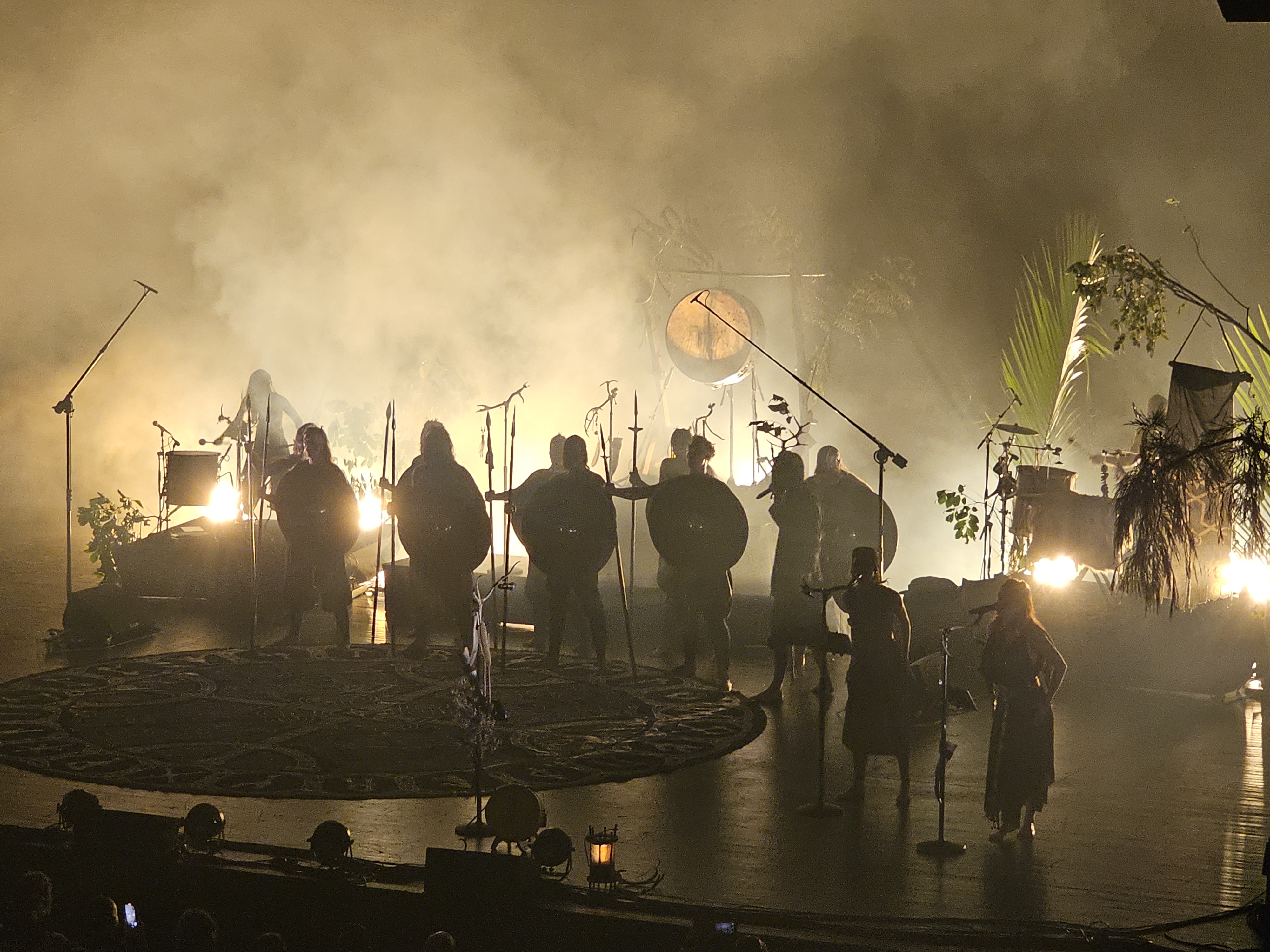
Heilung, it turned out, had a surprise up their sleeves: the show started with a Maori haka. It turns out that on tour, the group make the effort to track down First Nation tribes and incorporate them into their opening ritual. This was an amazing thing to witness. Taking the haka out of its normal, rather stratified contexts felt electric, and electrified the tradition. It wasn’t token, but quite the opposite. After the haka, members of the Maori troop participated in the opening ritual, a serious business and in contrast to typical concerts, where the audience expects to be entertained right from the word ‘go’. It felt like this sold-out audience understood the concept, and psychologically partook of the ritual.
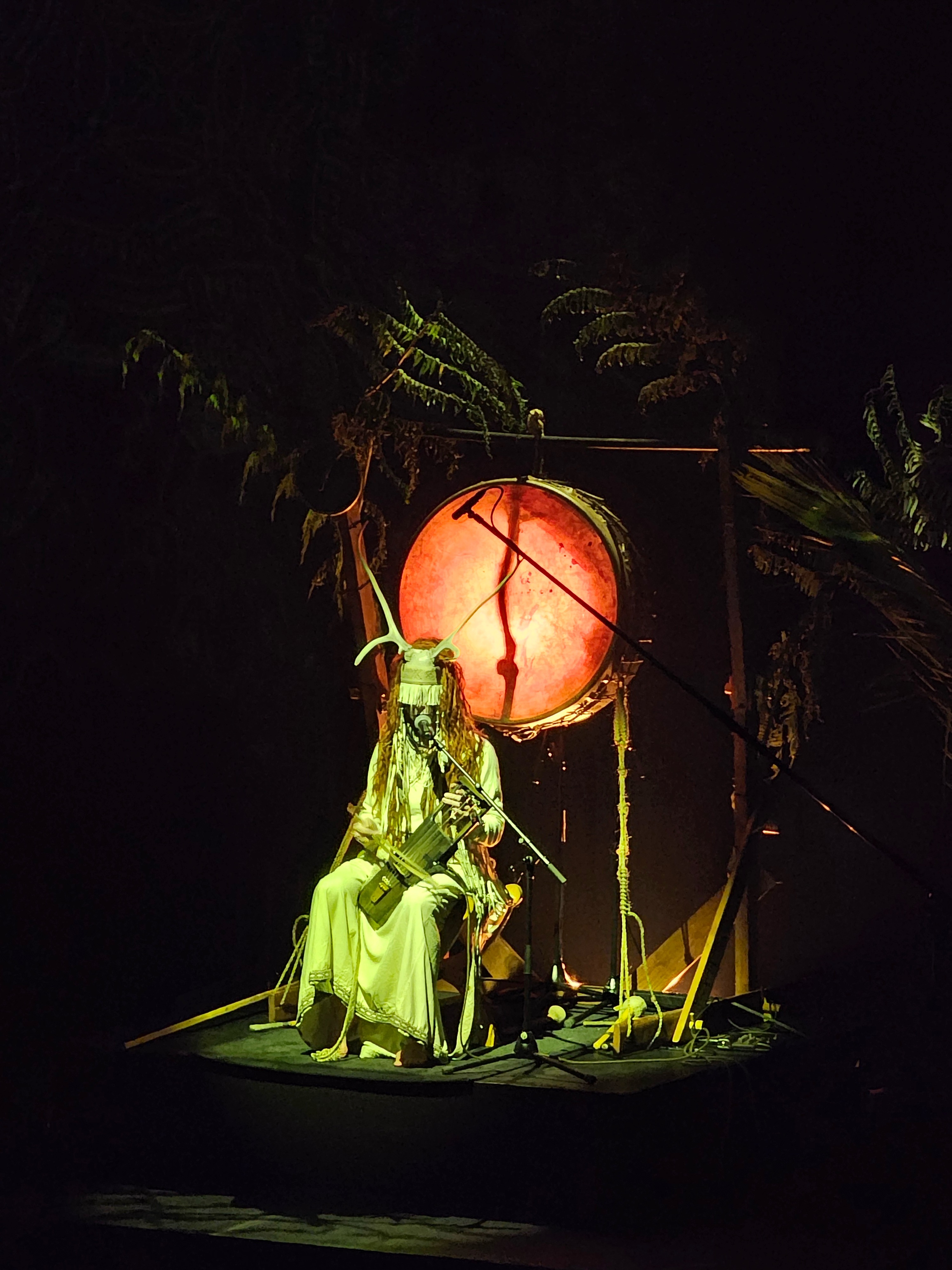
When the ‘entertainment’ did begin, it was instantly intoxicating. The full width and depth of the stage was utilised, and from one song to the next there was seldom a lull in the grand theatricality of it all. On record, the group sound a little like Dead Can Dance with a more tribal aspect and some demonic-sounding throat-singing. In live performance, the music is made much, much more vivid by a combination of impactful lighting, well-thought-out choreography and props, and bizarre costumes. It was unlike anything I’ve ever seen before, which makes it so much harder to describe, but for the visuals alone it would have been worth the admission price.
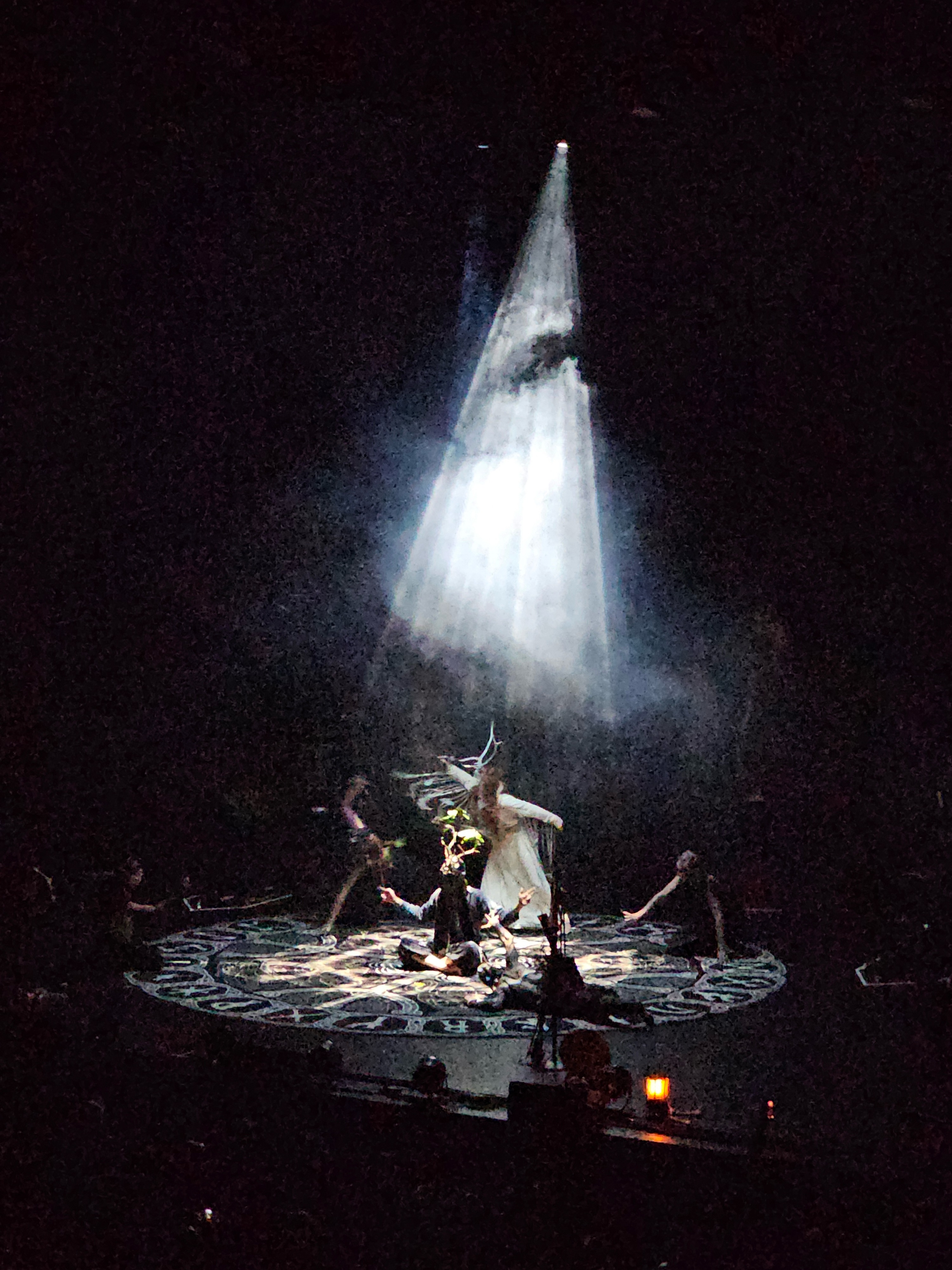
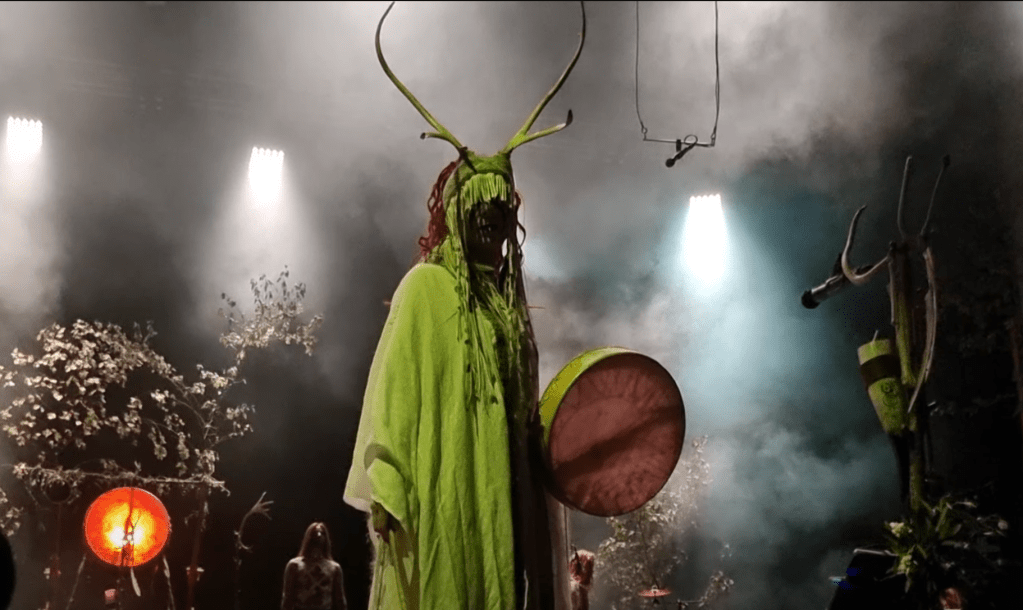
Depending on the demands of the song in question, the stage would have five or nine or 16 people on stage at any one time, playing instruments or acting out tribal rituals. The main female singer was striking in a costume that vaguely resembled Tim Burton’s Corpse Bride, with her white dress, long red hair and oddly disturbing mask. The master of ceremonies (for want of a better description) handled some of the vocal work and appeared to direct the action onstage. One chap to the left of the stage seemed to deal the electronics, while way at the back at either side of the stage two percussionists stood attacking huge drums with great relish.
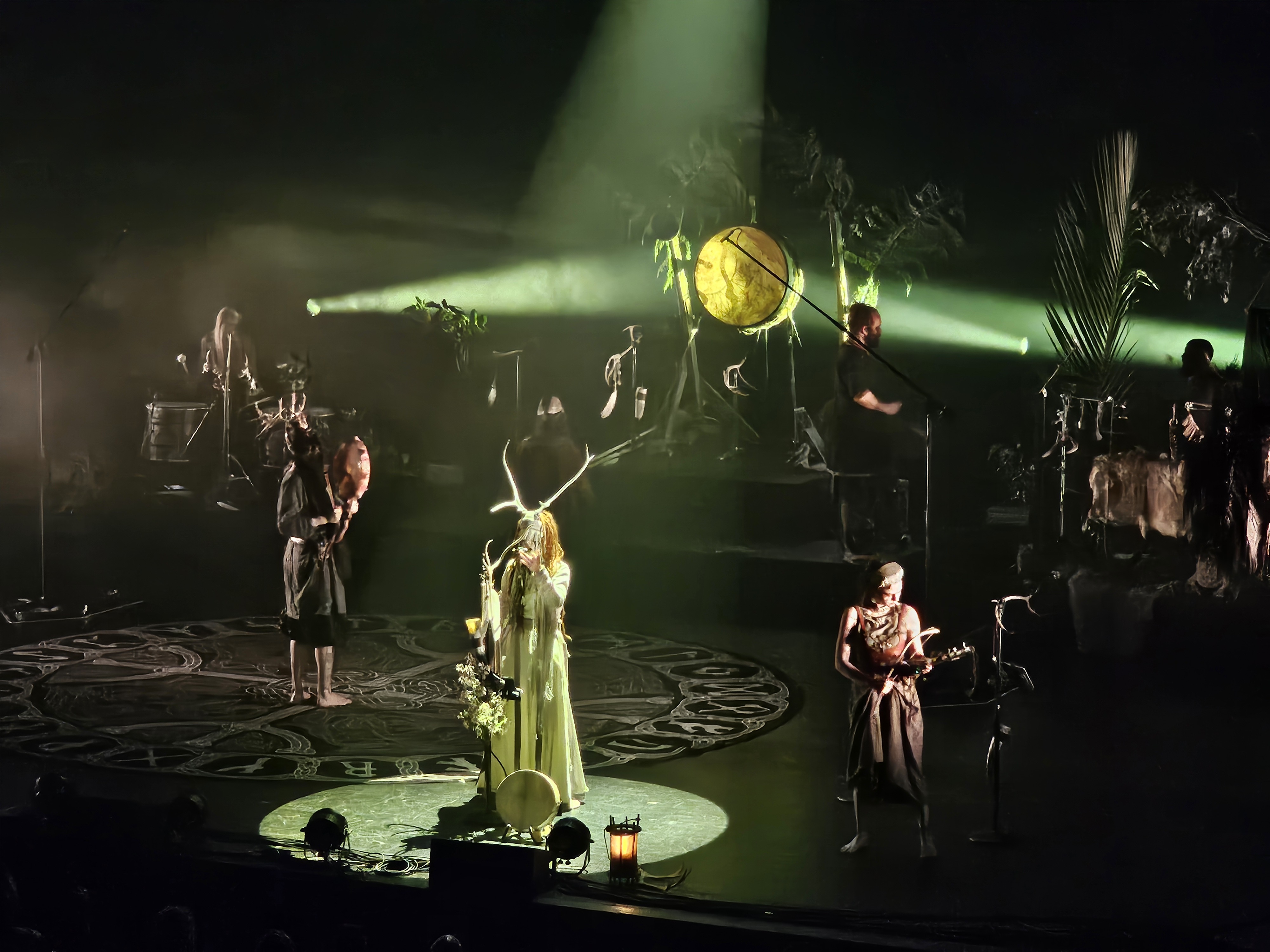
My friend Zak, with whom I attended the performance, afterwards made a crack that it reminded him of the risqué hippy Broadway show Hair, due in part to the nudity. And it did indeed feature several topless females participating in the rituals and was presumably the reason for its R18 rating. (My 10-year-old daughter desperately wanted to go to the show, but alas…) Or perhaps the rating related to the ritual “killing” of one of the women and subsequent “rebirth”. Who knows?
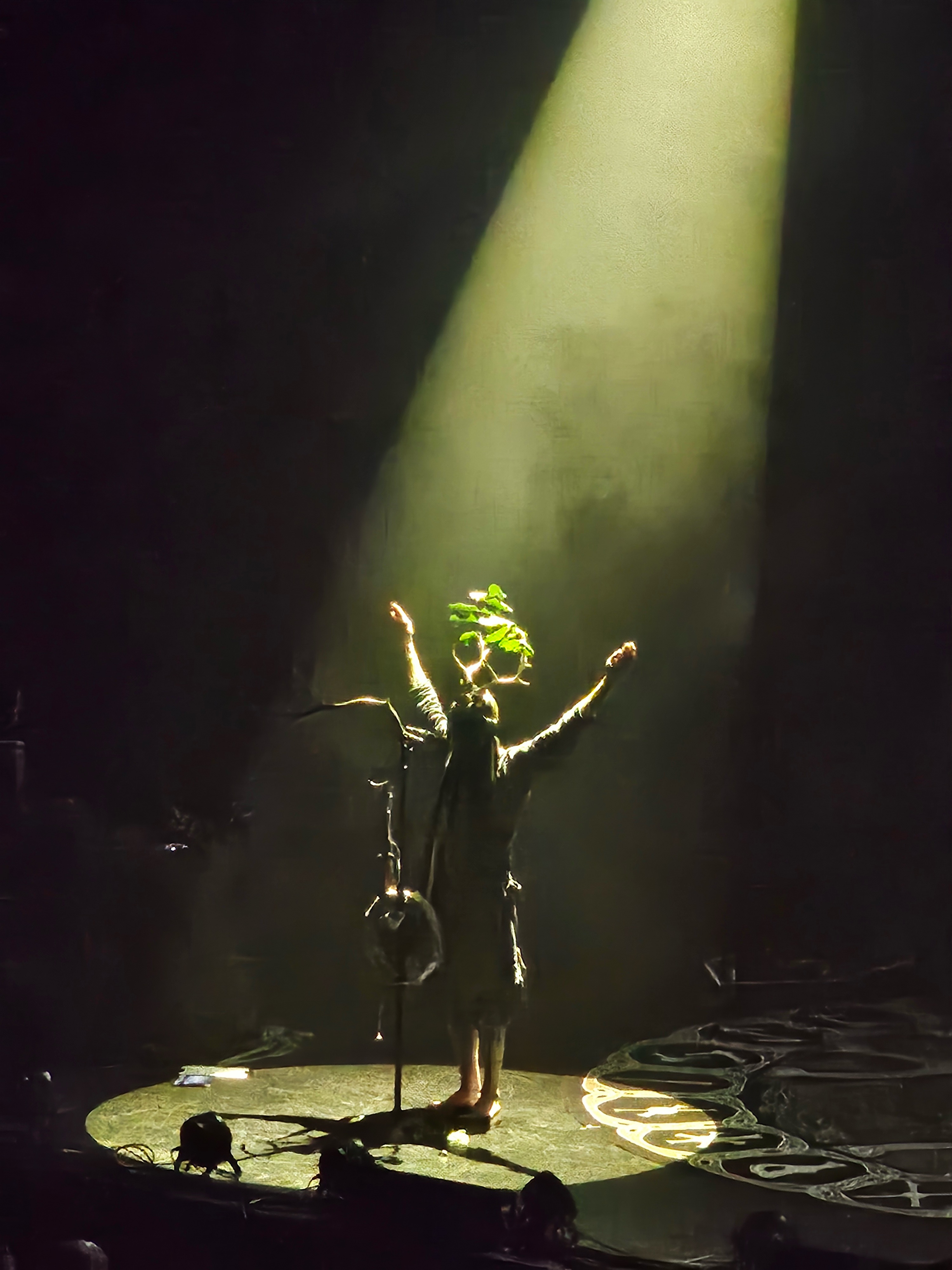
In performance, the music felt much more genuinely tribal, and ancient, even though of course it had new technology flowing through its veins. It’s essentially minimalist, with swathes of empty space leaving plenty of room for the monstrous percussion, guttural throat singing and female vocals. The relentlessness of the drumming reminded me of the 1970s German band Faust while the intentional repetition/incantation summoned the ghost of the French band Magma. It’s tempting to view Heilung as existing completely in its own universe, given how shockingly different they are from everything else on the music scene, but there are somehow connections. Similarly, the throat-singing has an almost death metal aspect.

As a dedicated atheist for whom a “spiritual” experience is a really good Indian curry, I’m naturally sceptical about the kind of illusions that can evoke an ancient culture with all its rites and rituals and magic. But Heilung (meaning ‘healing’), for me, wasn’t just an exciting show that left my surprised jaw on the floor (metaphorically speaking) but was genuinely moving. In fact, at times I was so emotionally impacted by it that I felt ye olde tears welling up. Perhaps the 6 per cent Viking that Ancestry.com says is in my bloodline found something in Heilung, something ancient and deep, that it identifies with.
See them, if you get a chance.”

This ritual is the closest thing to a religious epiphany I will ever experience. It was truly awesome, in the literal sense of that overused word. The final song, Hamrer Hippyer evolved into a full on trance/dance ritual with the whole auditorium dancing. The aesthetic, the lighting and props, the dancing and chanting, all were utterly spectacular. I really hope they return someday.
Click the photo below to watch a show from the tour.
Red Raven also reviewed the event:
“Heilung bring their primordial ritual energy field to New Zealand, contemporary theatrical dance and ancient pagan music which casts healing spells.

Their name being Germanic for healing.
Local iwi are on stage with a powhiri and a powerful greeting haka, prefaced by a wailing lamenting waiata.
There follows a long opening sequence to summon the earth and forest spirits. Chanting incantations as the players gather.
Smoke machines and metaphorical mirrors. Birds sing and dried herbs and leaves are burnt as incense to cleanse the auditorium.
It is a Midsummer Night’s open-air theatre of charms and rituals, all of which develop into the invocation of ancient spirits and beings. It may even have an air of Midsommar.

The essential nucleus of Heilung are Christopher Juul (Danish music producer), Kai Uwe Faust (German tattoo artist) and Maria Franz (German Folk singer). Founded the project in Copenhagen in 2014.
They seek to recreate the ancient pagan music of Europe. The interview gives an idea of what elements make up this vast project. Then to perform them in a modern setting.
An act of reincarnation and reanimation. Once everybody is in, the ceremony is about to begin.
There are numerous audience members dressed in ancient pelts and blowing tribal bone horns. Help to create the scene prior, and after the show.
The spectacle hits you like the central occult invocation which forms the core of Stanley Kubrick’s Eyes Wide Shut. Both exhilarating and dangerous.

Three sets of tribal thumping drums. James Brown did that in his last show in New Zealand. All human cultures have used animal skins stretched over a resonator as the origin point of music.
Helmets with antlers. Veil masks decorated by bones and feathers. Big tusk horns. Swords and knives.
They bring on Viking soldiers with leather shields and spears. Their marching is a low rumble from the stage.
Third song in is Alfadhirhaiti. The two men perform in fierce, guttural Mongolian and Tibetan style throat singing. The deep gravelly, vocal cord shredding style.

The Mongols also brought their cultural imprint into Northen Europe as habitual marauders.
This is why they are labelled as Viking Metal, although their music is not contained in those boundaries. Heavy male rumble voices have a similarity to the Samoan Metal of Shepherds Reign.
With the dense smoke and soldiers in silhouette, this feels like the music from the battlefield. After fierce battles and bodies in piles.
Last time I experienced that was a violent and nasty Sweetwaters festival in Ngāruawāhia 1982. Performers getting bottled, alcohol-fuelled violence, fires lit on the hills. Young males on testosterone highs.

You get the sense of blood and sweat. Wolves in the audience continually bay and howl. They could be werewolves.
There is sequence where a woman is ritually tied up and sacrificed by a spear. Brought back to life by another.
It takes an hour before I appreciate the continual background drone. Where does it come from? The band have explained it as music they record from the natural habitat. It has a curiously soothing and comforting effect.
Franz is the principle female voice, helped by two other women on backing vocals. She has a high keening Folk soprano.

When they combine, they can rise in the same arch intensity and otherworldliness of the great Bulgarian female choirs.
Traust and they become the three witches of MacBeth. Wild keening vocals makes a stunning spectacle.
Elddansurinn. Three deathly pale guys crab dance around and look like a few Gollum characters have escaped from the Lord of the Rings show next door at the Civic Theatre.

The shadow warriors return and for a moment, you feel the band has harnessed the weather as if we are watching a Kurosawa movie come to the theatre stage.
Their instruments are not plugged in, but they are amplified through microphones.
I see an old, bowed instrument which could be a ravanahatha, an ancient precursor to the sitar originating from Rajasthan, India.

Eivør plays the support slot tonight. An incredible and arresting soprano voice, her top range pierces like a hot wire cutting through a block of ice.
Eivør Palsdottir comes from the Faroe Islands, so she has some connection to nearby Iceland.
At first, she sang in the Wuthering Heights Folk Pop style of Kate Bush, but then she climbs higher in a pure tone operatic style. Even more remarkable is that she has no vibrato.
She commented during her set that Kiri Te Kanawa is one of her favourites.

Enn has her expanding the vocal range on the opening to Led Zeppelin’s Immigrant Song. This is matched to the to a drummer who can thunder with the hammer of the gods in John Bonham style.
Incredible and awesome. We are going to catch her again soon with her own headline gig in three days’ time.
She is Nordic blonde, but she does resemble Lindsay Lohan in her better days.

Heilung get closest to recognisable Metal with Galgadr. The dance part of this has Franz sitting of a Game of Thrones like Circe.
Varied percussion instruments including a bodhran, bones and what sounds like tablas. This is for Elddansurin, and it includes an extended fire dance. Fire walk with me.
We get a mediaeval mosh pit with the closing song Hamrer Hippyyer. Scattered distorted voices as if going through an old Leslie speaker.

Everyone comes back on, soldiers and haka-performing iwi included. A big shamanistic trance dance with whirling dervishes.
Then Heilung close the portal they have opened, soothe the wild spirits, and send us out just wondering what a spectacle we have just witnessed.
Rev. Orange Peel“
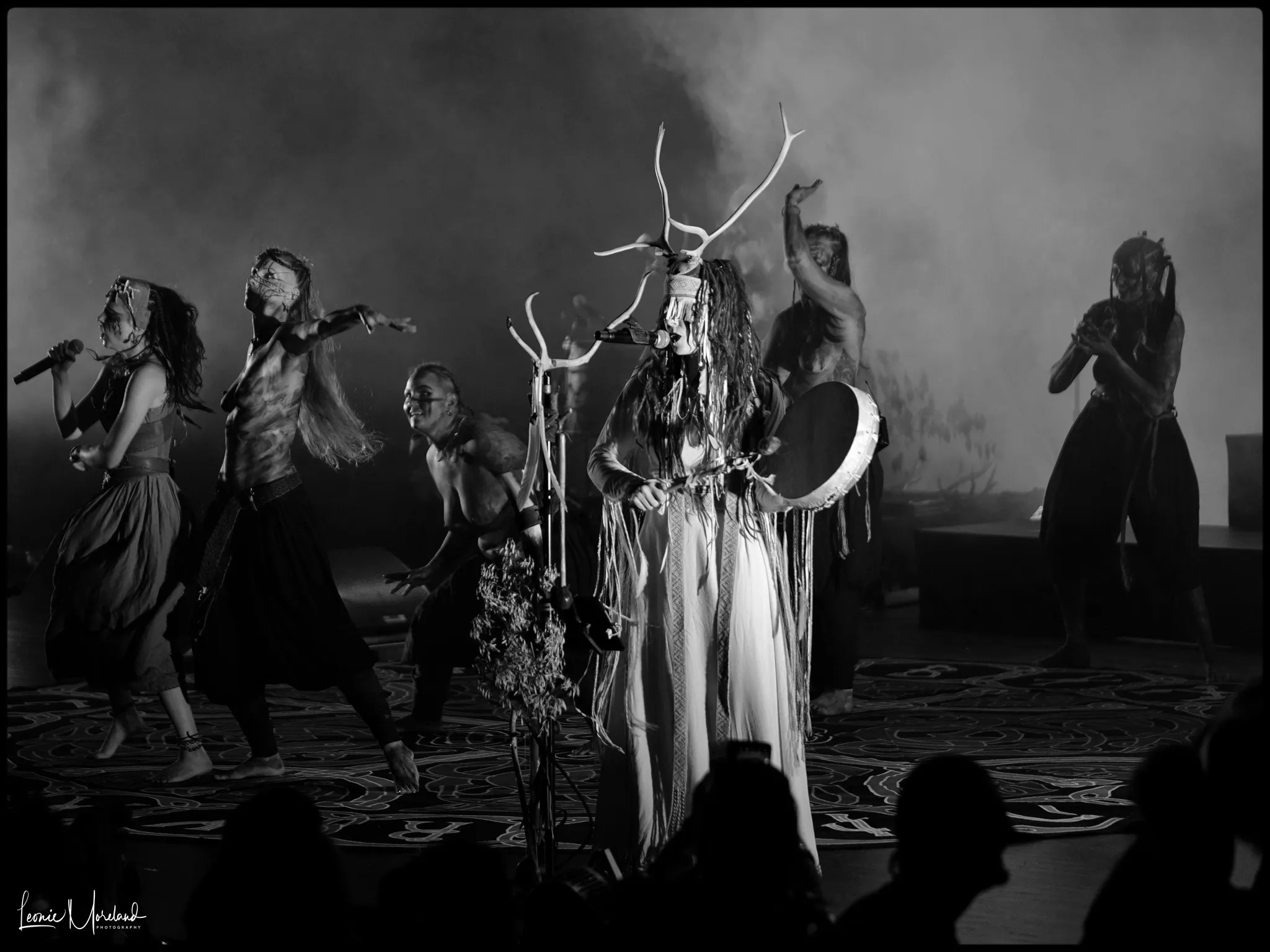
As I said, words and even recordings and photos cannot convey the energy and atmosphere of the event. It was like church for pagans I guess. Amplified History, sums it up.
From a hi-fi perspective it reinforced my ideas that everything we hear at home is a shallow illusion. Nothing we have at home, no matter how expensive and fancy will ever compare to the impact of a live performance. This might be obvious, but there is more to music than listening for ‘soundstage’, ‘imaging’ ‘bass slam’ etc
Enjoy hi-fi for what it is, but don’t pretend anything we hear is anywhere close to real.


 Audio Satori
You must be logged in to post a comment.