
The amplification side of the new system is taking me in a different direction from anything I’ve really tried before. The preamp currently in place is an EMIA Manual Autoformer, while the power amp will be the second edition of the Komuro K300S. I’ve paid for the Komuro, and it’s about to ship, so I’m looking forward to finally getting it into the system.
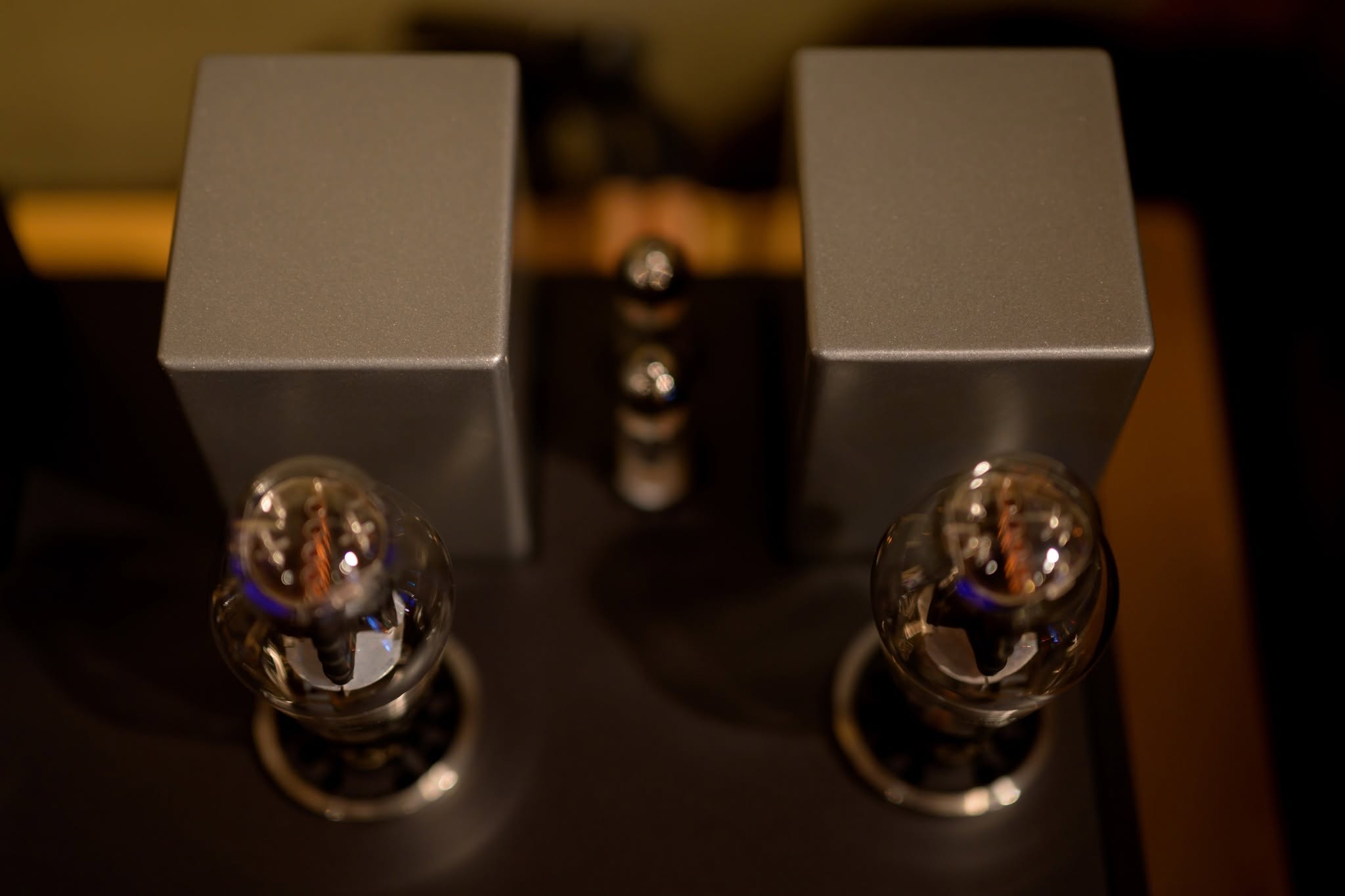
The K300S is a direct-coupled, single-ended 300B stereo amplifier developed by Nori Komuro in collaboration with John DeVore. It delivers 7 class-A watts per channel, using a valve complement of two 300Bs, two ECL82s and a single 274B rectifier. The circuit is hardwired, with no circuit boards, and does away with capacitors and interstage transformers in the signal path. Its custom transformers and chokes are housed in a carefully constructed chassis designed to isolate the sensitive signal circuitry from vibration and interference.
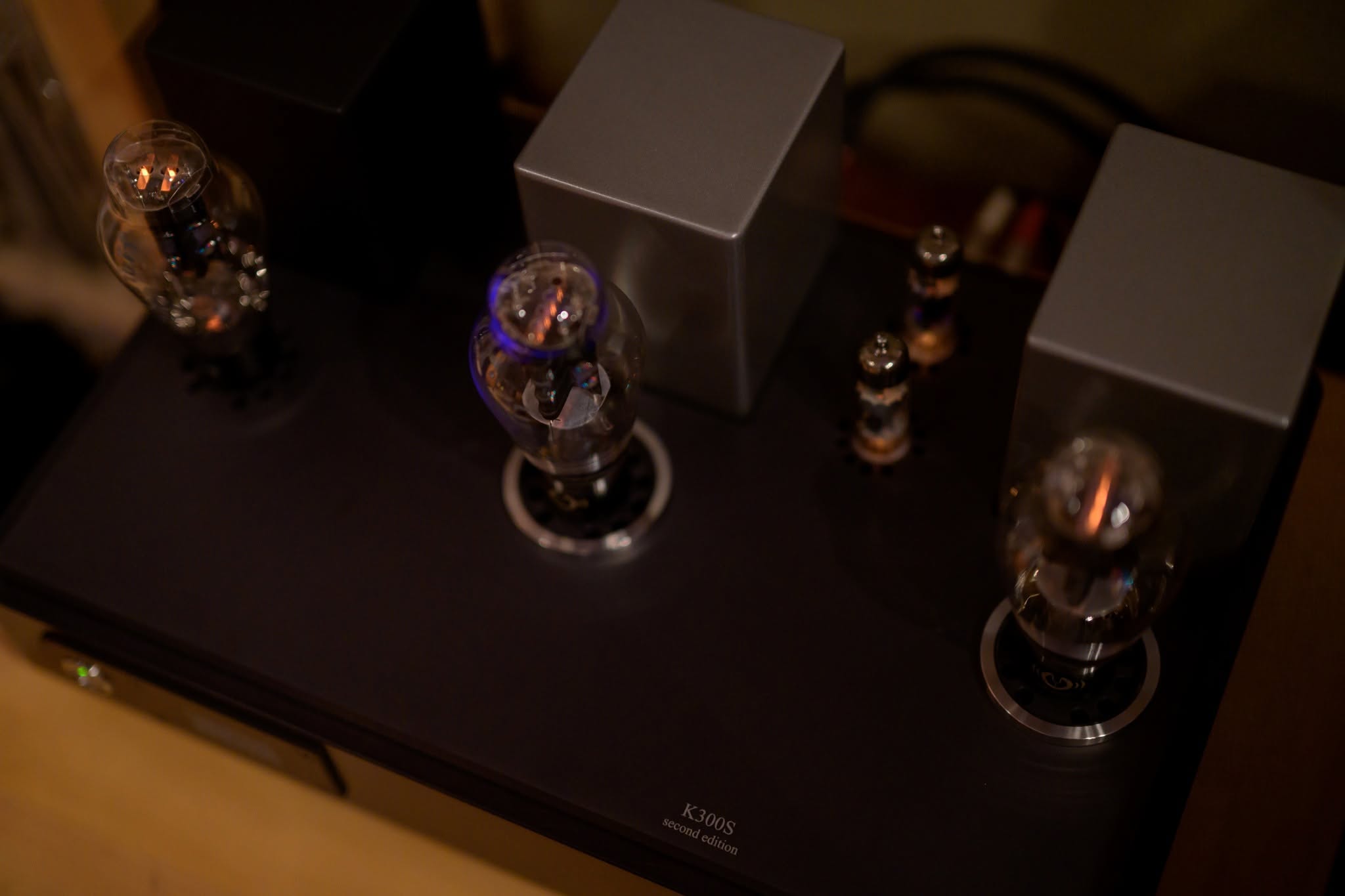
Seven watts might not sound like much but the K300S is designed for use with high-efficiency speakers, and it’s been conceived to complement my speakers in particular. That gives me good reason to expect they’ll make a very good match. Of course, the proof will come when the amplifier arrives and I can hear the combination in my own room, but it’s one of the things I’m most looking forward to with this system.
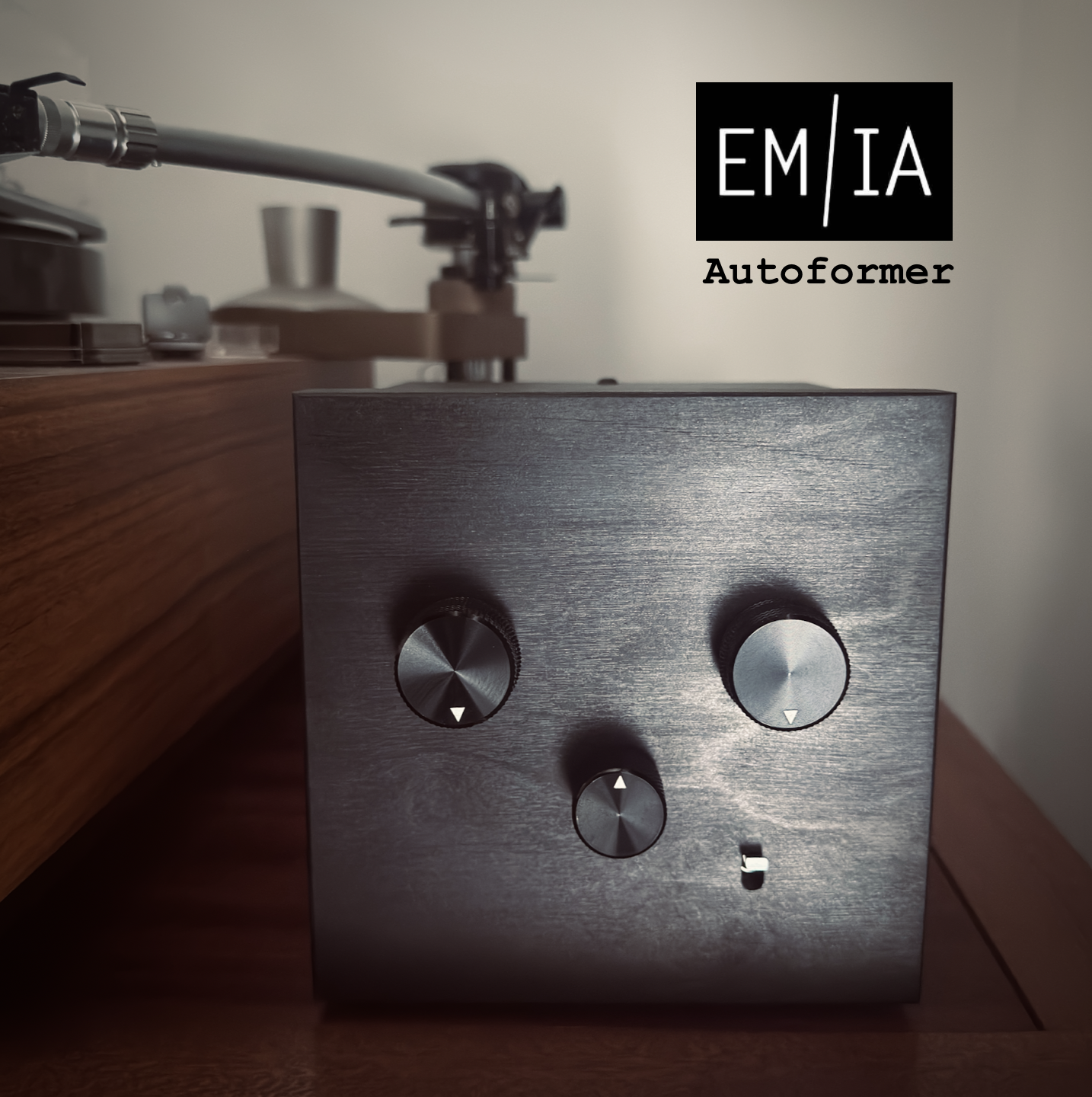

In the meantime, the EMIA Manual Autoformer is already here and giving me the opportunity to explore another unfamiliar approach. Rather than a conventional active preamplifier, it uses transformer-based volume control to attenuate the signal between source and power amplifier. There are no active gain stages or power supply involved in the volume-control circuit; instead, the signal level is adjusted by selecting different taps on the autoformer winding. It’s a deceptively simple idea, but one that takes a different approach from the preamps I’ve used previously. It’s a dual-mono passive autoformer, often referred to as a Slagleformer, which takes a different approach to volume control from a conventional potentiometer. Rather than simply dissipating excess signal voltage as heat, it uses transformer action to transform voltage and current while attenuating the signal.
The EMIA offers a total attenuation range of 0 to -52.5 dB, with the main volume adjustments made in 2.5 dB steps. A central balance control allows fine adjustment between the left and right channels, with offsets of 1.25 or 2.5 dB. In dual-mono operation, the arrangement also allows finer 1.25 dB adjustments. It’s an interesting combination of a relatively simple underlying principle and carefully considered control over the signal level and channel balance.
Mine is the manual version, with seperate level controls for each channel, and a balance control, and while I’d like to move to the remote-controlled model when funds allow, there’s no rush. The important thing for now is getting to know the autoformer approach and seeing how it works in this system. It’s a compact, understated component, but its design is a world away from the active preamps I’ve become accustomed to. I will get the remote version though, for the remote control functionality obviously, but also for the extra input, which will allow for the digital source, the phono stage, and also the DS Audio phono equaliser.
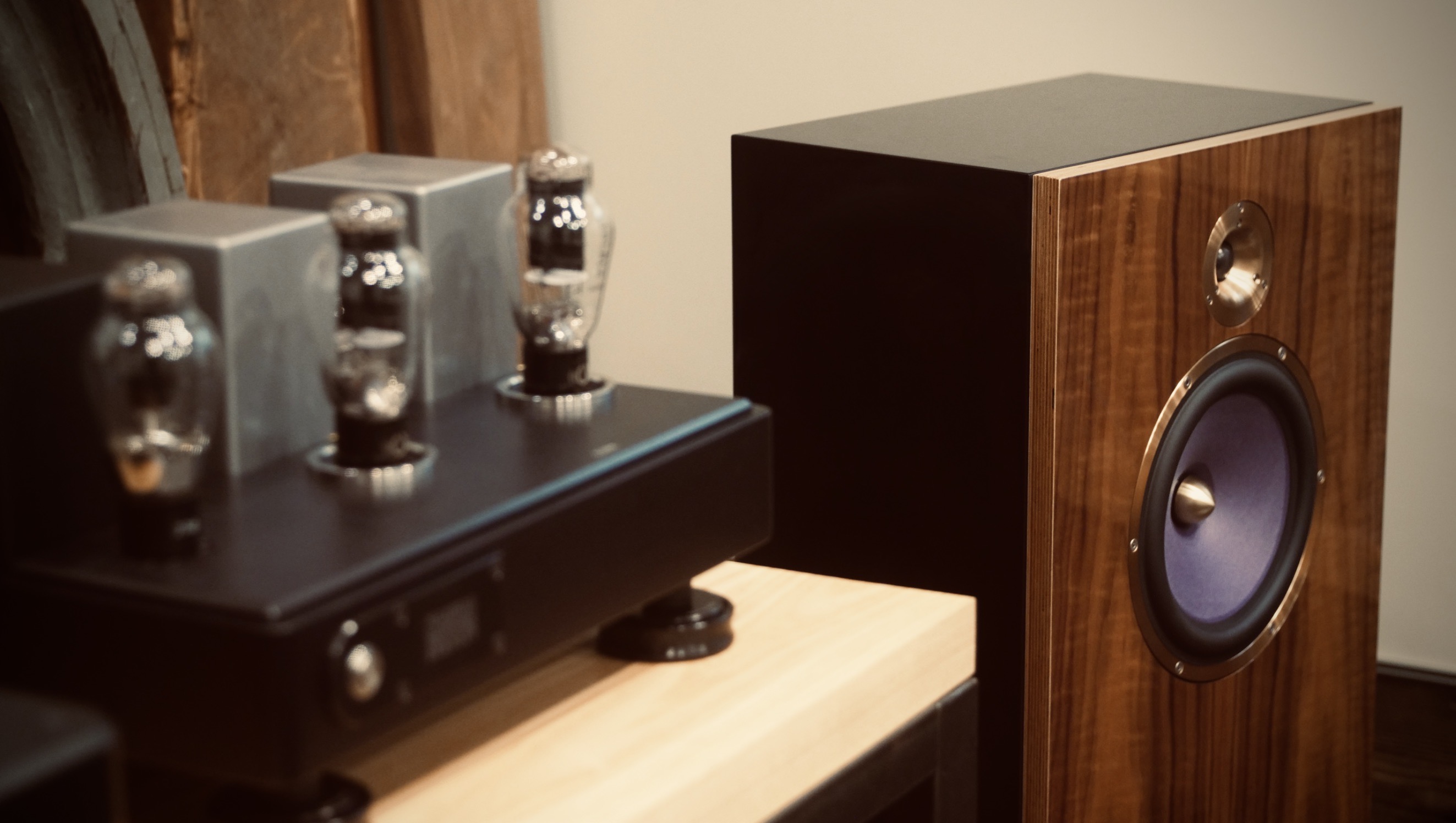
I’m deliberately holding off on any grand conclusions until everything is installed and I’ve had time to listen properly. What I can say is that both the EMIA and the Komuro represent a departure from my previous experience, which is what is making this change so appealing. Rather than simply replacing one familiar component with another, I’m exploring a different approach to amplification, and I can’t wait to hear how it all comes together.
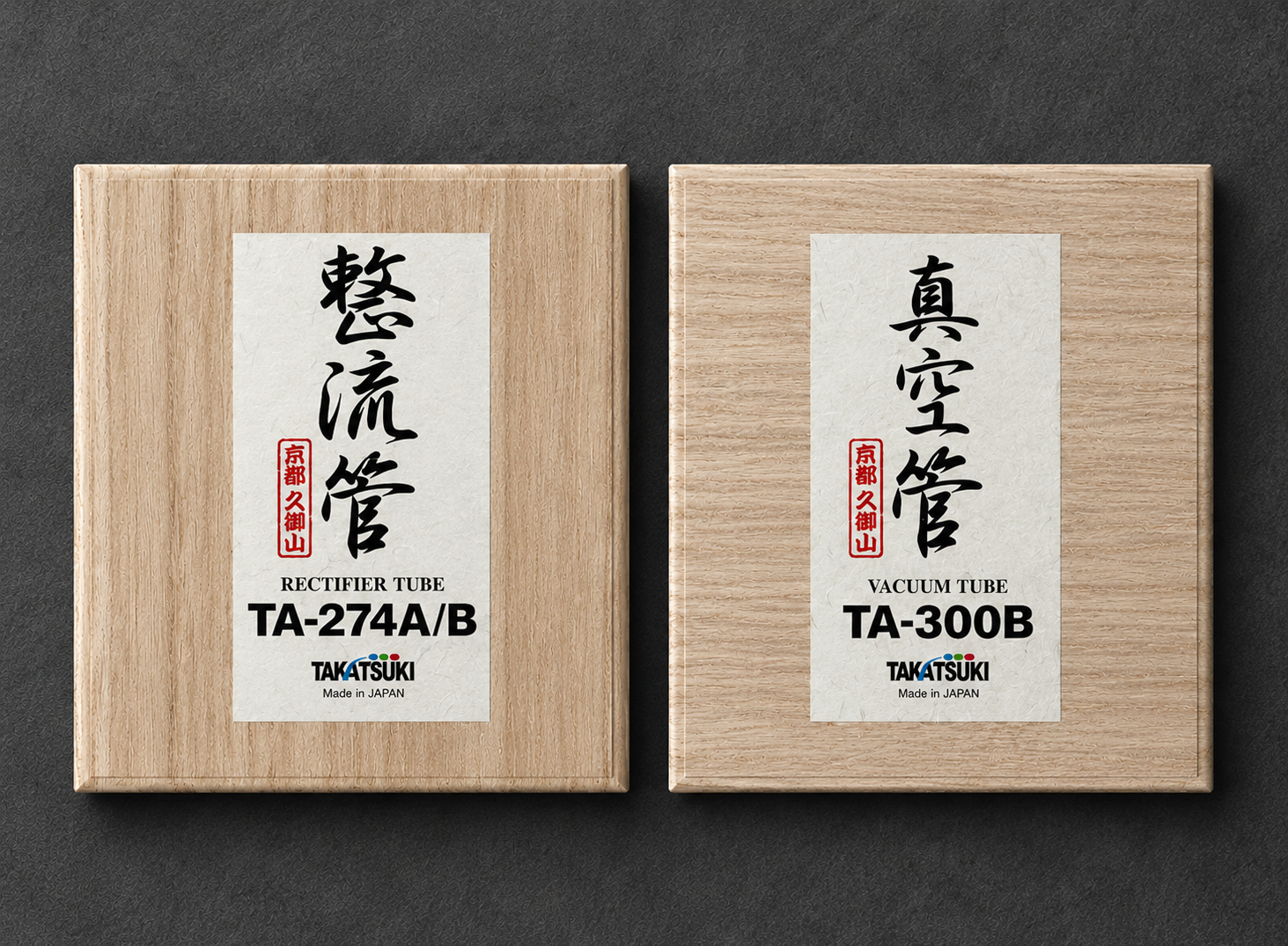
I have plans to fit some fancy pants tubes to the Komuro eventually, namely some Takatsuki 300Bs and also their 274B rectifier. Should be nice.
Looking at the direction the system is taking, I seem to be gravitating towards simpler signal paths and less complicated designs. There’s something appealing about stripping things back and concentrating on the essentials, rather than continually adding more stages and complexity in the hope of getting closer to the music. Leonardo da Vinci is often credited with the words, “Simplicity is the ultimate sophistication.” Whether or not he actually said it, the sentiment feels increasingly relevant to the way I’m approaching this system. The aim isn’t to do more, but to do less, and do it well.


You must be logged in to post a comment.