
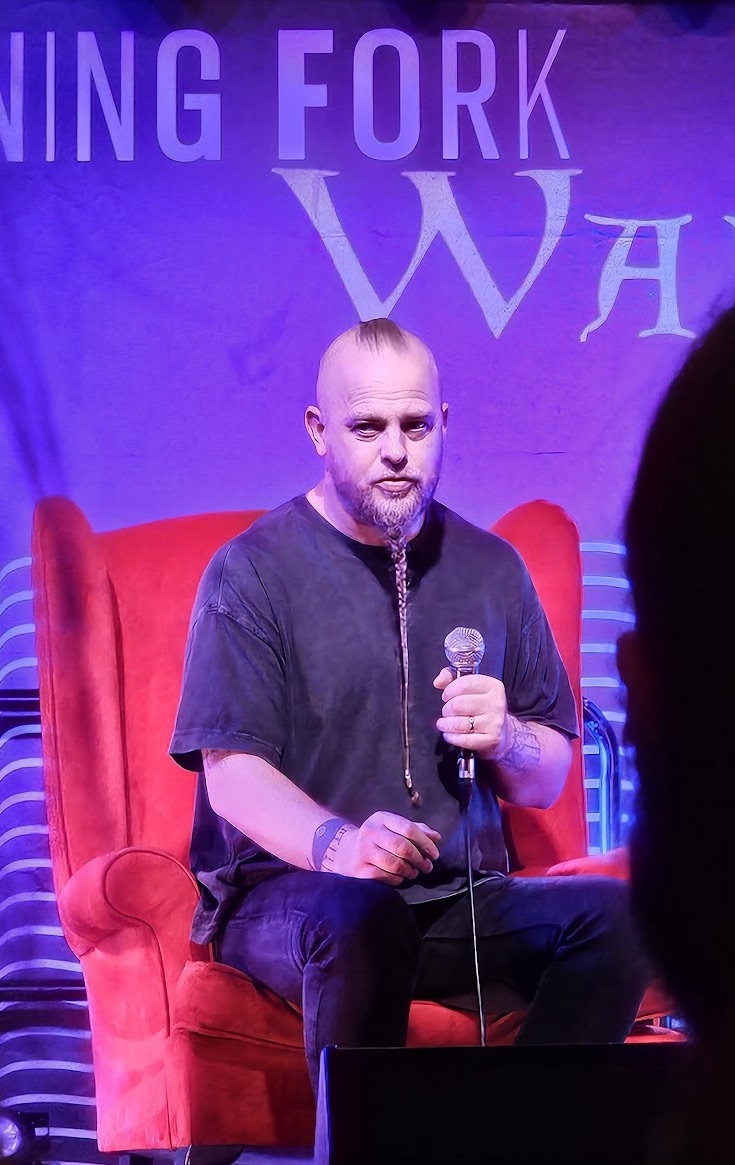
Last week was Wardruna week. On Wednesday we headed down to the Tuning Fork downtown for a meet and greet session with the band. It was a small (150 or so people) gathering with them. Einar was interviewed on stage and gave some excellent and comprehensive answers to even the most simple questions. A really considered guy with a very well though out philosophy.

After that we had a small break for refreshments. I bought a cd copy of the new album ‘Birna’ and also the new bluray of the ‘Live at the Acropolis’ show. Coincidentally my limited edition vinyl copy had arrived the same day. We all lined up and got to meet the band, and have them sign whatever we wanted. Some people gave them gifts which was excellent to see. We got to have a chat with all of them as well. After that we could all have photos with the band as well. It was a really cool experience for such a ridiculously low cost. A great way to set up for the actual show the next day.
We had been very fortunate to get front row seats for the show itself which gave an amazing vantage point. The Turongo Collective who opened the show with an extremely passionate and impressive powhiri were awesome. Very very cool. Being in such proximity enabled us to really feel the intensity behind the performance.

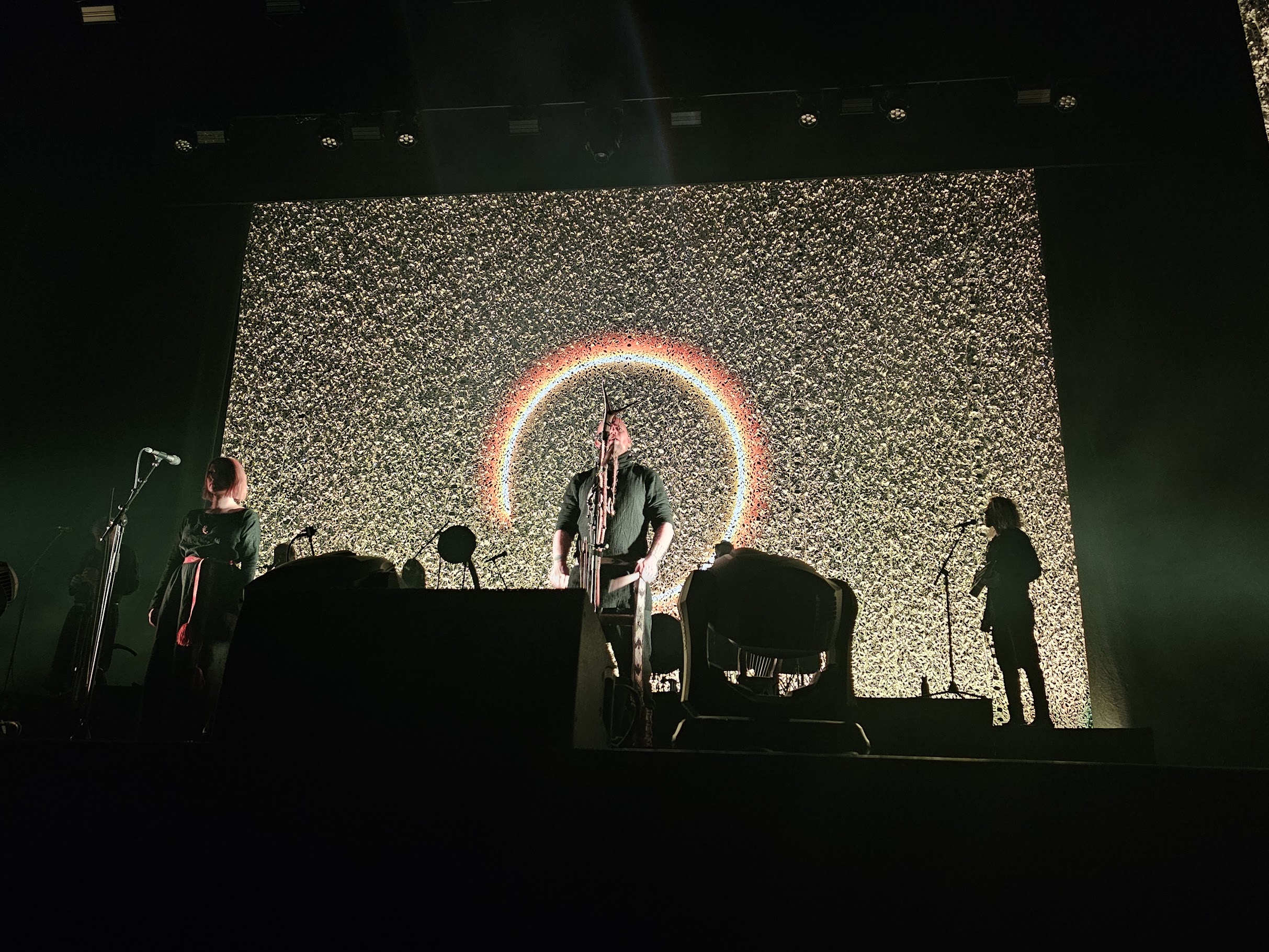
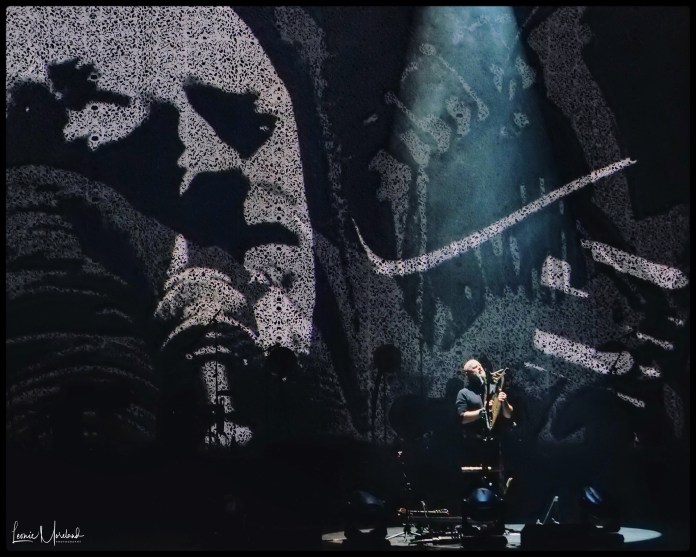
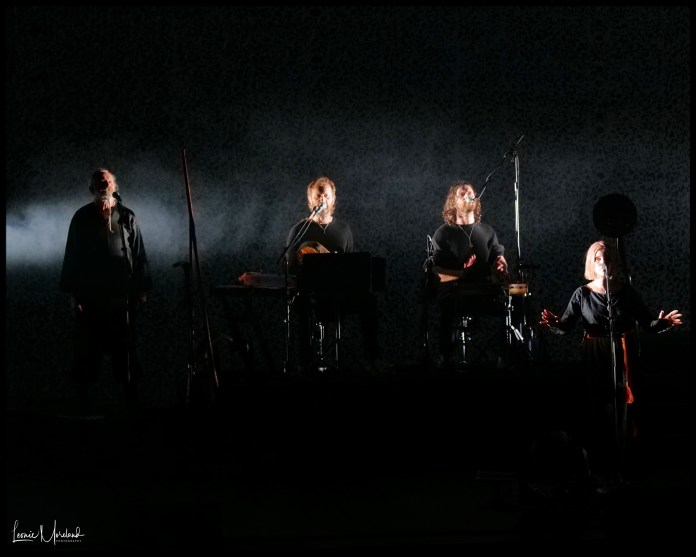
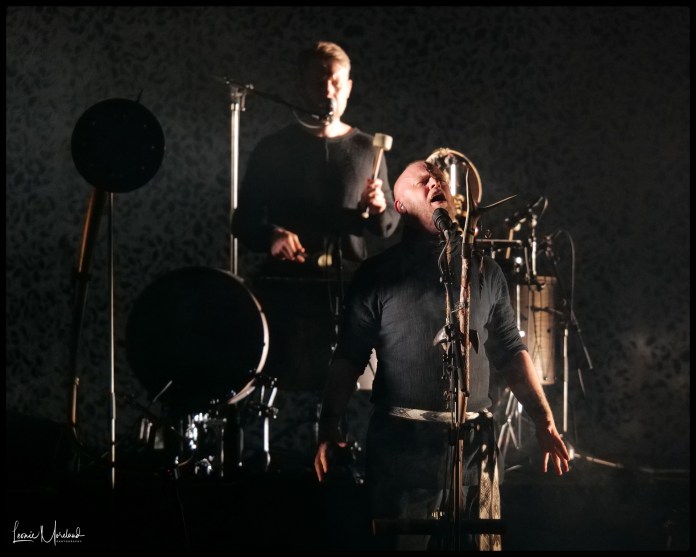
Wardruna themselves came out and the show commenced, mixing older songs with many of the new songs from Birna. It was superb. Always quite strange to see an artist you’ve been following for many years in the flesh. Even more surreal having met them in person the day before. The show itself was excellent. Minimal stage embellishments and excellent use of lighting, projection and smoke.
A huge highlight for me was hearing Helvegen performed. An iconic song preambled with a sincere and poignant introduction by Einar.
Red Raven reviewed it:
Wardruna – Kiri Te Kanawa Theatre, 30 January 2025: Review & Photo Gallery
By Rev Orange Peel
Photos by Leonie Moreland
1st February 2025

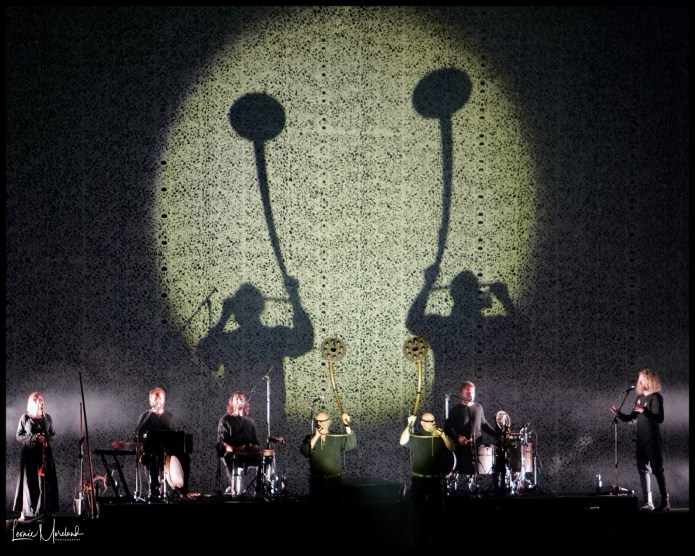
Wardruna channel shamanistic ritual Norse drone music reinterpreted for the Present time and give us ancient pagan Folk airs.

A reconstruction of music pre-dating the Christian and Islamic influence of the last two millennia. As the members of Heilung explained, prior to their well-received show last year at this theatre, a lot of tradition was lost by the sweeping Crusades and the recurring Inquisitions.
What was not Christian or Islam was banished or expunged from presiding culture by the dominant Control entity.
But music is ancient and can be awakened, like calling up forbidden history in the muscle memory of the instruments this group carries.

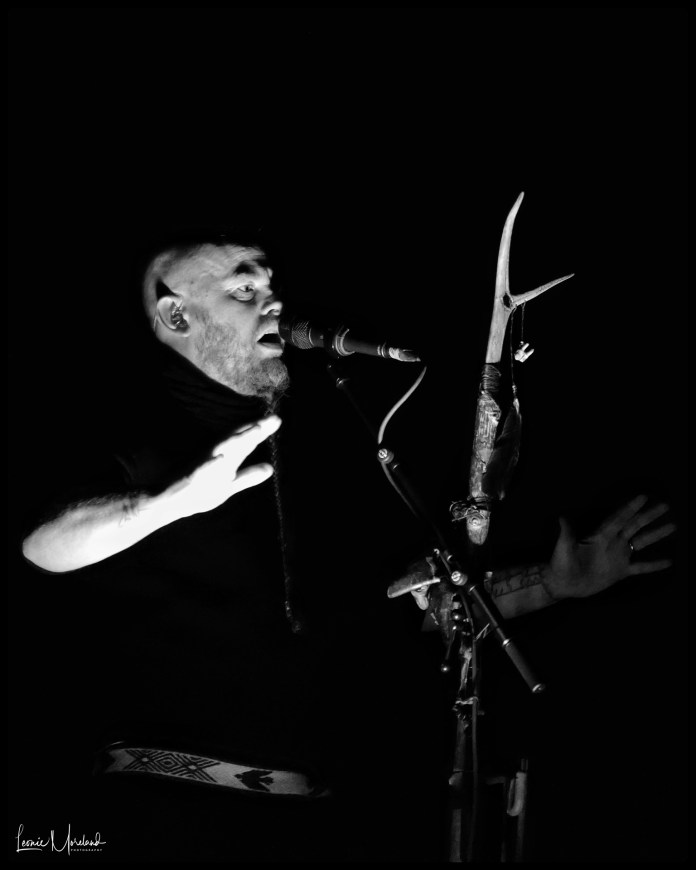
They are Norwegian and formed just over twenty years ago. Einar Kvitrafn Selvik is the leader, writes much of the music and is a multi-instrumentalist and one of the lead voices.
Lindy-Far Hella is the female voice and the resident dervish dancer.
These two I can reliably identify. Five others on stage playing floor drums, frame drums, percussion, horns and bowed instruments.
Traditional instruments are worth noting, being crucial to the sound.
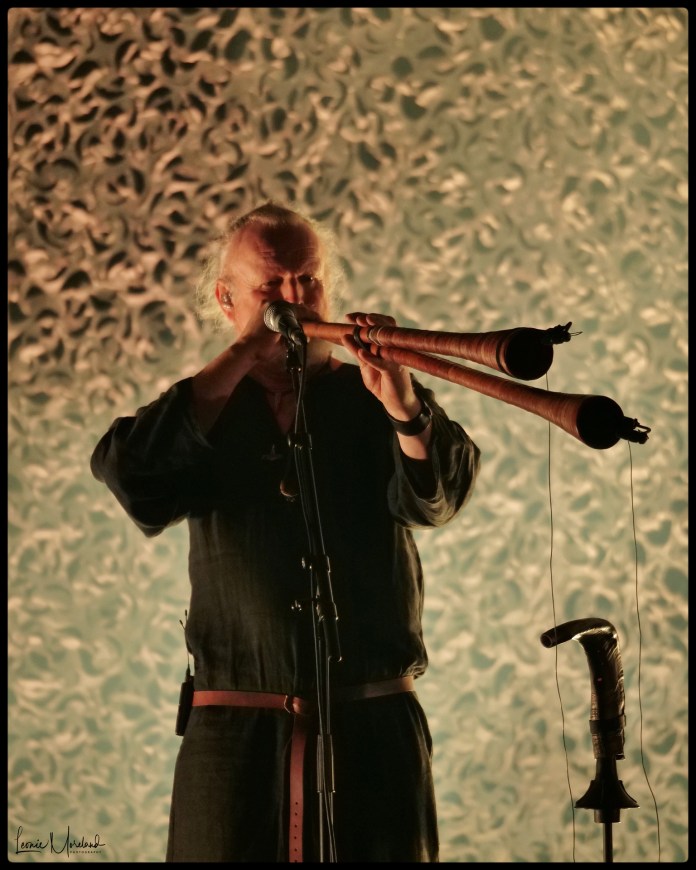
Lur are two large encircling horns capped by a large bell at the end. They look Tibetan or Mongolian. There is also a bukkehorn, better known as a goat horn.
A long narrow tube which rests on its’ bell on the floor looks like a skinny variation of the Swiss and German alpine horns.
From somewhere there is a didgeridoo sound. The low-toned resonating buzz drone.
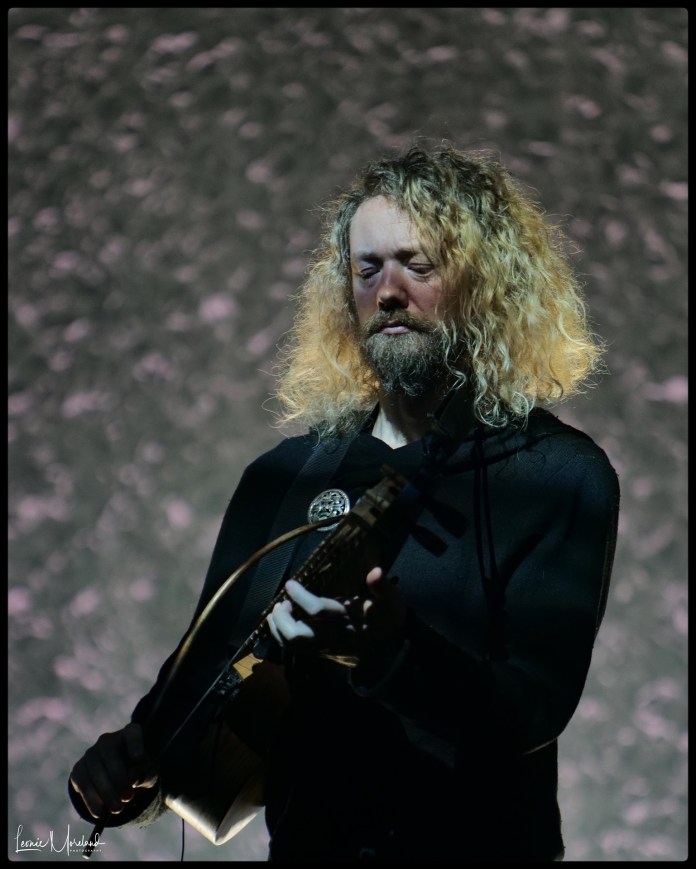
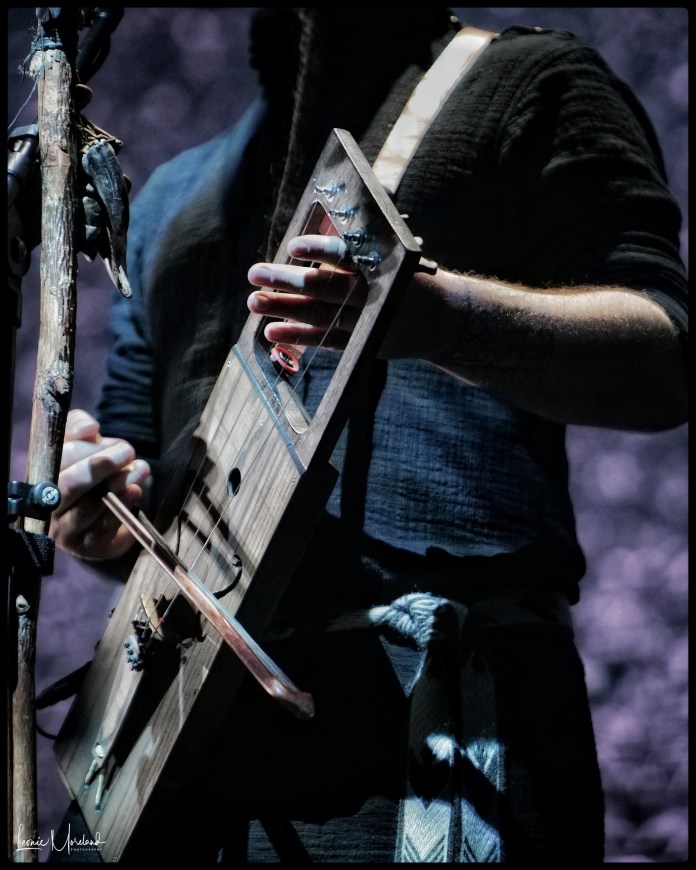
Tagelharpe is shaped like a lyre and is bowed. Also, there is a primitive version of a fiddle.
There are frame drums. A hide membrane stretched around a shallow wooden frame would be the oldest percussion instrument that you can play riffs on.

All this adds up to ancient pagan Folk music. The drone power is coming from backing tracks.
There is a familiarity to the sound, having just spent three days at the Auckland Folk Festival in Kumeu. It is the diverse airs of World music.
Tribal drums and incantatory vocals from the beginning. There is a heavy portent from the invocations. The sole female sorceress is captivating with her ghostly pale complexion (under the lights at least). She glides about in wide circuits.
The sound of oceans and mountain wind. The atmosphere of wind-swept northern climes could be the soundtrack to Tarkovsky’s Andre Rublev, a difficult masterpiece which screened at a recent Auckland Film Festival. Just before the lockdown madness.
It is dark and the chants run deep, reminiscent of the Bad Seeds and A Box for Black Paul off their debut album.
The palpable weight is lifted as the spaces open and the white sky floods in. The male voices sound like Tibetan throat-singing rumbles which develop into Celtic swing.
The slow marches have an air of possession. Invocations feel like the casting of spells or curses.
Lighting effects include forked lightning and strobe flashes. Floor drums match this with rolling thunder.
From portentous deep male vocals, a tenor arises for celestial salvation. Cat wails from Hella as the band unleash heavy drum rolls.
There are quiet pastoral moments. Hella sings like a thrush and her voice is strong and controlled to match the volume of the band.
As Kurosawa clouds billow on the screen behind, the two massive horns call like foghorns. There is rolling mist from the stage.

Close to finishing and Wardruna run through a Bardo song about negotiating through the perils of Interzone before finding your best rebirth. Go to the white light, avoid the red one. Who’ll sing for me when I am gone?
Wardruna acknowledge the warm acceptance from the theatre and are particular in praising the powhiri preceding them.
The last is a solo vocal by Selvik which sounds ancient and with a simple arrangement, bringing it back to Celtic flourishes.
Wardruna would be leaders in the restoration and continued presence of pagan Folk music.
Photography by Leonie Moreland










 Audio Satori
You must be logged in to post a comment.