


According to Hesiod, the Bronze Age of Man was all war and moral decline. I’m banking on my own Bronze Age being a bit less stabby and a bit more laid-back, probably. When I found myself in the position where I had to ‘downsize’ my system I had to figure out what direction I was going to go in. I always believe in starting with the speakers and working backwards from there. A few brands were in the running, but I eventually decided that I would stick with familiar territory and go with DeVore Fidelity. I initially thought about the O/96, having heard them work so spectacularly a few years back with a Kondo amp and dCS front end, but in the end I decided to push the boat out and go for the O/Bronzes.
Over the years, I’ve owned a few of John Devore’s creations, including the older Gibbon 88 and the current O/93. Both of those speakers left a lasting impression on me, and I knew that when it was time to change, ultimately I’d be looking to Devore again. The Gibbon 88 had a rich, full sound with a great low-end punch and a smooth midrange that made them incredibly versatile, while the O/93 impressed with its incredible openness and effortless handling of all kinds of music. Both experiences made it clear that Devore’s approach to speaker design was something special. Each pair had their own unique characteristics, but both delivered a sound that felt natural, immersive, and highly engaging. There was always a sense of ease with Devore speakers, a sense that they weren’t working too hard to get the sound right. They just were right. When the O/Bronze was announced, I was confident the boundaries would be pushed out further.
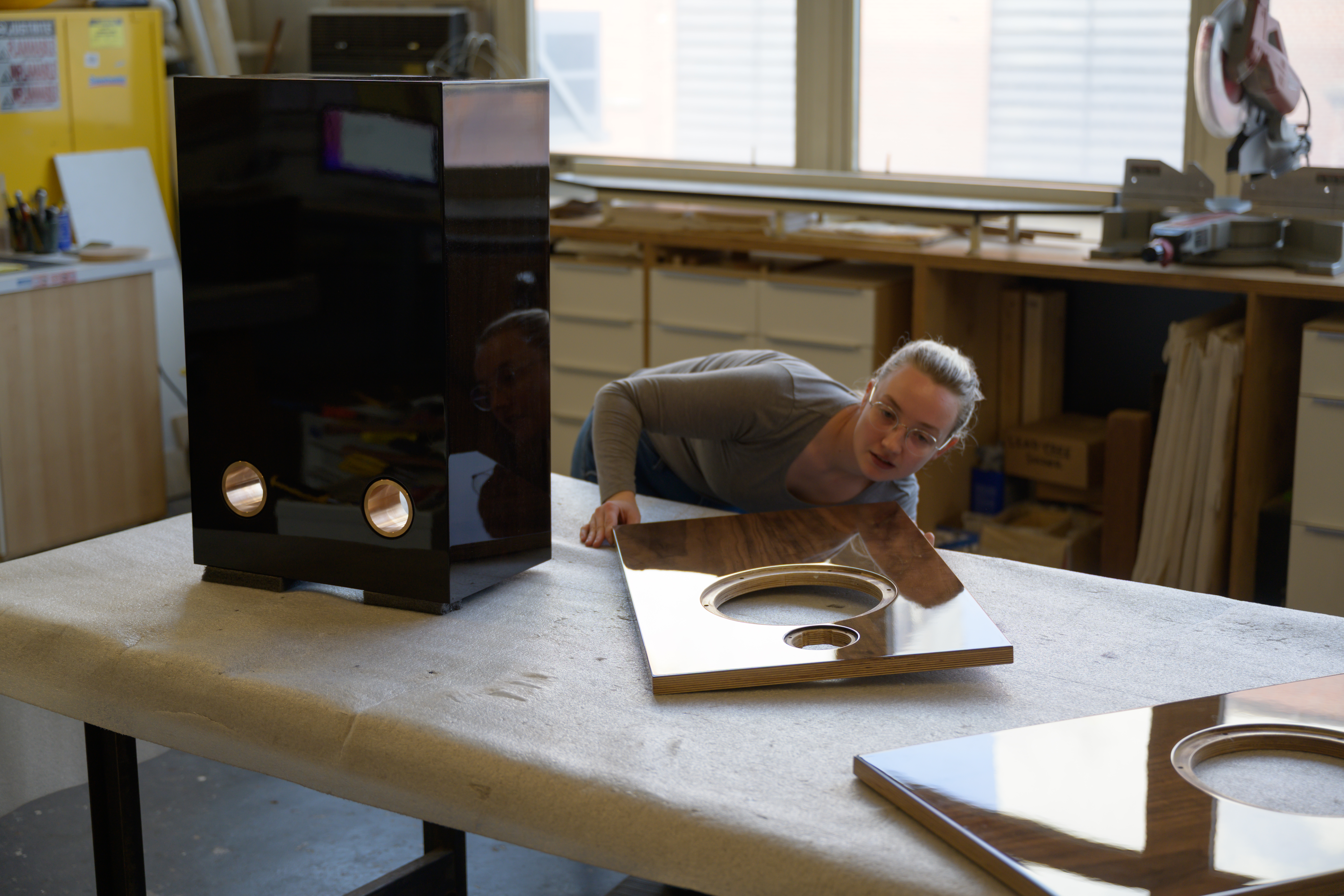
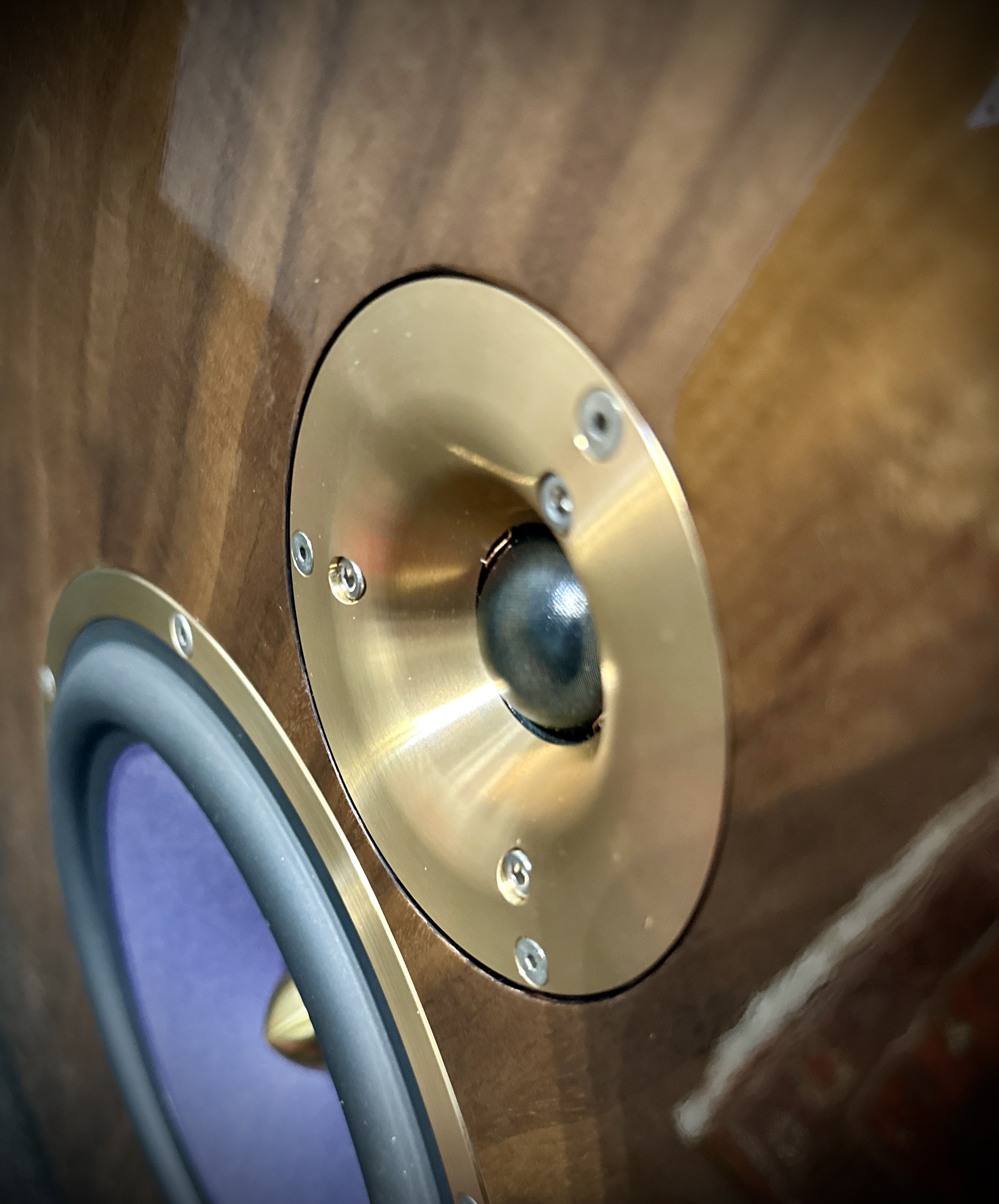
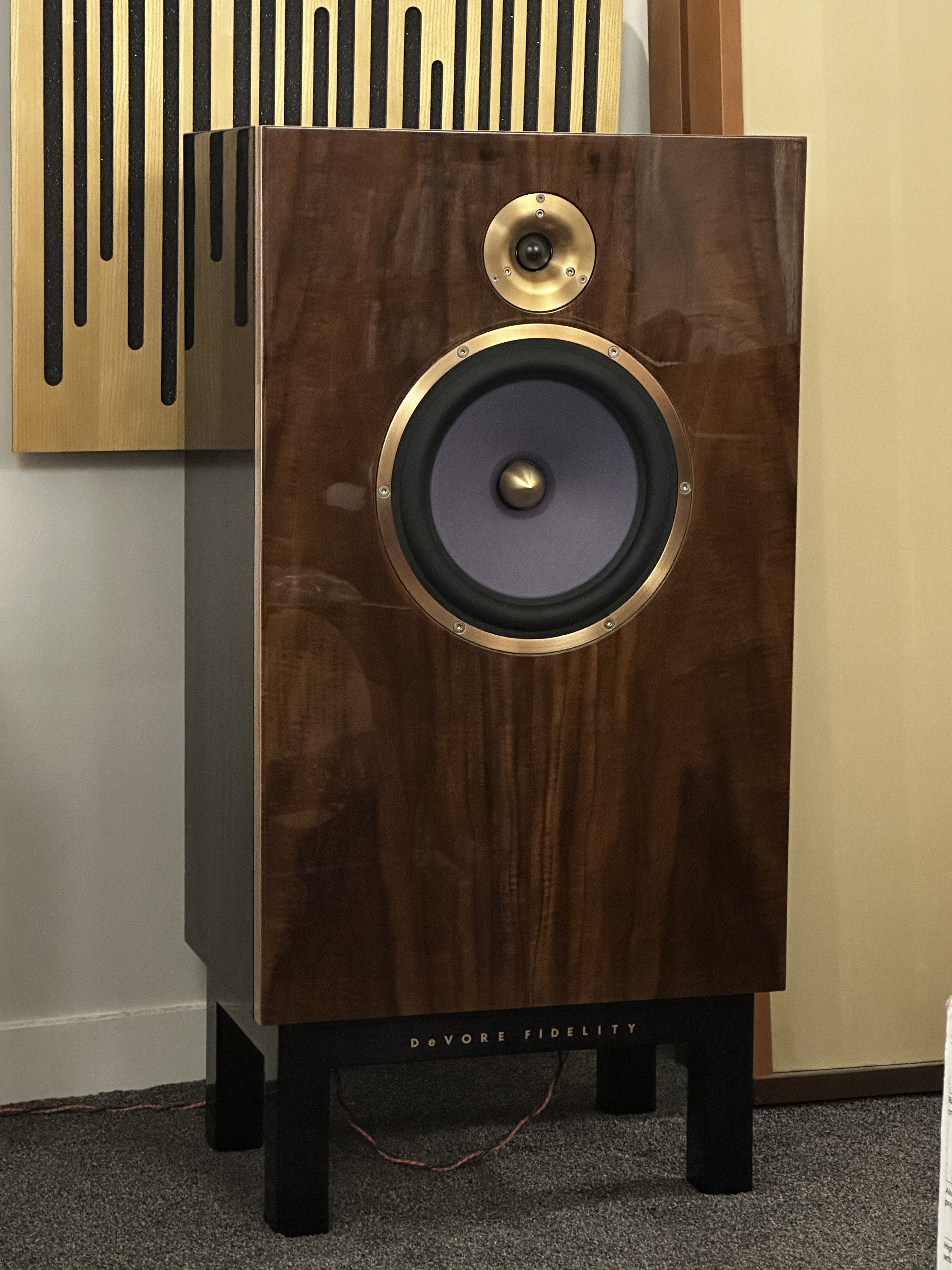
Waiting for something you’ve been eyeing for months can feel like a never-ending process. This is exactly how I felt when I ordered these speakers back in September. The anticipation was real, every day felt like it was dragging by as I counted down the weeks, eager to finally hear the speakers for myself. Now that they’ve arrived, I can honestly say they’ve been absolutely worth the wait. They look amazing. The American Black Walnut veneer is so cool and the fit and finish is exemplary, as expected. The subtle figuring of the veneer visible on the chassis is elegantly done. The bronze details accent the walnut really nicely and adds visual interest as the pictures show. Photos don’t really do them justice, as the cliche goes. They look extremely artisanal, which, in fact, they are.
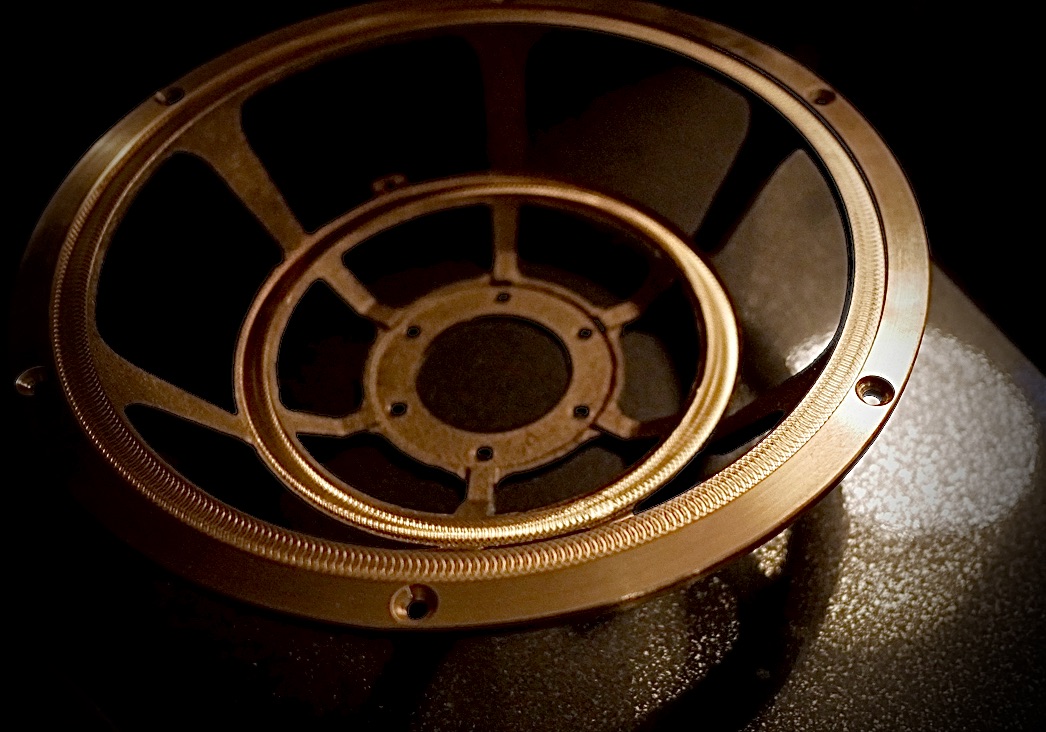
When I placed my order, I knew I would end up with a pair of speakers that were designed not just to sound good, but to make music feel alive. They promised a balanced, natural sound that works across genres, and I was definitely intrigued by the way they’re engineered to do that. John is known for his obsessive attention to detail. His philosophy is all about making speakers that don’t just reproduce sound accurately, but also engage the listener on a more fundamental level, to ‘communicate the life-breath of music’. The use of bronze in these speakers is very cool. Bronze, being a denser material, helps dampen unwanted vibrations and adds a certain richness to the sound. It makes for a speaker that’s both beautiful to look at and excellent to listen to. There’s definitely a lot of trickle down technology from the flagship O/Ref here. The tweeter is the same, the decoupled bronze ports, etcetera. Interestingly the armboard that holds my EMT tonearm on my turntable plinth, made by Auditorium 23 in Germany, is also fabricated in bronze. This metal is well known to have beneficial properties for audio. People who know, know. I guess bronze has been used for hundreds of years in a musical context, bells and cymbals come to mind. There must be other things as well.
I know of a couple of other manufacturers who have used bronze in their drivers, PHY-HP in France, and Living Voice in the Vox series, and there might be others too.
One of the things that made this purchase even more special was the opportunity to see behind the scenes of the craftsmanship that goes into each speaker.
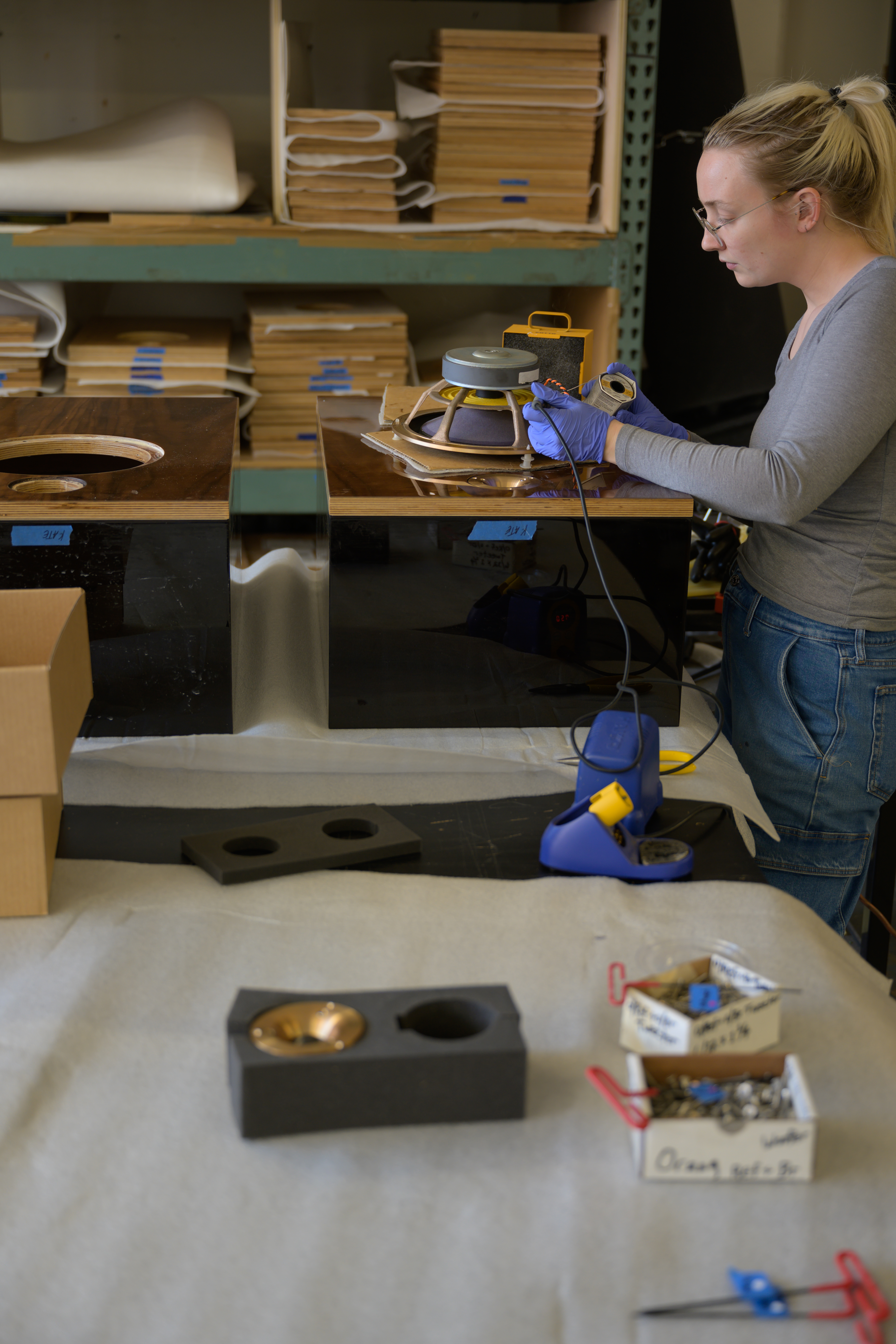

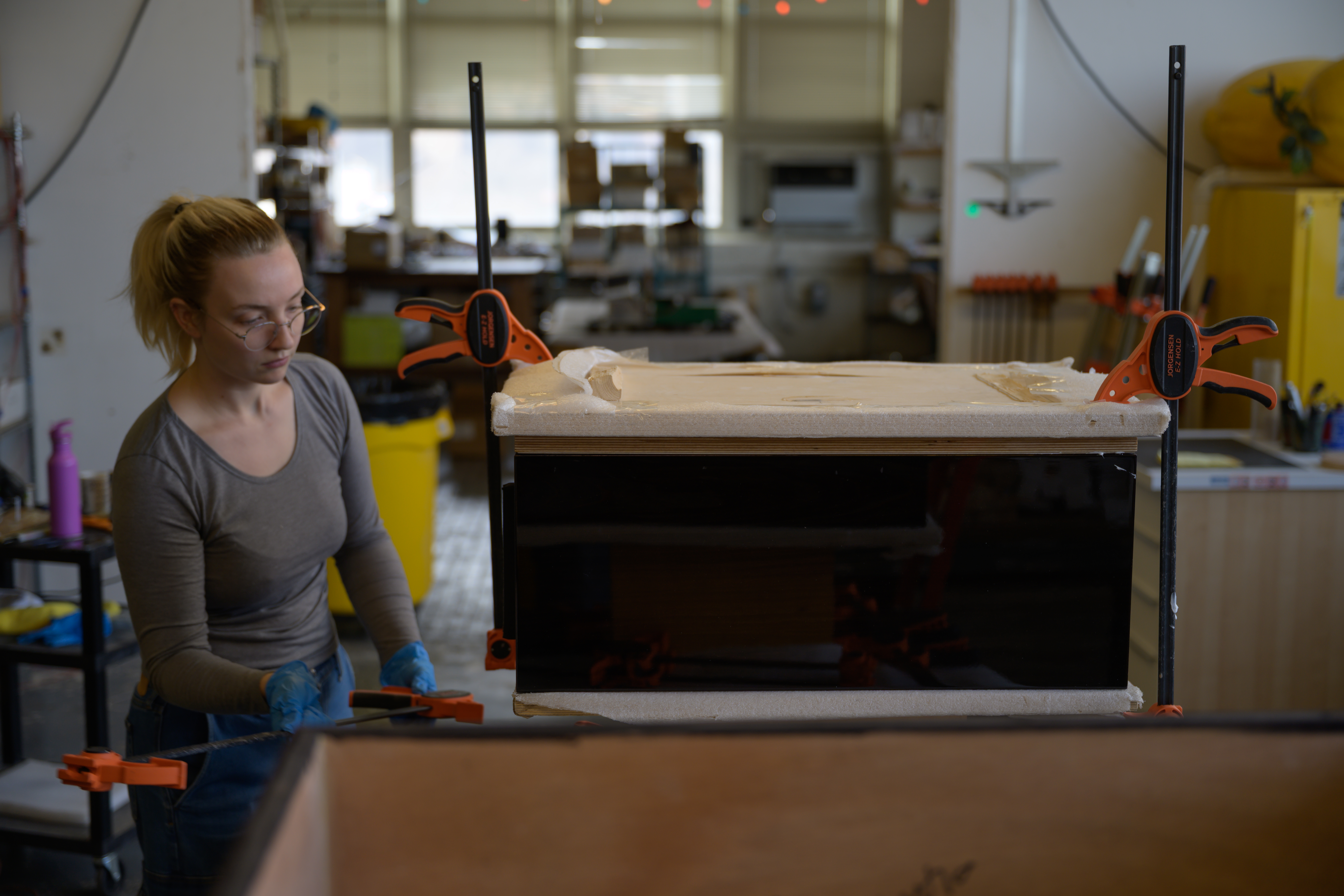
John kindly provided construction pictures showing skilled DeF worker bee Natalie carefully assembling my speakers, and it is excellent to witness the level of precision and dedication involved. Seeing the process unfold, from component parts to a finished speaker, gives an even deeper appreciation for the artistry behind these speakers. It’s one thing to hear about high-quality craftsmanship, but it’s another to actually see it in action.
There was a nice video by Jana Dagdagan for Darko Audio recently showing the construction process of some of the O/Baby speakers too, apparently she has one coming for the O/Ref too.
One of the things I was especially looking forward to was seeing how they would mesh with my Kondo Overture amplifier. The Kondo is an amp that’s known for its musicality, but it’s also a bit picky when it comes to the speakers it works well with. Its relatively low power of 30 watts or so suggests a speaker with an easy load would be the best match. With their 96 dB/12Ω efficiency, these speakers are very easy to drive. This means the amp can focus on what it does best, namely delivering a rich, lush sound without being bogged down by a tough load. The end result is a fluid, dynamic sound that just flows.
The Overture effortlessly powers the DeVores, and you can hear it in the music. Whether I’m listening to Heilung or Ulver or Iron Maiden, the speakers perform spectacularly, with no sense of compression or strain. Everything feels natural, alive, and open. They have this perfect balance of warmth, clarity, and detail. The midrange is lush, the lows are deep but controlled, and the highs have just the right amount of sparkle without being piercing, these speakers bring every note to life in a way that feels more like a live performance than just listening to a recording. What really impresses me is how effortlessly they filled the room with sound. They don’t just pump music in your face, they spread it out, creating a full, three-dimensional soundstage that wraps around you. It’s that they are here, versus you are there type thing. With the Bronzes you are transported to the event. Listening to Lifa by Heilung is a near transcendental experience. This system captures all the elements of that live performance so well.
My room isn’t even that big, albeit having a high stud height and being open to stairwells and stuff, but the forgiving nature of the DeVores assures they work well. I will tweak toe-in and whatnot over time, but for now they’re just plonked in the place where they will live. Out of the box I noticed how the speakers disappeared and portrayed an amazingly deep and wide, and high soundstage.
They have a lot of running in to do, 450-plus hours is recommended, but they really have been excellent freshly hatched from their crates.
I know many people are expecting me to compare these speakers to my Shindo Petite Latours, but I’m not going to do that, for a couple of reasons. First, they’re entirely different beasts. The Shindos are designed to work within their own carefully crafted ecosystem, using distinct design philosophies and driver types. While both are efficient and easy to drive, they achieve that in very different ways.
Secondly, the Shindo speakers aren’t even available for purchase right now. So, what’s the point in making direct comparisons? Honestly, I’m not a fan of ranking things against each other anyway. I prefer to judge each piece of gear on its own merits. They both sound incredible in their own ways. Aural memory is fickle, I can’t really remember specifics enough to give any meaningful comparison. I would imagine very few people will have heard the Shindos anyway.
Also, I’m no professional reviewer or writer and have never claimed to be. These are just my personal impressions, not some meticulously structured critique. Most of what I write is stream of consciousness. At the end of the day, almost everything can sound great if it’s used the right way and suits your taste. I’m not here to blow things out of proportion the way some magazines and reviews need to.
If you’re considering a pair of high-end speakers and are debating whether the O/Bronze is worth the wait, I can confidently say it absolutely is. With John’s thoughtful design and use of innovative materials, he’s created something truly special. The efficiency of these speakers makes them an ideal match for low-powered amps, making them perfect for tube amp lovers like me. The sound speaks for itself, rich, dynamic, and incredibly immersive. You could almost call them graceful with the way they handle sound. They have a really nice sense of light and shade, timbral textures are vivid and realistic. Very highly recommended by me. I’ll be keeping these for a long time.
The blurb:
The Orangutan O/Bronze fills the gap between DeVore Fidelity’s award-winning O/96 and our top of the line O/Reference. In a cabinet the same dimensions as the O/96 we use the tweeter from the O/Reference and a new 10″ paper cone woofer. Both drivers use the cast and machined bronze chassis from the O/Reference and deliver a new level of linearity and dynamic coherence for a speaker of this type. The port tubes are also made from bronze and like the O/Reference, they are isolated from the cabinet to minimize the effect of vibrations on the speaker performance.
Frequency Response: 26Hz-23kHz
Sensitivity: 96 dB/W/M
Impedance: 12 ohms
Dimensions: 12″d x 18″w x 35.5″h including stands
Finish Options: American Black Walnut, Lace Walnut, or Custom


 Audio Satori
You must be logged in to post a comment.