

The Grimm Audio PW1 Phono Stage
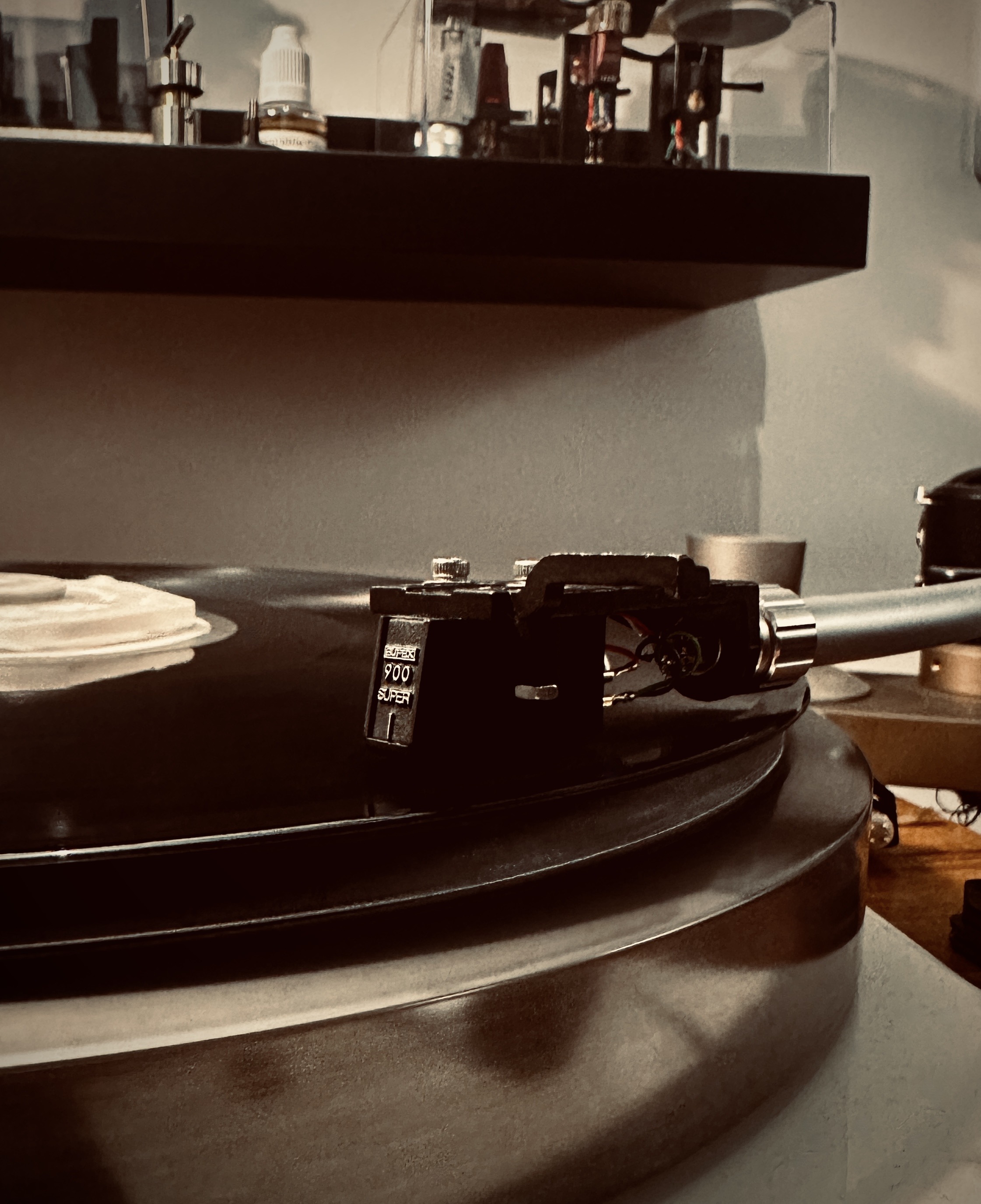
Being in the audio industry comes with its perks, chief among them, the chance to be able to play with all kinds of gear that most people only read about. Arguably its the main reason people stay in the industry… There’s fun to be had in exploring how different components shape sound, and recently I had the opportunity to investigate a cool phono stage: the Grimm Audio PW1, with no intention to purchase. In high-end audio, some components disappear so completely that the music seems to exist independently of the system. The PW1 is one of them. Compact and understated, it allows the cartridge to define the music rather than asserting its own voice. Over a few days of listening, paired primarily with my vintage Supex SD-900 Super, I had a chance to get to know this brand.
The Supex itself is a fascinating piece of history: a pre-Koetsu design by Yoshinori Sugano, with low output, meticulously wound coils, and tonal philosophy that foreshadowed the later Koetsu sound. After a long time in storage, revisiting it through the Grimm revealed qualities I had long forgotten: evenness, flow, and a natural weight in the music.
Design, Construction, and Adjustability
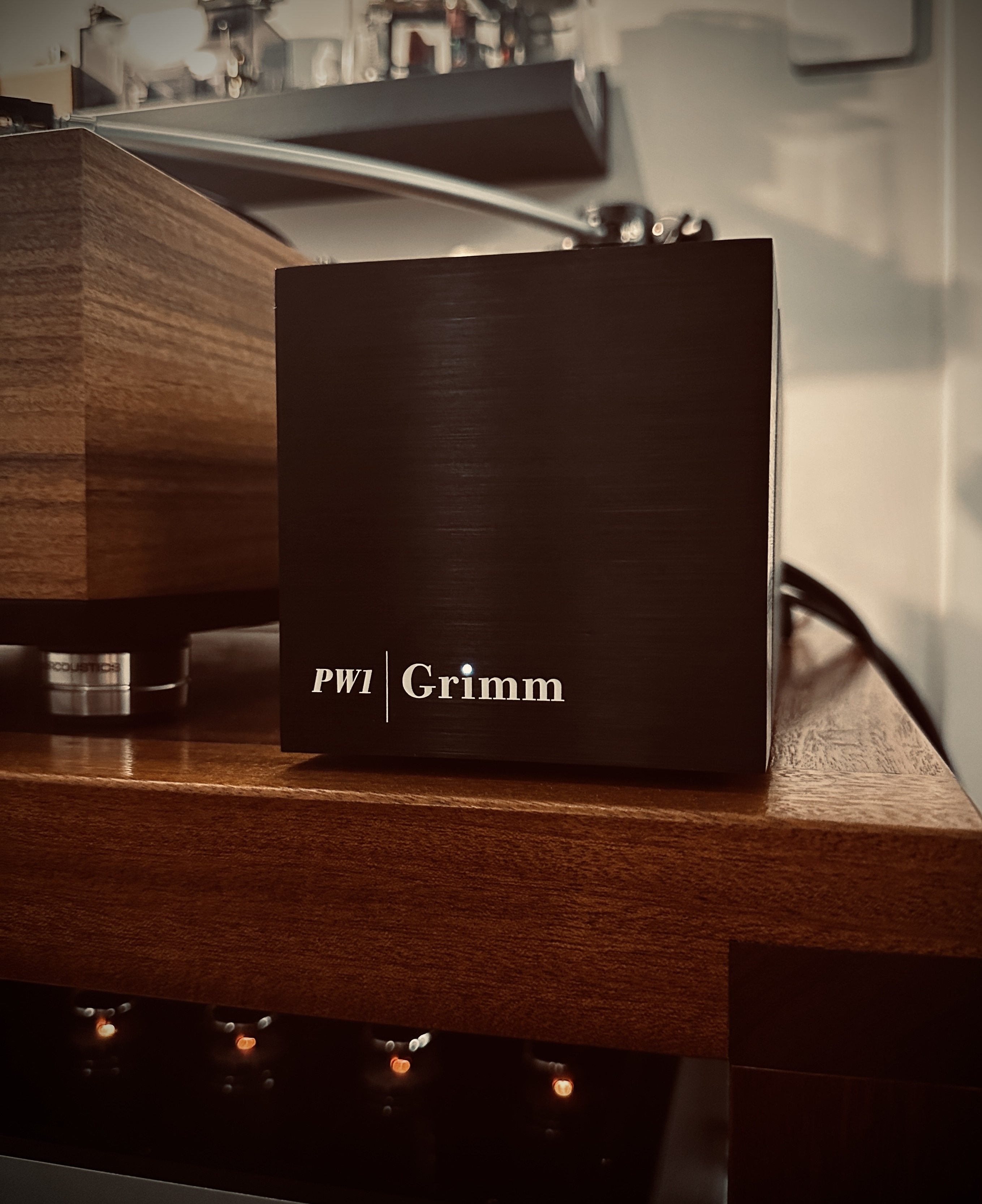
The PW1 is deceptively simple at first glance, but every detail speaks of careful thought. Measuring roughly 10cm square and 25cm long, it houses both power supply and amplification circuitry in a single, shielded box, a feature that keeps noise to an absolute minimum. A thorough PDF manual lays out all the specs clearly, and for those who prefer paper, a printed version is included. But more interesting is the PW1 itself.
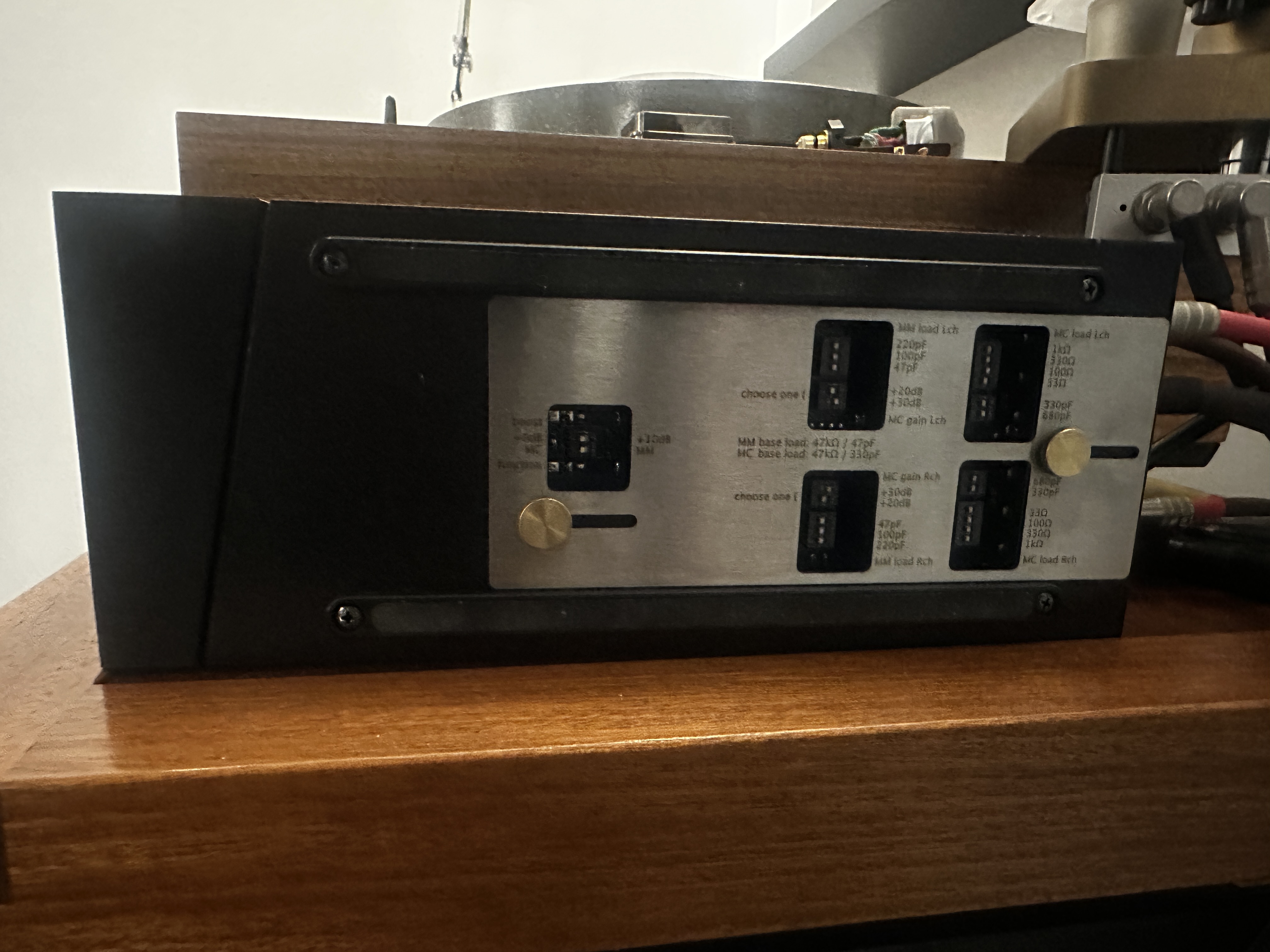
The bottom control panel is bordered by substantial rubber strips, with a slidable metal door secured by two large brass thumbscrews. Beneath this panel, five small windows hold multiple dip switch adjustments. Arranged in a mirrored left/right channel layout, one window provides access to a boost function (+0dB , +10dB ). MC can be set to +20 dB or +30 dB gain. The remaining switches handle loading: for MM, 47pF, 100pF, and 220pF; for MC, 1kΩ, 33Ω, 100Ω, and 330Ω, plus 330pF and 680pF. It’s extremely well-constructed, nicely adjustable, and intuitive once you spend a few minutes with it.
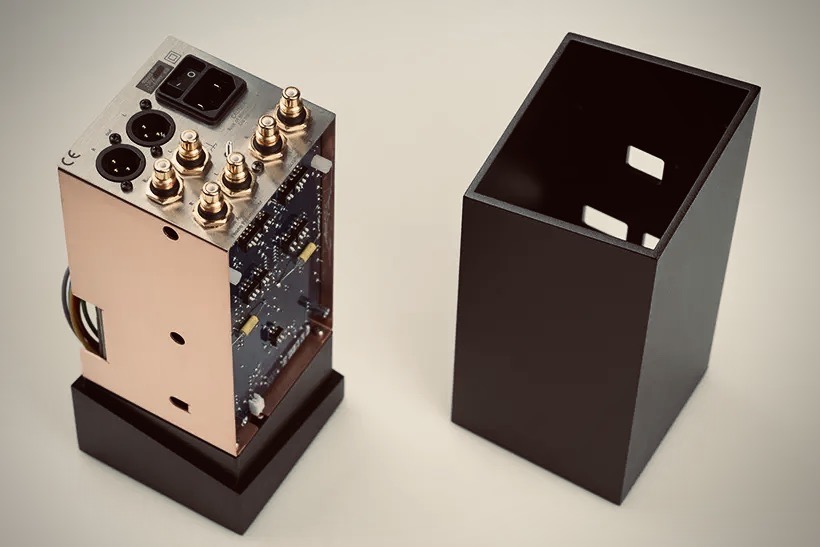
The front panel sits ahead of a subtle, diagonally cut indentation seam and features a single LED that glows white when powered. At the rear, heavy-duty RCA inputs for MM and MC are accompanied by both RCA and XLR outputs, a master power switch, and a ground screw. The PW1 is finished in black brushed aluminium, restrained but undeniably elegant.
My Dying Bride: The Angel and the Dark River
The first notes through the PW1 confirmed its character: utterly silent background, tonal evenness, and dynamic control. The Supex rendered the guitars with natural decay and texture. Bass had warmth, but not the clichéd “tube warmth”, instead the natural bloom of real instruments in a physical space.
Vocals floated effortlessly; every breath and subtle inflection was present without being pushed forward. The Grimm allowed the music’s scale to breathe, giving depth and dimension. Comparing briefly with the Kondo GE-1, the Kondo added more body and tactility, the same notes felt more “flesh-and-blood.” The DS Audio E3, meanwhile, revealed microscopic detail, but lost some of the sense of natural bloom and weight that made the Supex + Grimm pairing so engaging.
Heilung: LIFA (Iotungard)
With Heilung, the PW1’s ability to handle complex, layered material was remarkable. Drums, chants, and environmental sounds unfolded with clarity and spatial coherence. The low-end of the bass drums had a physicality that made you feel the resonance in your chest, while each voice carried in space without congestion.
The Supex captured subtle attack and decay, and the PW1 preserved them without too much colouration. Compared to the Kondo, the Grimm is slightly cooler, allowing you to notice the placement of each instrument in the recording rather than emphasising its “humanity.” Against the DS Audio E3, the Grimm offered a more physical sense of the music, less abstract but equally revealing of subtle detail.
Barn Owl: Shadowland
Shadowland tested the system’s handling of drones and sustained textures. The Grimm + Supex combination produced long, controlled decays, keeping each layer distinct without creating a sense of separation that feels unnatural. Reverb tails were intact, and the scale of the soundstage felt believable.
The Kondo brought more density, making the drones feel “heavier” and more tactile, whereas the DS Audio rendered them with microscopic precision but slightly less spatial realism. The Grimm maintained a perfect middle ground: cohesive, and musically rewarding.
Supex SD-900 Super
Revisiting the Supex SD-900 reminded me why early Sugano designs still matter. Its low output, precise coil geometry, and tonal philosophy, prioritising proportionality and musical truth, allow it to thrive on the PW1’s quiet, neutral platform. Nothing is exaggerated. Timing, note weight, and spatial coherence are preserved. Surface noise was super low as well. Any ticks and pops were very unobtrusive.
Through the Grimm, the Supex reveals subtleties you might have forgotten existed: the air around instruments, the motion of a bass note through a room, or the interplay of layers in dense recordings. This proto-Koetsu design is deceptively capable, and the PW1 provides the perfect environment to hear it fully.
Comparative Perspective
Alternating with the Kondo GE-1 and DS Audio E3 highlighted the PW1’s unique strengths.
- Kondo GE-1: Denser, more tactile, slightly more emotionally immediate. Human presence is emphasised; music feels more “alive,” maybe slightly less neutral.
- DS Audio E3: Extraordinary detail and separation. Backgrounds are silent, transients sharp, but sometimes a bit abstract and detached from physicality.
- Grimm PW1: Balances neutrality, detail, and musicality. Nothing jumps out; everything is coherent, proportional, and believable. Perfect for long listening sessions.
It’s not exactly comparing apples with apples when bringing the DS Audio into the discussion, it’s a complete system, using its own optical cartridge, operating on a fundamentally different principle than conventional phono setups. Likewise, the Kondo GE-1 sits in a very different price bracket, at roughly three times the cost of the Grimm. Still, the point here isn’t price-matching or topology debates, but rather a comparative listening within the context of what I own and know well, exploring how each conveys music’s character and emotional weight. For clarity, I didn’t use a step-up transformer with the Grimm, whereas the Kondo was paired with my Supex SDT-77 SUT, as I normally would when using the SD900.
Timing, Dynamics, and Musicality
The PW1 impresses with rhythm and decay. Transients are clean, dynamic contrasts are wide, and notes retain shape. The Supex responds with fluidity, and the music flows naturally. Evenness is the defining feature: highs extend without harshness, mids articulate subtleties, and bass blooms naturally in the space.
This neutrality is its strength. The PW1 never imposes, never colours, yet allows the full spectrum of musical nuance to be revealed. It’s the sound of music existing in its own right, not filtered through a designer’s signature.

The Grimm Audio PW1, paired with the Supex SD-900, is a system that reveals the heart of vinyl. Neutral and silent, and with nice precision, which allows the Supex’s pre-Koetsu voice to flourish: balanced, and musically satisfying, there’s a great sense of proportion overall with everything sounding correct and ‘in its place’. Compared with the Kondo GE-1 and DS Audio E3, the PW1 occupies the perfect middle ground: technically accomplished without losing musical soul.
While the Kondo remains my personal favourite for its human density and tactile immediacy, the Grimm PW1 is a phono stage I could happily live with for years. It doesn’t chase emotion, it delivers it through balance and authority. I wish I had more time with it. The Supex, after years of rest, proves that great analog design never truly fades. With the right phono stage, it still has plenty to say.
There’s a good review here by Christiaan Punter of Hifi Advice as well.
Ken Kessler recently reviewed it too and came to the same conclusions I did.


 Audio Satori
You must be logged in to post a comment.