
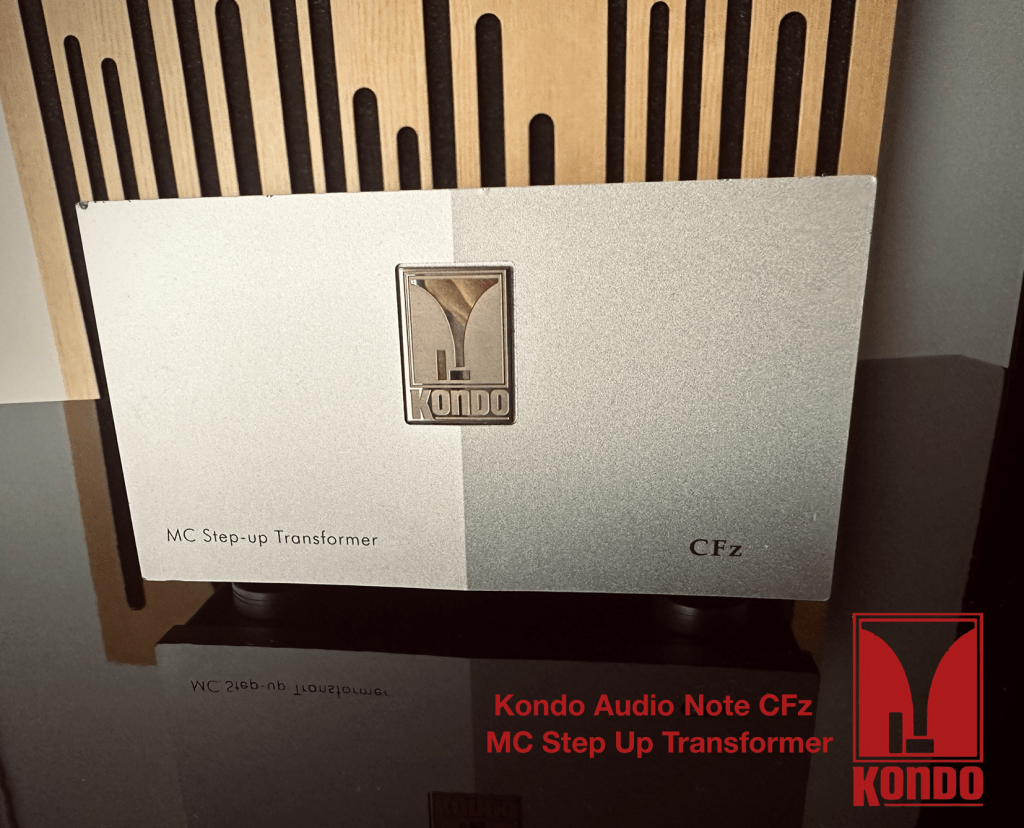
Another gadget has joined the arsenal. Step up transformers have become something of an obsession for me, not just as tools but as instruments in their own right. I’m constantly learning things about the dark arts of phono reproduction. Each one reveals a different way of hearing the same truth. The latest addition is the Kondo CFz. I had the opportunity to acquire it at a fair price, and given the Kondo heart of my system it made sense to grab it while I could. I had to sell my A23 T1 SUT to make it happen though, which was unfortunate, but this sort of fills that niche anyway.
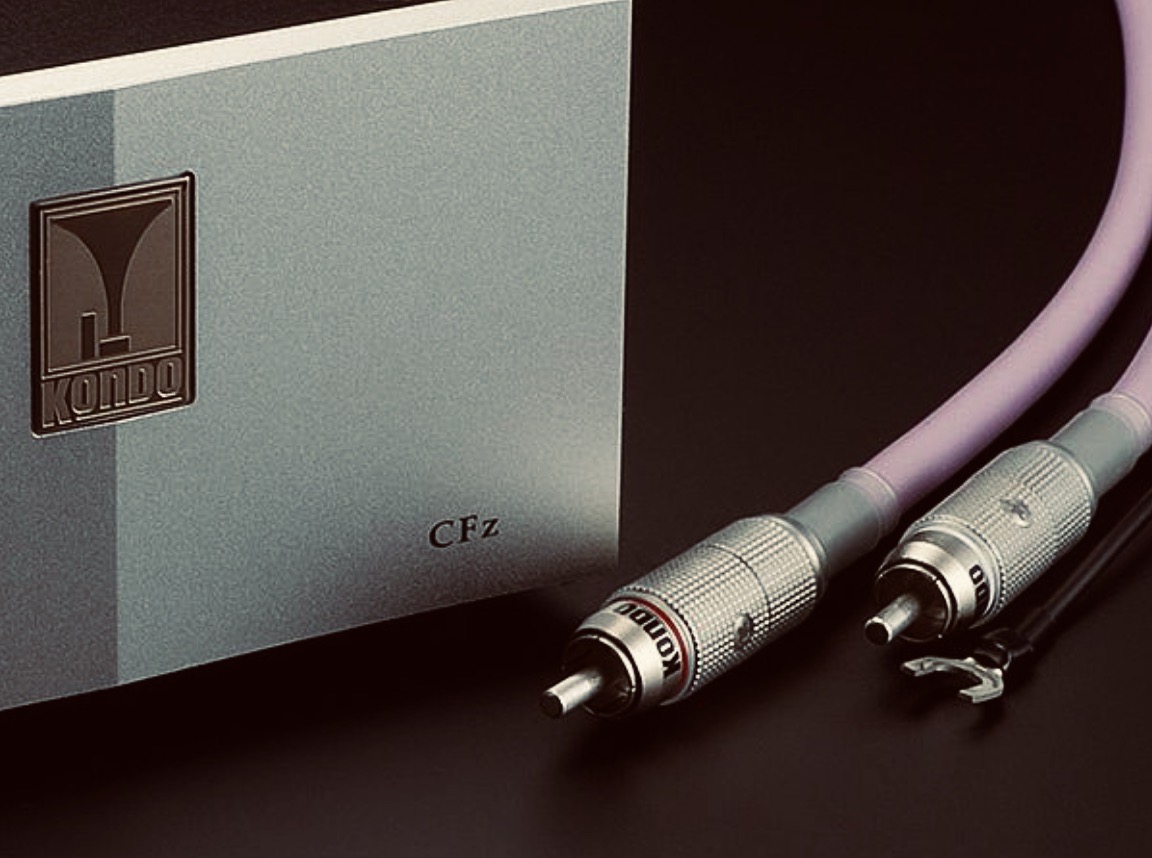
Being around Kondo gear always feels like stepping into an alternate dimension of audio, one where the obsessive disappears into the effortless and engineering turns into something poetic. The CFz isn’t particularly ostentatious. No switches, no LEDs, no visual fanfare, just a perfectly damped copper case, hand finished, some nice RCA sockets, with a Kondo KSL VcII copper output cable trailing from the rear. Inside that case lies a masterclass in transformer art that amplifies a whisper into a voice without changing its soul.
Design and Philosophy
The CFz is Kondo’s copper wired moving coil transformer, sitting below the exalted silver wound SFz but sharing its design DNA. In combination with a phono amplifier like the GE-1, the CFz is one of the best MC step-up transformers for recovering the rich musicality and highest sound quality from an analog disc.
The design draws on decades of Kondo’s silver wire expertise, applying it in copper with a new and original winding technique. A strong core, using the same design and material as the SFz, further improves sound quality. The result is an open and natural sound with stunning freshness, offering delicate expression and a wide dynamic range.
The CFz employs a newly developed multi-layer winding structure specialised for pure copper wires, producing rich sound with refined smoothness. The large core is laminated with ultra-thin 0.1 mm permalloy layers, which suppresses eddy currents and hysteresis losses while realising ultra-low distortion and maintaining a flat response up to 100 kHz. The core has a big sectional area and a short magnetic circuit path, ensuring deep, controlled bass.

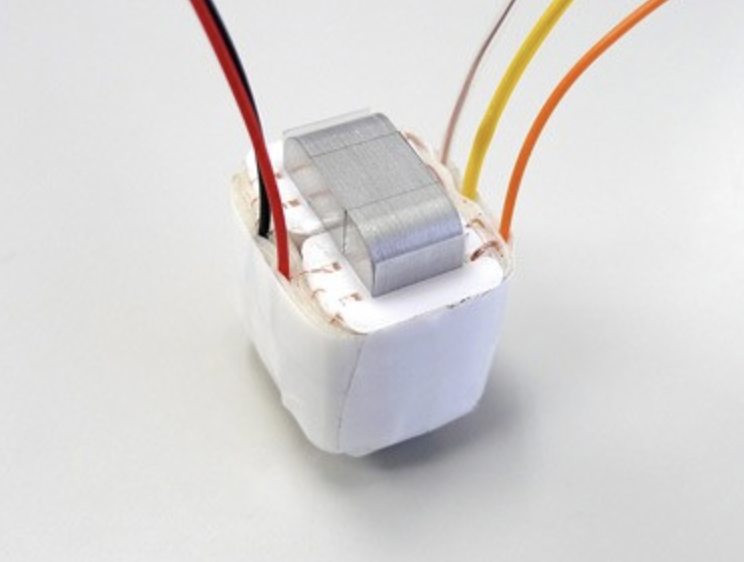

A double shield structure, permalloy outer case and pure copper inner case, protects against magnetic and electrostatic interference. Double float mechanical damping using carefully selected materials, along with damping gel and specially chosen rubber feet, further minimises vibration. Signal output is direct, with minimal connections, and the KSL-VcII copper cable is used as the output lead.
The pure copper chassis guarantees open and stable sound. The multi-layer winding maintains flat frequency response, with peaking less than 1.5 dB even under no load when connected to a phono amplifier with 47 kΩ input impedance. Mechanically, everything is mounted with care to reduce microphony, allowing the CFz to deliver its stunning sense of space and tone without interference from vibration or resonance.
There are two primary inputs, 1.5 Ω and 30 Ω, corresponding roughly to 1:50 (34 dB) and 1:10 (20 dB) gain ratios. It is intended for cartridges between about 1 and 40 Ω internal impedance, with the lower tap clearly the reference.
This is not an analytical device. It is about tone, weight, and space, the natural way harmonics hang in air and dissolve into silence.

Cartridge Pairing and System Context
I ran the CFz with a broad mix of cartridges, each with a distinct personality:
Hana ML, Supex SD 900 Super, EMT JSD6, EMT Anniversary, Ortofon SPU Classic #1, and Ortofon SPU AE.
The CFz fed into my Kondo GE-1 phono stage at 47 kΩ, with loading determined purely by the step up ratio. That pairing immediately felt right, as though the transformer and phono stage shared the same dialect. The tonal consistency, low noise, and sense of unforced energy between them made the GE-1 the perfect companion for the CFz.
For this round of listening I deliberately limited my music choices, partly because aural memory, even in the immediate term, is fickle, and partly for expediency. A handful of familiar reference points tells me more than an endless carousel of records. I settled on four albums I know intimately, each chosen for what it reveals. Heilung’s Lifa, recorded live, is a primal collision of ritual percussion, voice, and space, a perfect test of dimensionality and low-level detail. Iron Maiden’s Piece of Mind remains a touchstone for drive, tone, and coherence; if a system can keep Steve Harris’s bass, Nicko’s drums, and the twin guitars all in balance while letting Bruce soar above, the timing and tonality are right. Dead Can Dance’s Toward the Within is a masterclass in recorded ambience and texture, its blend of ancient instruments and ethereal vocals laying bare how a component handles harmonic decay and hall reverb. And Pan Daijing’s Jade is the wild card, dense, modern, and spatially abstract, pushing dynamics, transient response, and spatial layering to the edge. Together they provide a concise but revealing lens into how a system breathes, moves, and resolves emotional cues.
Hana ML
Electrically, the Hana ML is higher in impedance than the CFz’s “ideal” low impedance range.
Having said that, the Hana is a fairly musical partner for the CFz, despite the 8 Ω internal impedance and 0.4 mV output.
This means the 1.5 Ω tap underloads it a little, resulting in a slightly softer low end and a touch looser damping compared to SPUs or the Supex SD 900 Super. Using the 30 Ω tap brings the loading closer to optimal, giving tighter bass and more control, though at the cost of slightly lower gain. The CFz opens up the Hana’s harmonic structure, and with nice phrasing, microdynamics, and tonal inflection.
Despite this, the musical result remains extremely engaging. The Hana ML is balanced, confident, and musically whole, demonstrating that a slightly non-ideal electrical match can still produce a satisfying sonic experience, not my first choice though.

Supex SD 900 Super
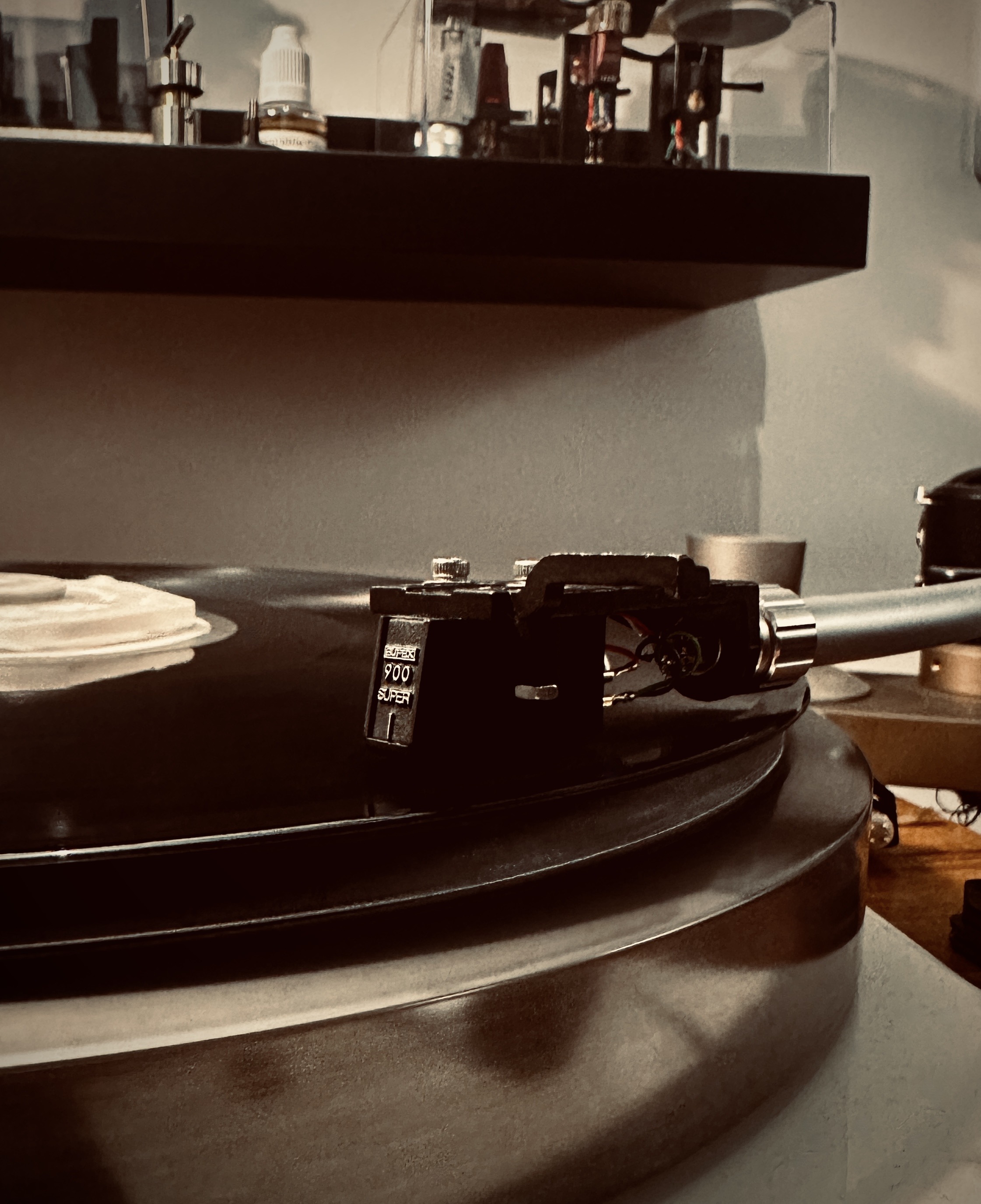
The Supex feels like home turf for the CFz. Designed in an era when SUTs were not optional but integral, the SD 900 Super locks in perfectly with the 1.5 Ω input. The presentation is rich yet clear, tactile yet never thick. Piano has weight and bloom, cymbals hang in three dimensional space, and vocals carry that human warmth that separates playback from reproduction. Black backgrounds, gentle liquidity, and a midrange that glows without glare create a sense of effortless musicality.
Where the Hana refines, the Supex embraces. The tonal saturation here is pure analogue gold, slightly vintage in texture, and really addictive.
Ortofon SPU Classic #1 & SPU AE
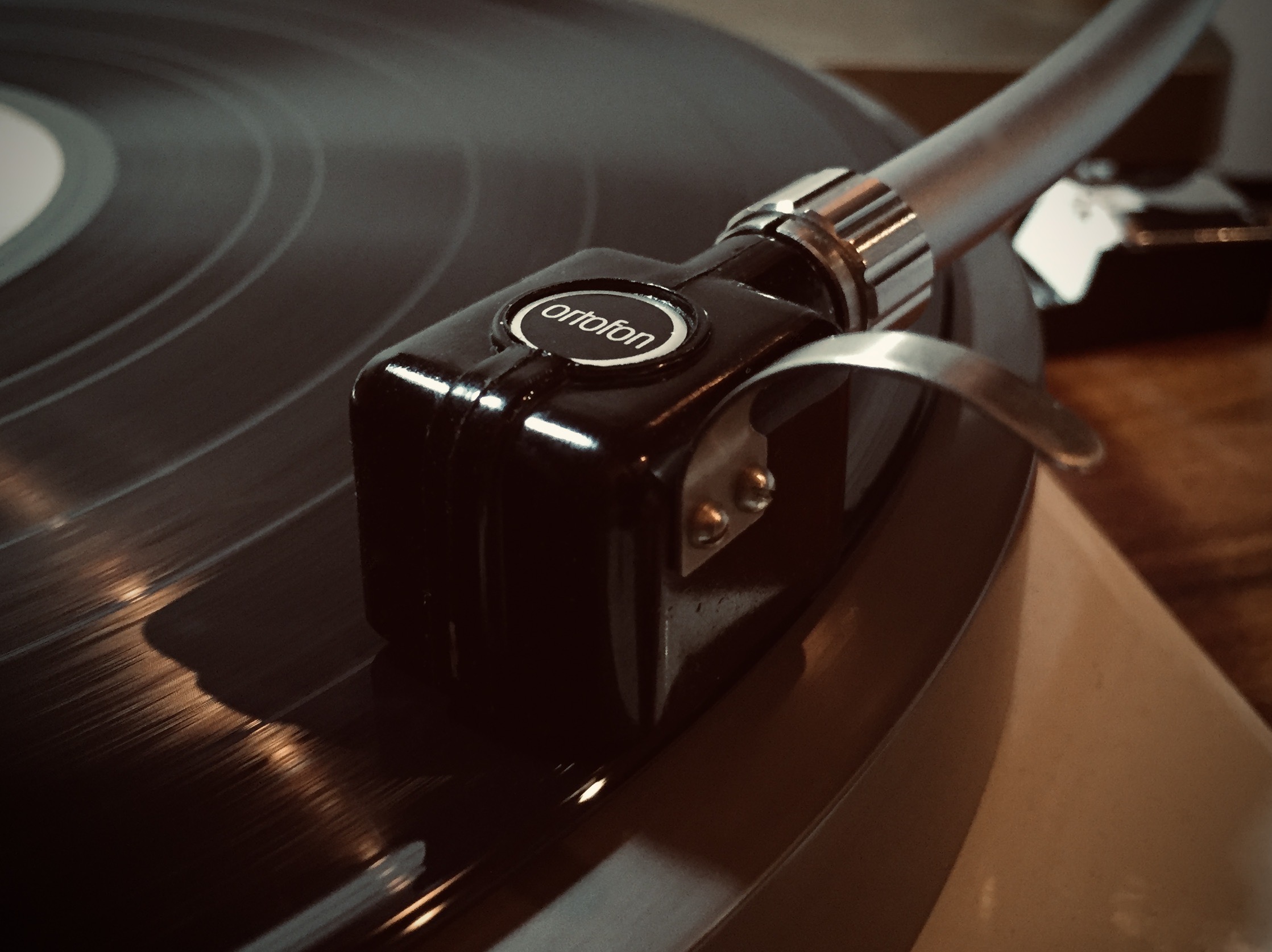
These are the spiritual partners for the CFz. Both SPUs are low output (0.2 mV), low impedance (2–3 Ω) cartridges that practically demand transformer coupling. On the 1.5 Ω setting, the CFz delivers them with majestic scale and density. There is physicality and dimensionality in the soundstage, not overblown, but grounded and convincing.
The CFz gives the SPUs the gain they require while preserving their natural nobility of tone. The sound is solid and organic, and unforced. Exactly what you hope for when combining old world cartridge design with Kondo’s modern mastery.

EMT JSD6 & EMT Anniversary
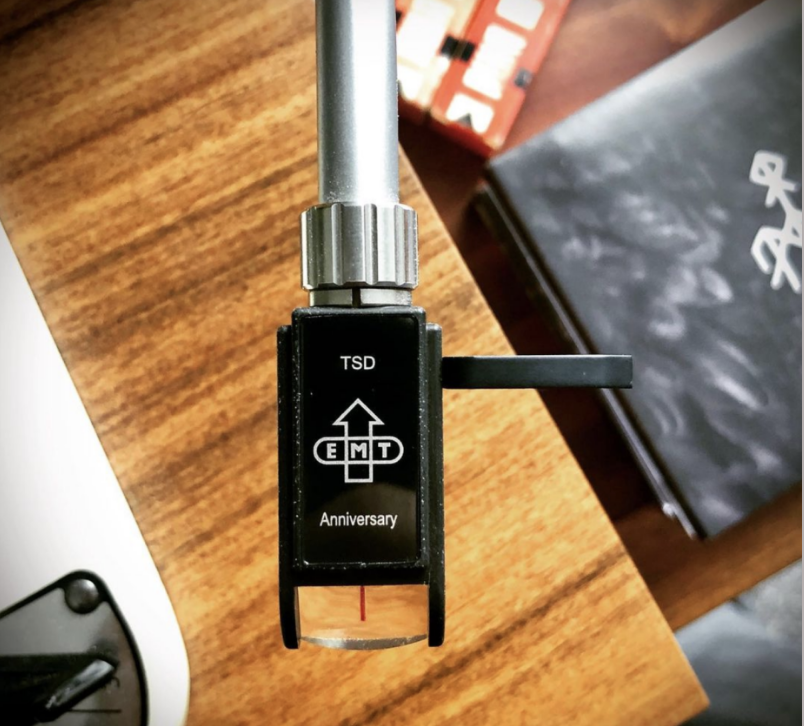
Both EMTs are magnificent transducers, higher output (~1 mV), 20–24 Ω impedance, and naturally lively in character, but in truth they sit a little outside the CFz’s comfort zone. On the 30 Ω input, the match is functional but not magical. Dynamics flatten slightly, and the signature Kondo transparency turns just a bit opaque.
These EMTs sing far better through my A23 T2 Hommage SUT, which clearly hits their sweet spot in impedance and gain. The T2 retains their sparkle, pace, and drive, while the CFz, in this context, feels like a velvet glove on a sprinter. Beautiful, but too restrained.

Listening Impressions
The defining characteristic of the CFz is quiet. Not a sterile absence of noise, but a living, organic silence. A canvas that lets color, texture, and phrasing emerge unforced. The tonal purity is remarkable: copper warmth, yes, but balanced with harmonic air and a sense of space that breathes.
The Kondo GE-1/CFz combination is about inhabiting the music. Instruments feel weighty, harmonics bloom naturally, and the midrange carries an effortless realism. In contrast, the Grimm PW-1 I recently had time with is more forensic. It resolves with pinpoint clarity and layers textures in a way that is almost surgical, rewarding close listening to micro-dynamics and detail. While the Kondo emphasises musical flow, tonal warmth, and narrative, the Grimm emphasises analytical insight, revealing the architecture of the signal. Listening to the Kondo, you live in the music; listening to the Grimm, you study it. Both are revelatory, but the contrast highlights how philosophy and design choices in high-end phono gear shape the listening experience.
The Kondo doesn’t shout its virtues. You just notice you have stopped analysing the sound and started listening to the music. Instruments occupy their own clearly lit corners of the stage, yet the whole picture feels coherent. A unified, natural organism rather than an assembly of parts.

The Kondo isn’t really about measurement or specification. It is about flow, the ability to let energy and tone move through the system without impedance of any kind. Among my cartridges, the Hana ML is an engaging, if non ideal partner, the Supex SD 900 Super brings body and soul, and the SPUs deliver grandeur and gravitas. The EMTs, fine cartridges though they are, simply find their truest expression through the A23 T2 Hommage.
The CFz is the kind of component that anchors a system for decades. If the silver SFz is a mirror reflecting perfection, the CFz is a window, slightly warm to the touch and transparent.
I also have a couple of other interesting pieces waiting for their turn on the bench; the Fonolab Eqves Mannus, interestingly designed specifically for MM/MI cartridges, and the Aurorasound AFE-10 MM Expander. When time allows, those will no doubt open up yet another set of sonic questions to explore. I would also like to eventually get hold of a Kondo IO-M cartridge, which I suspect will provide yet another layer of insight and nuance in combination with this family of Kondo components. Good things take time (and money) though… I also have one or two other secret projects ongoing that will eventually see the light of day as I get more time to dedicate to them. Time is a very scarce resource these days.


 Audio Satori
You must be logged in to post a comment.