
Occasionally I come across a piece of gear reminds me that audio history was built by people who designed tools, not trophies. The Ortofon RF-297 is one of those reminders. It was created for radio studios, meant to sit on an EMT 927/R80 and run all day with heavy cartridges and serious tracking force. Nothing about it feels particularly ornamental. It is a working instrument with a very clear purpose.
I recently had the chance to inspect one as part of a possible rewire job. I went in thinking it would be fairly straightforward. It was not. The arm defeated me that day, the first one to do so. I did a lot of prep work fabricating an intricate wiring loom for it that I had anticipated I would be able to easily feed through, like I have done with so many other arms over the years, but no… Its construction is far more interconnected and over built than most vintage arms, and you can feel the broadcast mentality in every part you try to loosen. But it left a strong impression. The engineering is serious, the design intent is obvious, and by the time it left I knew I wanted one for myself.
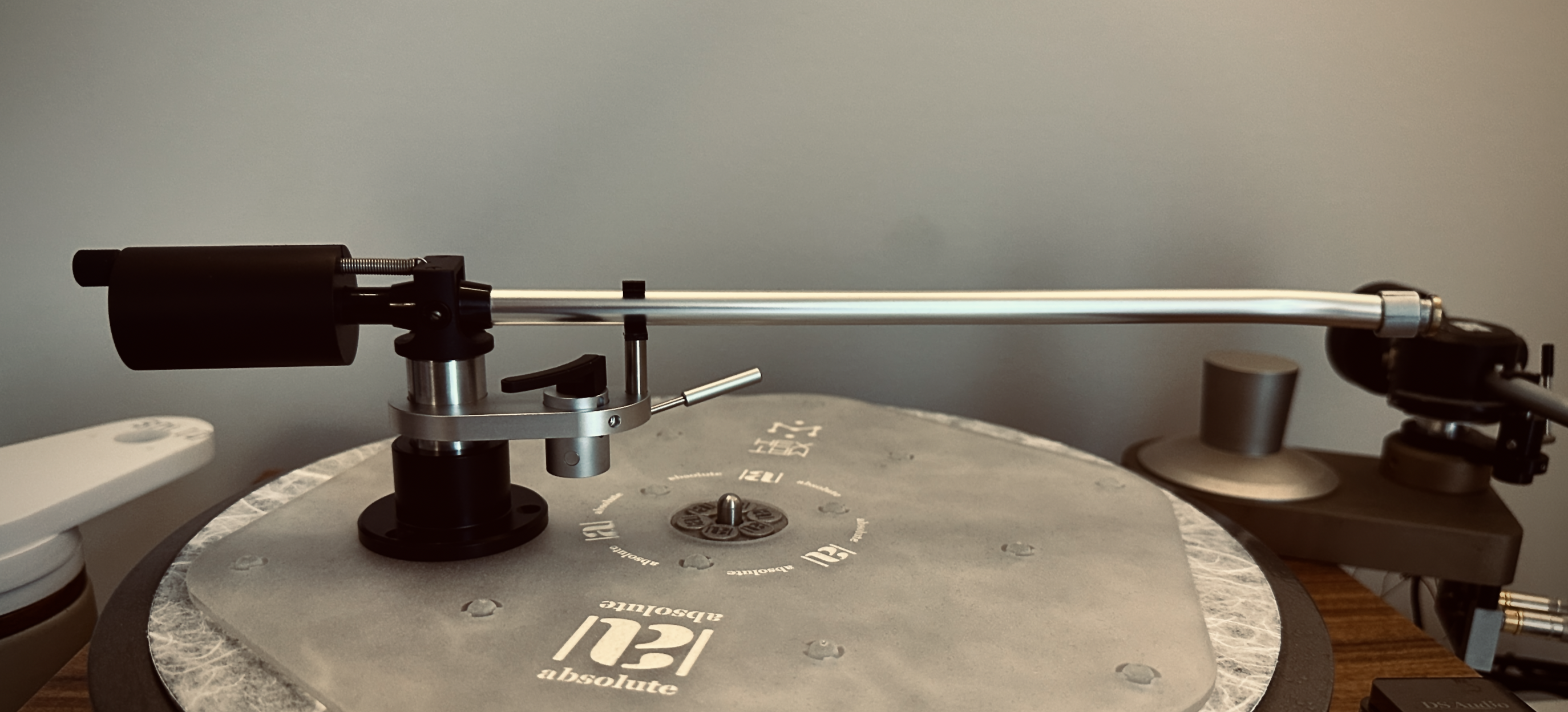
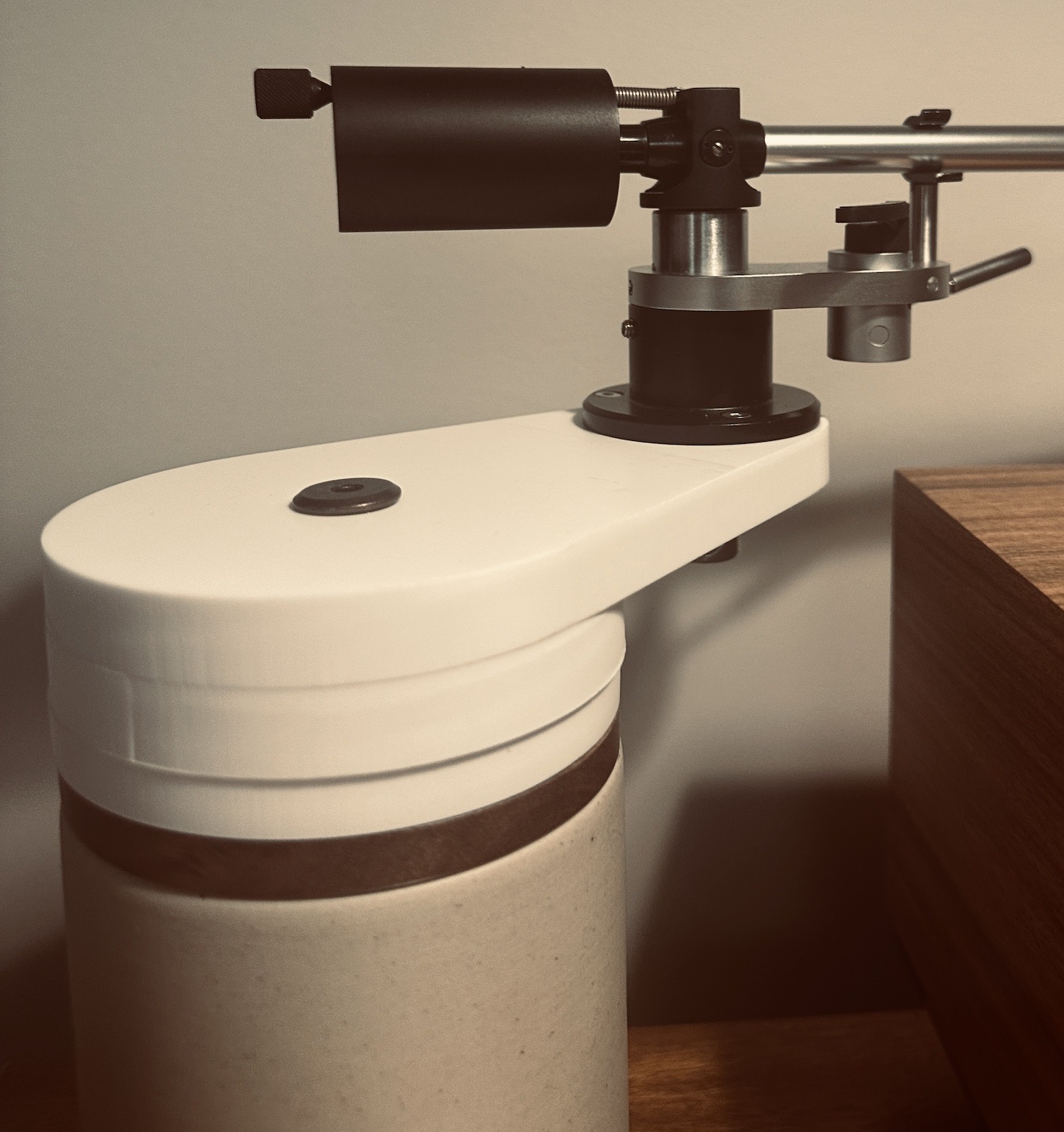
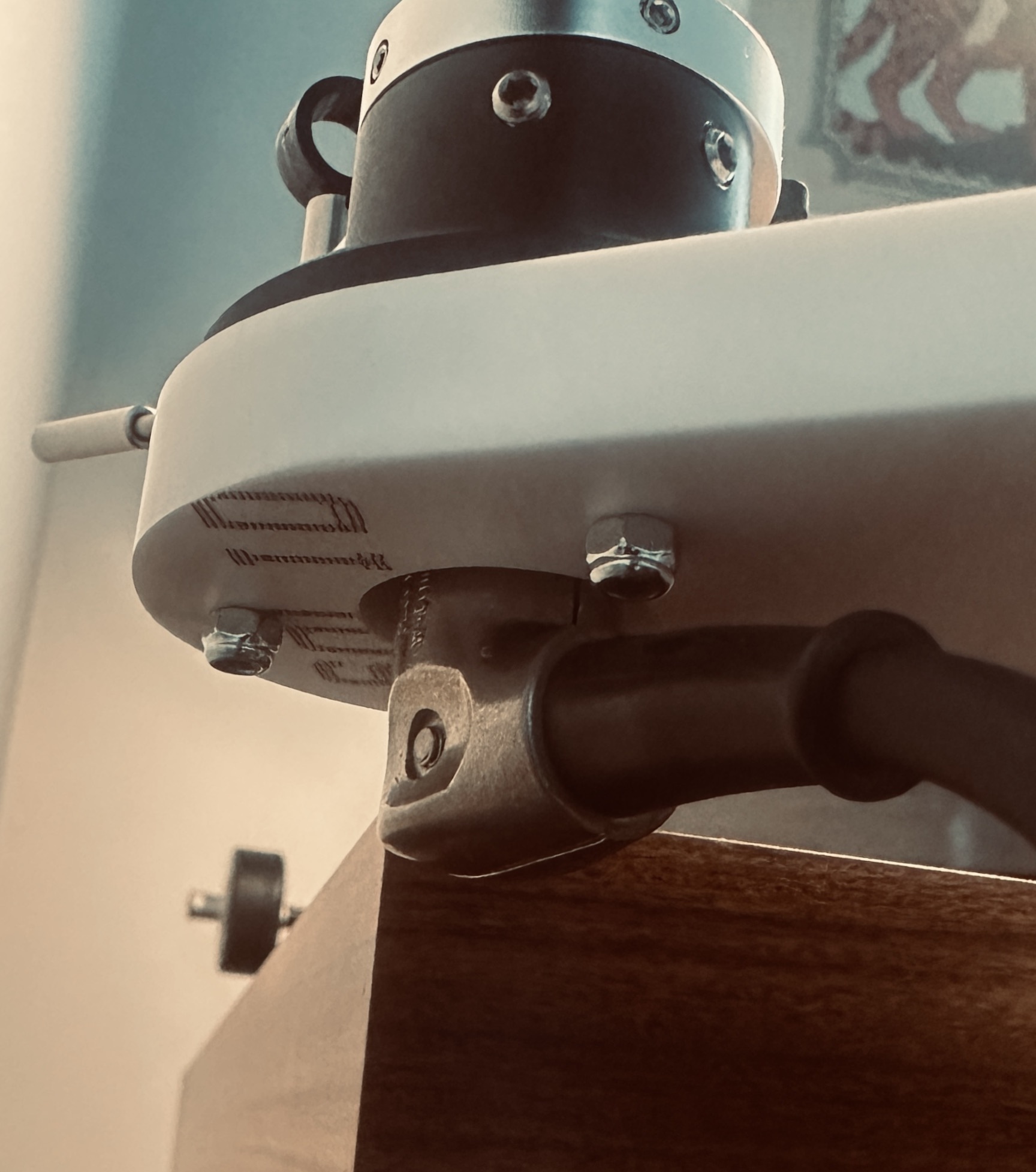
That set off the usual hunt, and eventually I found an incomplete RF-297 in average condition from a seller in Japan. The arm tube has a few marks, but nothing too bad. Luckily, I still had some spare parts from my EMT 997 that were suitable, mainly the arm mounting collar which you can see in the picture above, so it became a proper restoration project rather than a parts bin curiosity. It will also get its own dedicated arm pod, which I am having partially fabricated by a friend. The plan is corian as the primary material, but with my own twist on the base, so its supported the way this sort of broadcast hardware expects, but in keeping with my Japandi themed set up. I had a cool ceramic container that was about the right height that I have filled with lead weights and fine silica sand to weigh it down and dampen resonance. I had a corian piece made up to fit into the wooden lid and it has made the perfect height arm pod. I have tested the prototype and finalised the design, so will get the bits fabricated for final assembly. I’ll do an update once that’s done.
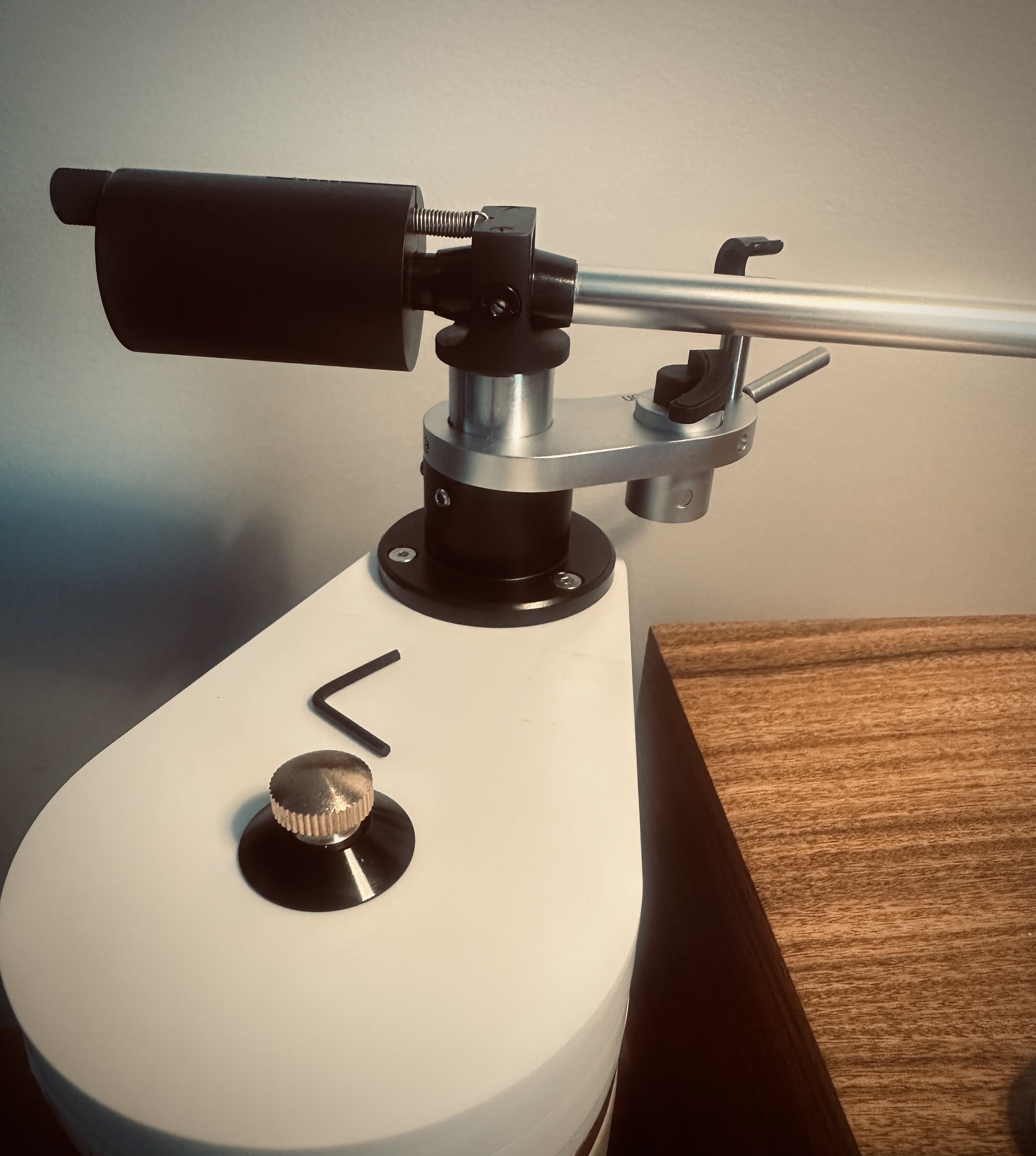

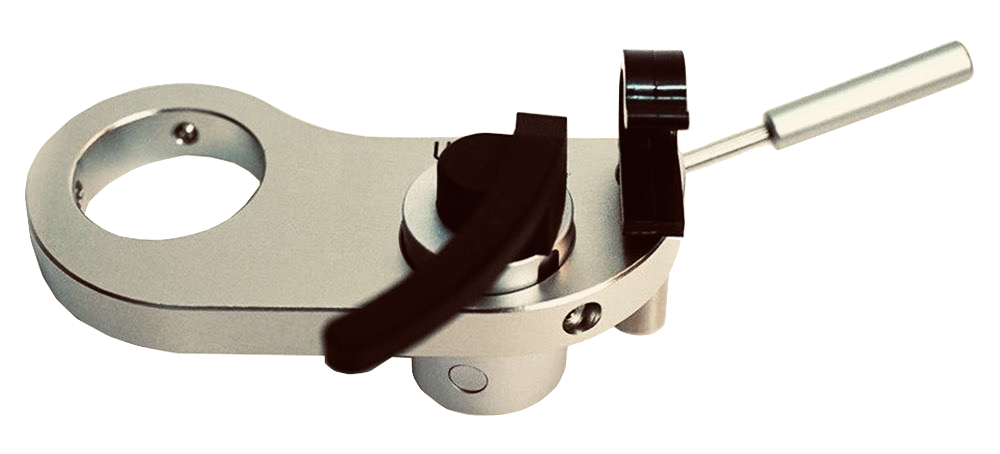
I also tracked down an Ortofon AL-1 arm lifter for it, also from Japan where they are made. It wasn’t cheap, but it is definitely a quality item.
The RF-297 was often used in studios where cueing was done by hand, so many arms were never equipped with a lifter in the first place, but I’ve never liked doing that sort of risky shenanigan. The AL-1 is the correct mechanism and brings a proper sense of completeness to the setup. It is a simple device, but beautifully made, and it gives the arm a level of day to day usability that makes a real difference once it is in regular rotation.
On a suitable turntable the RF-297 feels immovable. It was made for low compliance cartridges like the early SPU A and EMT types. The heavyish arm tube and large bearings give it real authority in the way it tracks the groove, with confidence modern light arms rarely provide. The sound has weight and presence, with a midband that stands firm. Studio engineers valued this because it meant the cartridge behaved itself no matter what was happening around the console.
Using the arm outside its original EMT 927 environment requires planning. It expects a stable and serious arm board. Once it is aligned correctly though, it just gets on with the work. The original five pin DIN cable can be replaced with a modern, far better option, and in my case I have made up a completely new tonearm cable using a Switchcraft din plug, some good shielded cable and some WBT Next-Gen silver RCA plugs, because this one arrived without one.
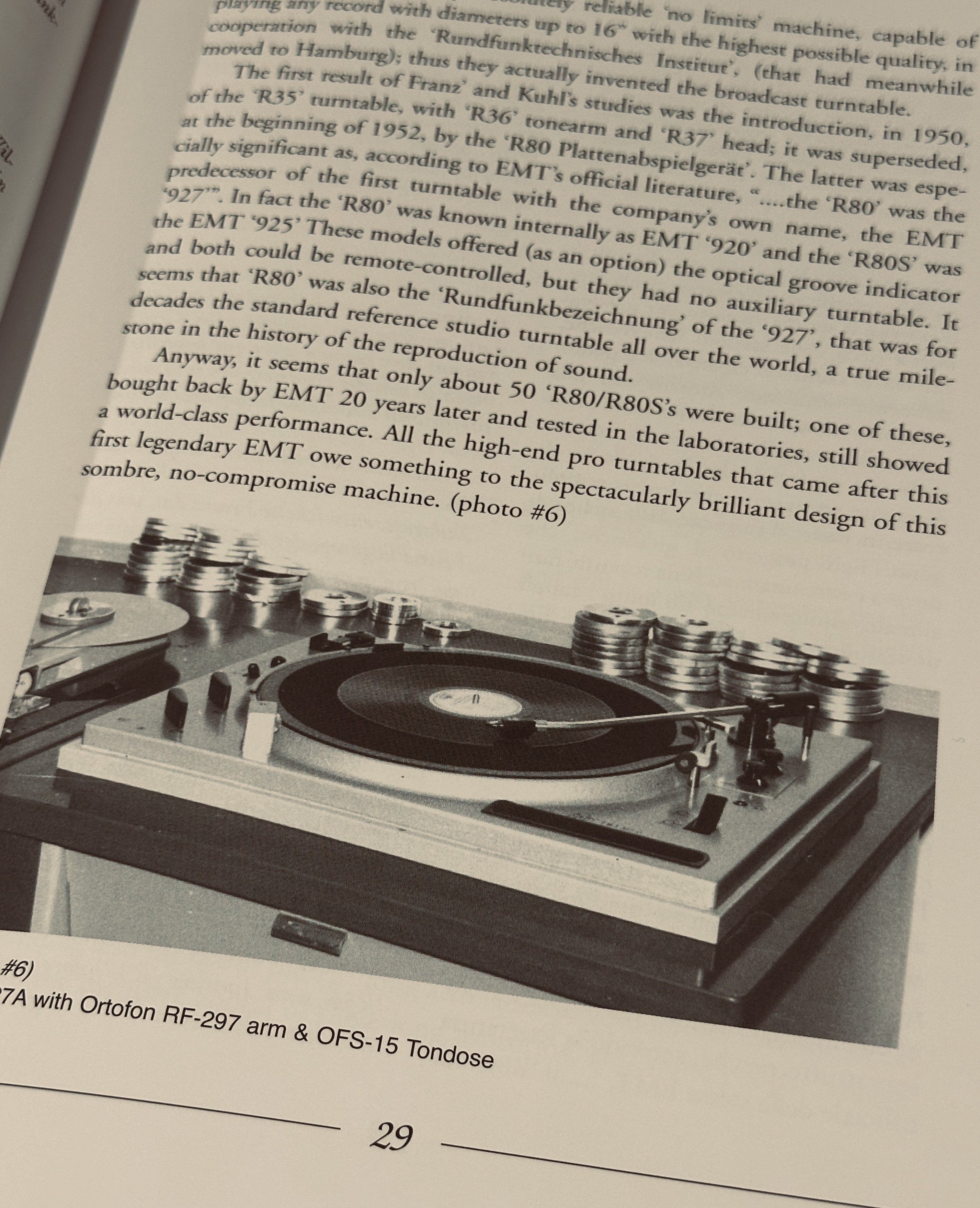
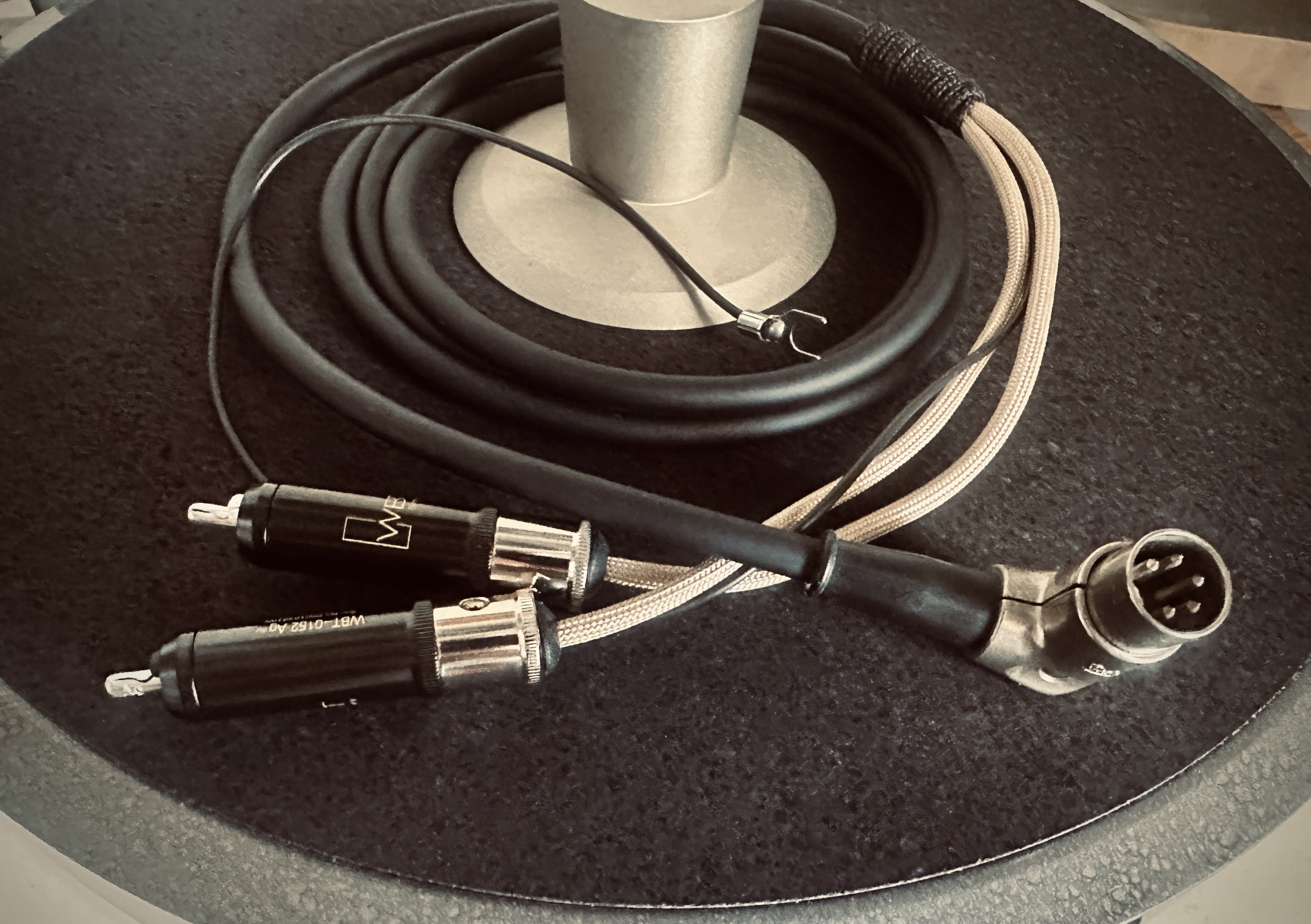
It is also worth noting that the Shindo Meursault arm is a modern derivative of the RF-297. It carries much of the same geometry and design philosophy, filtered through the Shindo approach to analogue playback. The fact that Shindo based an arm on this design tells you how strong the original concept remains.
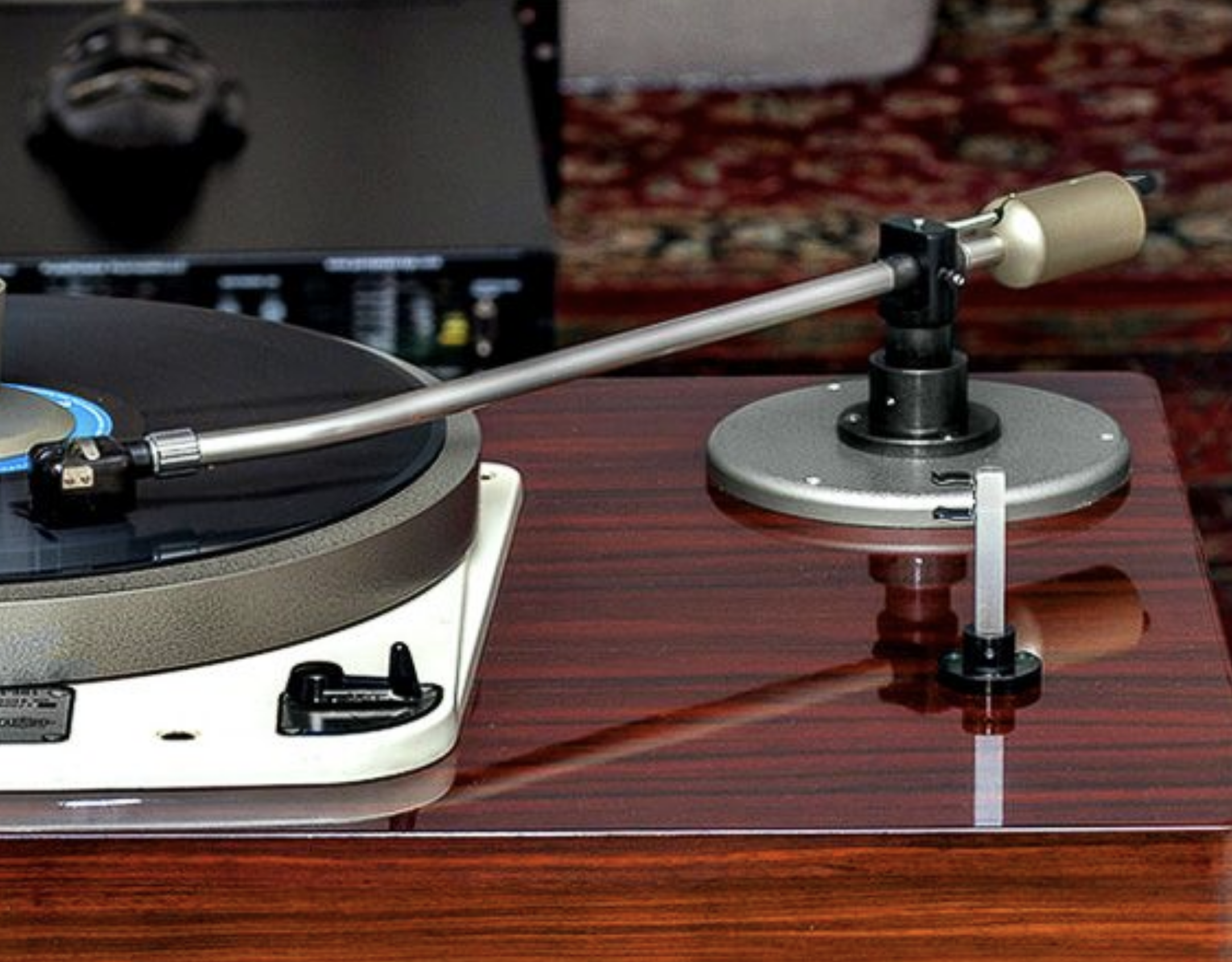
The RF-297 is not aimed at everyone. It is a studio tool really. But if you use SPU-A or EMT cartridges, or you enjoy the grounded scale of classic broadcast systems, this arm delivers that sound in a very direct way. Restoring one takes some patience, but once it is back in proper working order, the RF-297 still performs exactly as it was built to do.
Collecting vintage audio gear has a way of blending the past with the present in a surprisingly natural manner. Old equipment carries the weight of history, the marks of real use, and a kind of mechanical honesty that modern products often smooth over. When paired with contemporary components, these vintage pieces do not feel out of place. Instead, they bring character and perspective, reminding you that good engineering does not expire just because a new model has arrived. The mix of old and new can create a system that feels both grounded and alive, a reminder that progress and heritage can sit comfortably side by side.


I have long admired the classic EMT turntables, but the prices they command now put them well beyond anything I can realistically justify, not to mention the space constraints I have. As much as I would love a vintage EMT studio deck, that is simply not going to happen, so this project is the next best thing. Restoring the RF-297 and building a proper home for it lets me capture a small part of that broadcast heritage without needing to mortgage my future for a 927 turntable. I intend to use the RF-297 with my A-shell style cartridges (SPU-A, EMT Anniversary etc). I do have another arm on the way as well, not vintage at all, but similarly high-ish mass. I will be spoilt for choice, good times!


 Audio Satori
You must be logged in to post a comment.