
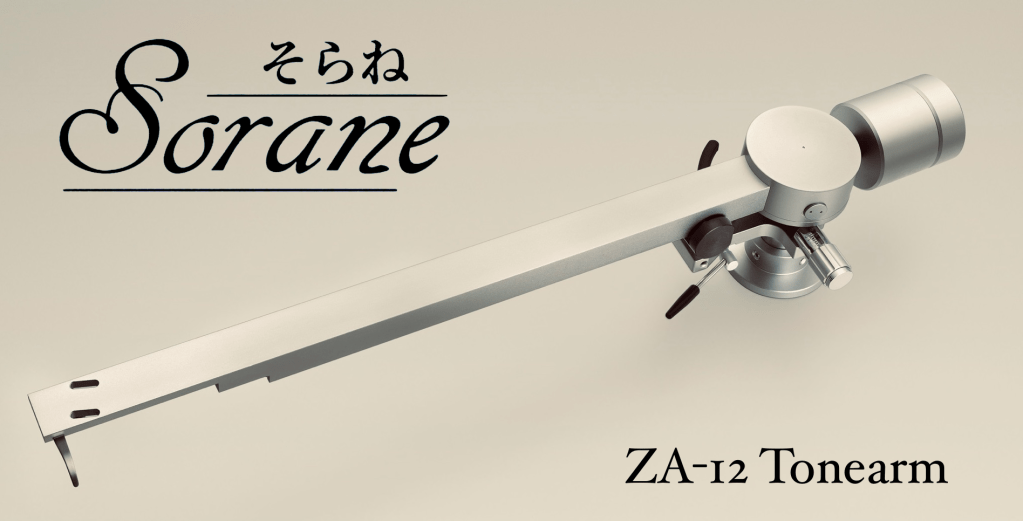
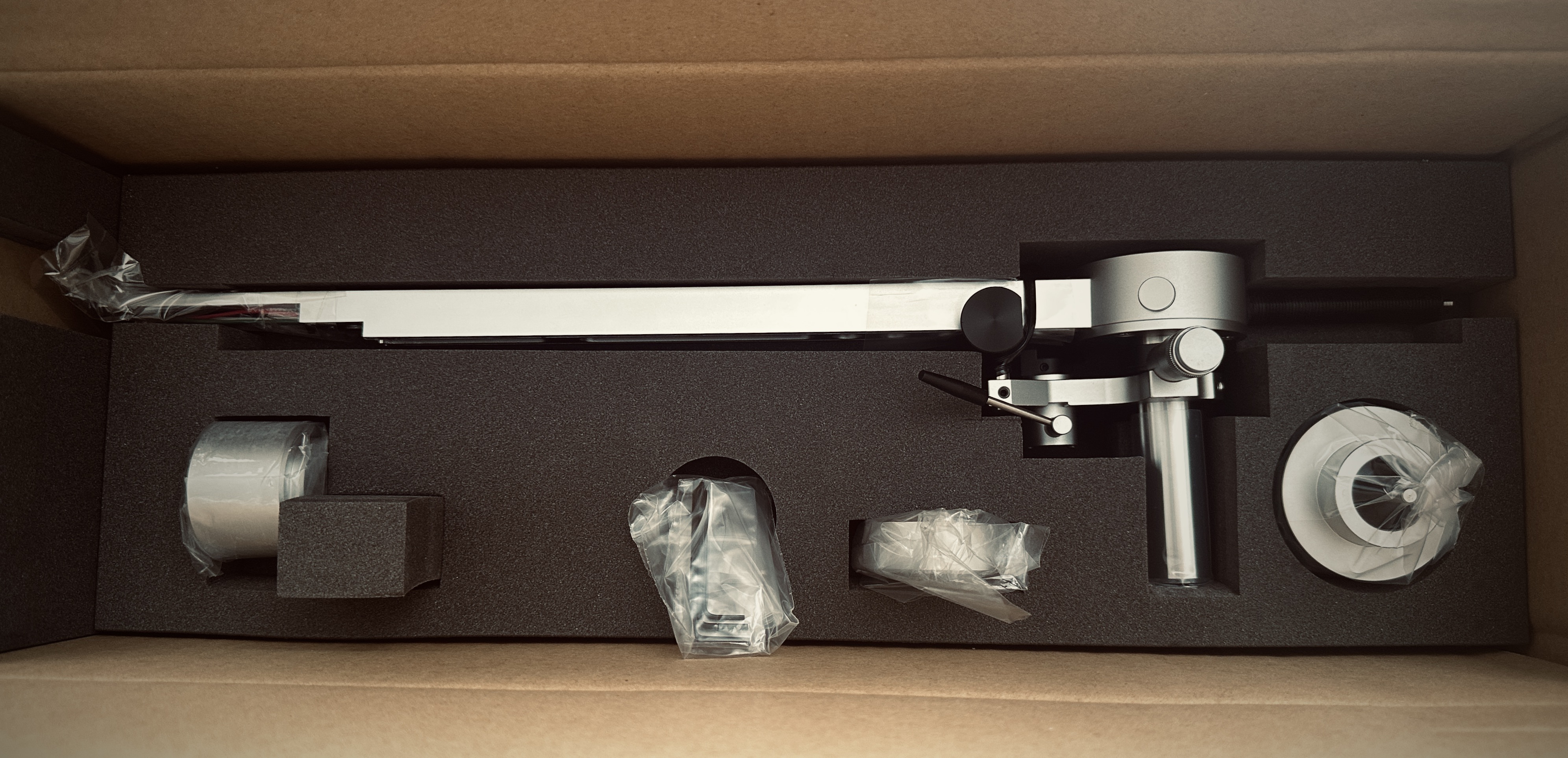
This particular Sorane ZA-12 arrived not with ceremony, but via a modern obstacle course. Ordered from Norway, it spent an inordinate amount of time in the care of UPS, which once again demonstrated that international courier services are capable of moving objects vast distances while remaining strangely incapable of delivering them efficiently. Delays, vague tracking updates, and the sense that the parcel was orbiting nearby rather than approaching were all part of the experience. Couriers, even at the best of times, seem structurally unsuited to handling anything that requires care or timing. Eventually, the arm did arrive, and once it was finally out of the box, the frustrations of courier incompetence quickly receded. At least I can be reassured of the mechanical sanity and clear priorities of this piece of gear, after being reminded how little of either exists in modern logistics. I ordered it as a secondhand demo item, but it clearly has never even been mounted. It is pristine, which is great news for me.
Sorane arms are made in a small family run workshop just out of Tokyo.
Blurb:
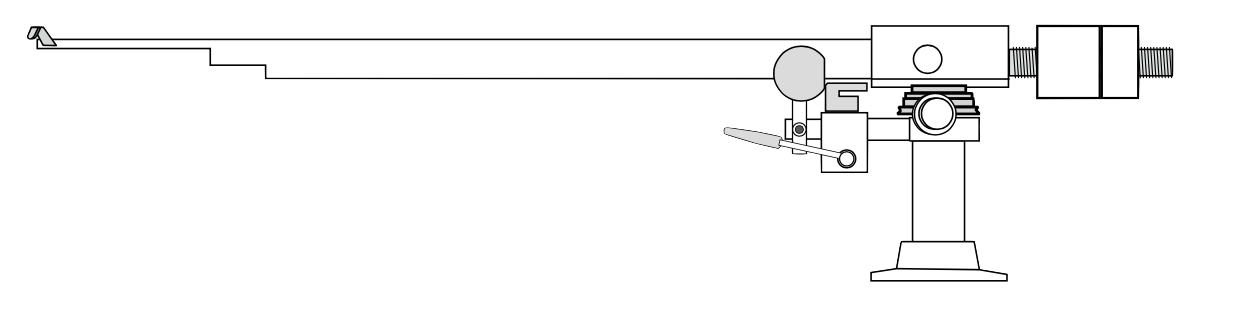
“For the ultimate in rigidity, stability, and precision tracking, Sorane offers the ZA-12 tonearm. This 12” design reduces tracking error as well as skating force, due to its longer effective length and the lower overhang. More stable tracking performance and lower distortion are the result. The detachable headshell found on other Sorane designs has been removed in favor of slotted cartridge mounting holes machined directly into the end of the tapered armwand, increasing rigidity and creating a more direct mechanical link to your cartridge. The ZA-12 also features double pivot suspension for low friction movement and a damped counterweight tube made of a combination of brass and delrin. Internal wiring is routed through two separate slots, separating the left and right signal wires for maximum channel separation. Available in silver or black anodized aluminum finish, all precision machined from solid billet.”
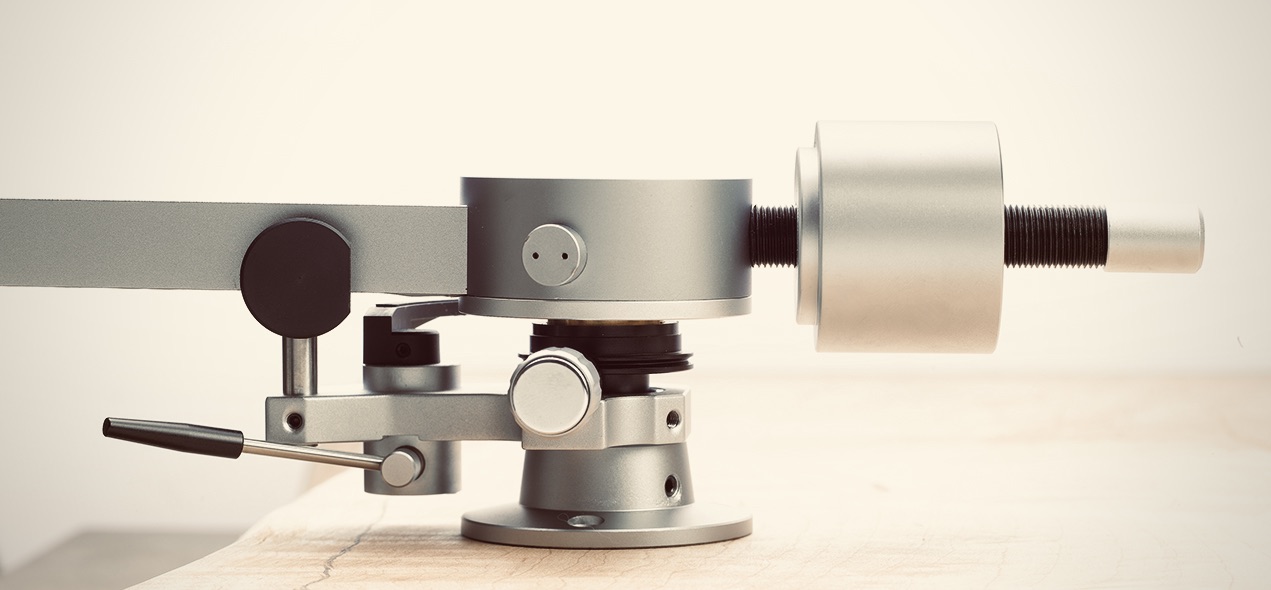
The ZA-12 is a mechanically conservative tonearm, designed around stability, predictability, and control rather than novelty. It is a 12-inch, statically balanced arm using precision pivot bearings, a fixed headshell, and a square-section aluminium arm tube. Every design decision serves a clear mechanical purpose. It actually measures around 42cm from tip to toe, which is pretty huge actually. It has a longer than average effective length too, at 322mm.
It is a chunky uncompromising thing and reminds me of a modern interpretation of an old Gray 108B, of which I also have an example in my stash, albeit in need of restoration. I think it looks minimal and cool.
It comes complete with a nice, if basic, arm cable, two different counterweights, and the requisite tools for setting the correct mounting distance. The manual is nicely written with extremely clear drawings and clear instructions.
The ZA-12 was also reviewed by the late Art Dudley in his Listening #194 column for Stereophile. He commented on its substantial physical presence, distinctive rectangular arm tube, and the practical implications of its length and effective mass for cartridge matching and turntable compatibility. His listening impressions focused on the arm’s low bearing friction, mechanical solidity, and its ability to deliver confident, grounded sound with suitable cartridges, while also noting that its size and characteristics made careful system matching essential. It was a measured, experience-driven assessment, very much in keeping with Art’s approach.
Like all longer ‘transcription’ length arms, the extended effective length reduces angular tracking error and moderates skating force variation across the record surface. This lowers lateral stress on the stylus and improves inner-groove behaviour, particularly on densely cut or dynamically complex records. The audible result is reduced congestion toward the end of a side and more consistent tracking under load.
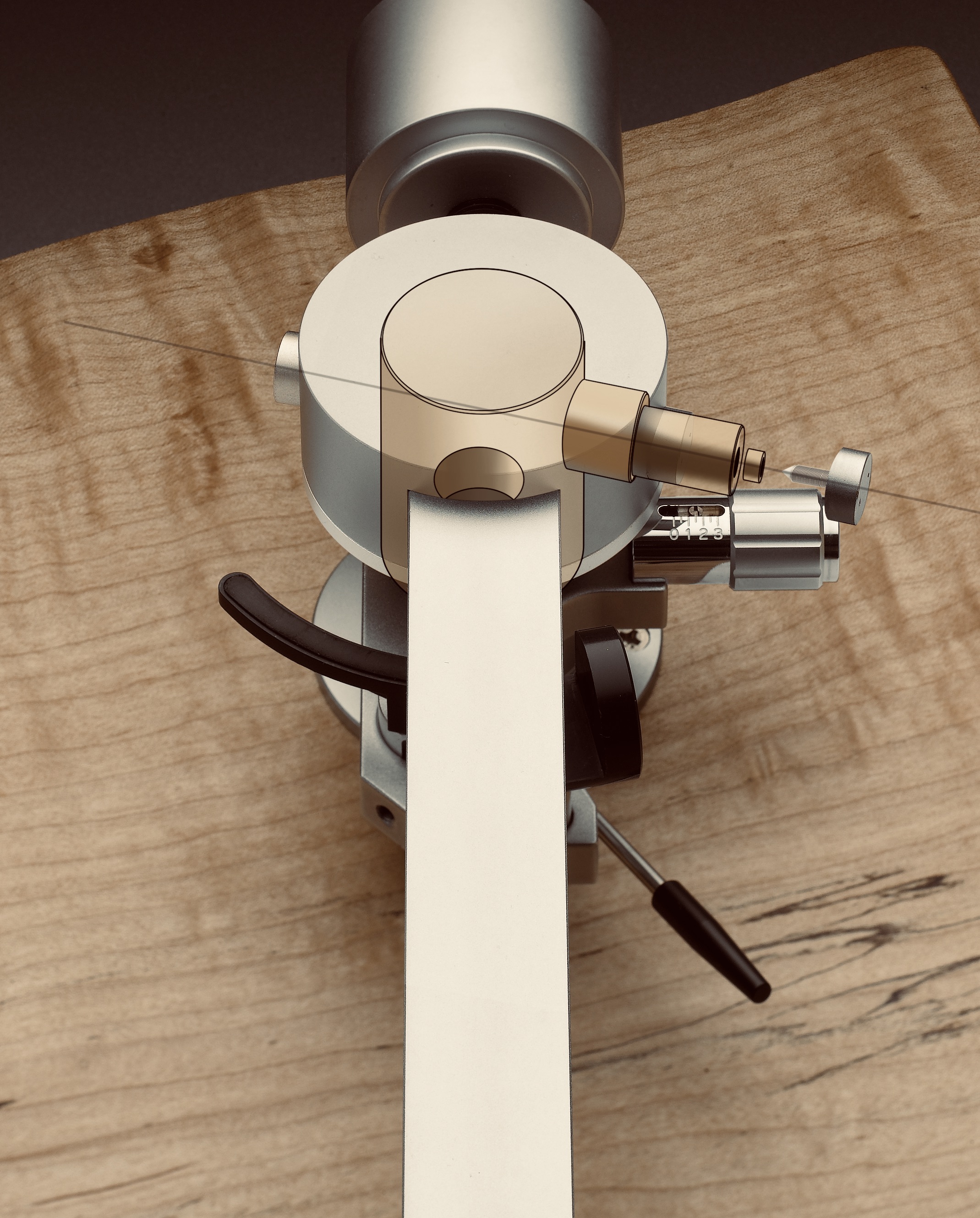
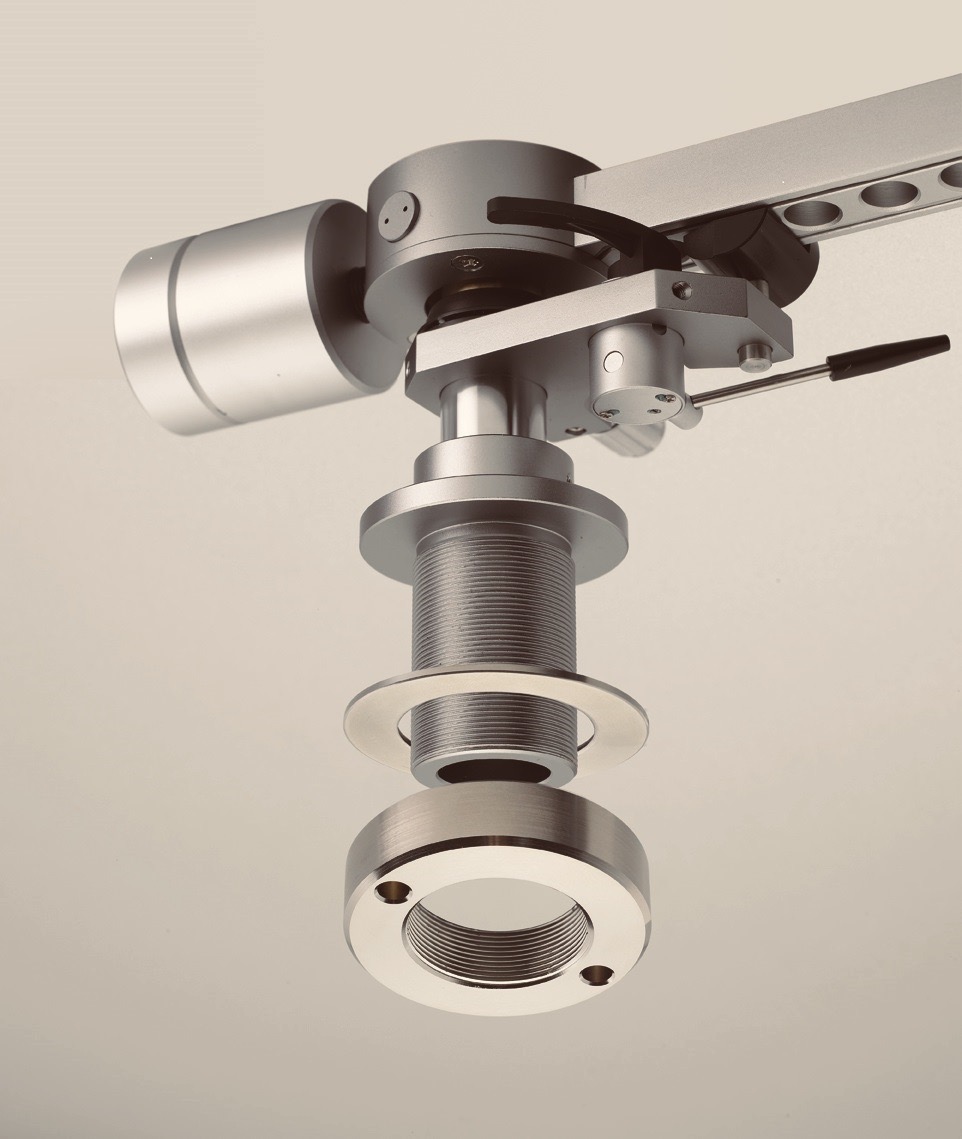
The ZA-12’s rectangular-section aluminium arm ‘tube’ prioritises torsional rigidity over cosmetic elegance, although I actually do find it fairly elegant in its simplicity and symmetry. Compared to a round tube of similar mass, the square profile better resists twisting forces generated by stylus drag, improving cartridge stability during transient-heavy passages. Damping is applied sparingly, avoiding the overdamped character that can blunt dynamic expression while still controlling high-frequency resonance.
The bearing assembly employs precision pivot bearings for both vertical and horizontal movement. Friction is kept low, but the emphasis is on repeatability and mechanical consistency rather than chasing theoretical extremes. The bearings behave predictably under real-world groove forces, maintaining stable stylus geometry without introducing chatter or vagueness.
The presumed effective mass places the ZA-12 firmly in the high mass category. This makes it an excellent partner for low-compliance moving-coil cartridges, both vintage and contemporary. The fixed cartridge mounting slots removes one variable from tuning, but cartridge matching remains straightforward through careful selection and conventional setup practices. Resonance behaviour remains well controlled within acceptable ranges.
In the short time I’ve had to listen with the Hana ML (because both brands are handled by the same company, YouTek in Japan, and a short time because I have been focussing on my Ortofon RF-297 for the moment), using my typical audition albums; Pan Daijing’s Jade, Dead Can Dance’s Toward the Within, and My Dying Bride’s For Lies I Sire as examples, initial impressions suggest that bass performance reflects the ZA-12’s mechanical discipline. Low frequencies appear to have firm pitch definition and stable timing, free from bloom or overhang. Bass lines are easy to follow, not because they are emphasised, but because their structure seems intact.


Through the midband, the Hana shows early signs of benefiting from the arm’s stability and inertia. Complex passages are intelligible, with instruments occupying stable positions without obvious artificial separation. Vocals appear tonally neutral and proportionally scaled, allowing phrasing and dynamic nuance to emerge without added presence or forwardness.
High-frequency performance with the Hana seems clean and extended, without etch or glare. Transients are well defined, but decay appears natural and unforced. Surface noise is not masked, nor exaggerated by resonant artefacts within the arm structure, allowing record condition to be heard without becoming intrusive.
Setup is straightforward for a 12-inch design, adjustments are stable once set, and the arm does not encourage continual recalibration. This mechanical stability allows the cartridge to perform consistently over time.
From a system perspective, the ZA-12 integrates easily. It does not impose a strong sonic fingerprint or require compensatory changes elsewhere. Its contribution is primarily subtractive: reduced distortion, reduced stress on the cartridge, and reduced mechanical uncertainty.
It won’t appeal to those seeking conspicuous engineering or novelty materials. Its appeal lies in doing established fundamentals correctly and reliably. For listeners who prioritise cartridge control, predictable behaviour, and long-term listening stability, it is a technically sound and musically dependable tonearm.
According to the Sorane website all arms are totally handmade: “Skilled hand assembly does not simply mean “combining the constituent parts by hand”. Skilled hand assembly involves measurement, adjustment and hand-fitting to produce optimal interface between machined surfaces. Once completed, the fitment between every part is ideal, satisfying the necessary conditions for vibration-free and noise-free reproduction of analog sound.”
I’ve only had it temporarily set up on my arm pod thus far, and have remounted my Ortofon to keep testing that for the mean time. I was initially using the Hana ML, but I intend to try it with my EMT JSD6 as well, seeing as Art had such great success with one when he tried it. I’ve had two new arms arrive in fairly short order, and have lots going on with limited time resources, so it will be a while before I have any firm opinions, but it is very promising so far. I actually bought the arm for this years big project that will be revealed in due course…. just need to get the funds in order, but its going to be pretty awesome if/when it all pans out.


 Audio Satori
You must be logged in to post a comment.