
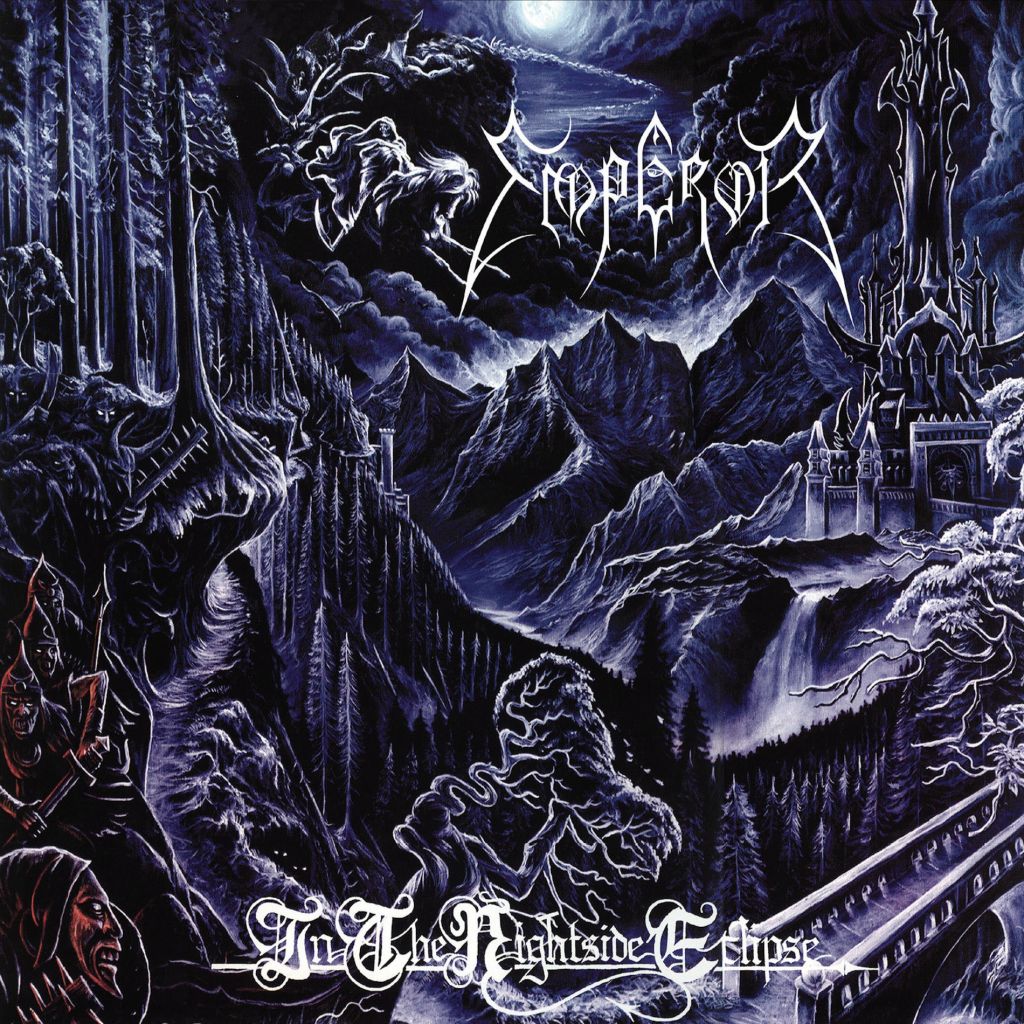
I realise that most people probably do not care about this kind of music. Writing about records like this is not really an attempt to persuade anyone or to construct a universal argument for their importance. It is something I do primarily for myself. A way of tracing the outlines of experiences and influences that helped shape who I became, even if those moments might seem obscure or irrelevant from the outside.
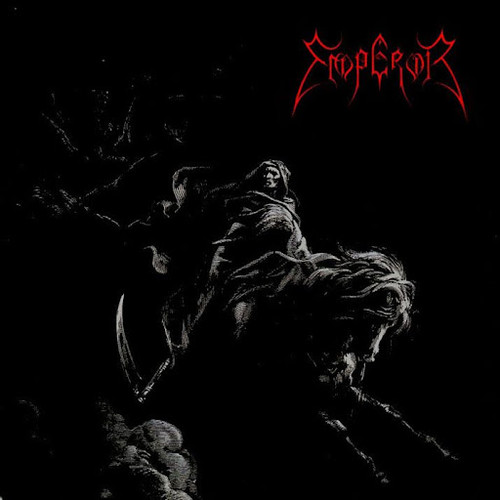
I was still at school when Emperor’s In the Nightside Eclipse was released, as were the guys in the band. I was very much into tape trading then, writing letters to people all over the world and waiting weeks for replies that might contain a badly duplicated cassette and a few lines of handwritten commentary. I still have some letters from that time somewhere… including some from the infamous Varg Vikernes. Music travelled slowly, it arrived carrying distance and mystery with it. None of this instant gratification from streaming and the ensuing commoditisation and devaluation of music that the digital age has heralded. I had heard a few Emperor songs from their demo and a split EP on tapes sent from Scandinavian friends. Interestingly, and unusually for the time, and maybe a foreshadowing of my later obsession, I bought the album on vinyl (which I still have of course). That original pressing sells for over $1200 these days in fair condition, I’ve even seen a few mint copies sell for over $6000! Apparently only 2000 were pressed.
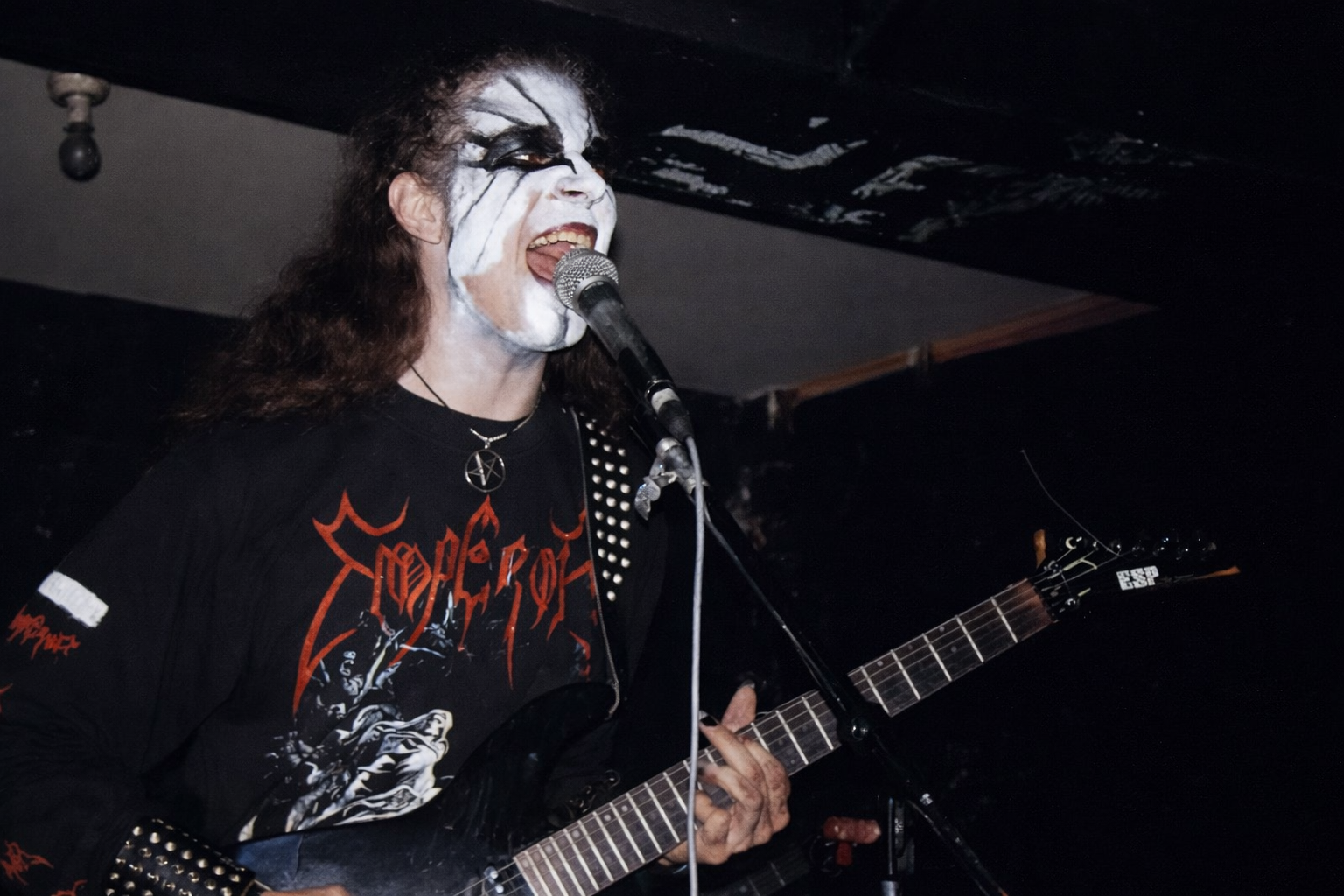
There was also a darker reality surrounding the scene that gave the music an unsettling sense of authenticity. Stories of church burnings, violence and ideological extremism filtered through fanzines and word of mouth, blurring into myth in a pre internet world. It created the impression that this was not simply another musical movement but something more dangerous and uncompromising. These were not just alcoholic idiots getting stoned and posturing for effect, which had never held any appeal for me. There was a seriousness of intent, however misguided or destructive some of its expressions proved to be. I was not drawn to the literal acts themselves, but I could understand the impulse toward rejecting imposed structures and inherited belief systems, even if the methods used by some individuals were somewhat troubling.
There was also an irony at how this music was perceived. From the outside it was labelled simply as satanic, reduced to provocation and blasphemy. But for many of us the deeper resonance lay elsewhere. It suggested a reconnection with landscape, with night skies and forests and the overwhelming majesty of the natural world. The imagery and symbolism were often filtered through an explicitly anti-religious perspective, a rejection of imposed belief systems rather than an embrace of any literal doctrine. In that sense the atmosphere of the music felt expansive rather than nihilistic. It pointed outward toward something older and less easily defined.
Black metal at that moment felt genuinely evil in a way that was difficult to explain to anyone outside it. Not a cartoonish evil but something occult and serious. It represented a decisive break from the comparatively casual culture of death metal. No more Reeboks and blue jeans. No more comfortable cartoon style brutality. This was black leather, spikes, corpse paint. A transformation of identity as much as sound. It felt ritualistic and important. I remember seeing an article in Terrorizer magazine about Emperor’s now infamous tour of the UK in 1993 with Cradle of Filth. It was enigmatic even in print. The whole image, conveyed a seriousness and mystique that stood in stark contrast to the cartoonish brutality and comic book gore of much of the meathead death metal of the day. Even on the page, the aura of ritual and intent was undeniable. I also remember an interview with Varg Vikernes of Burzum in a local fanzine, which sort of took the piss out of him a bit. I remember him seemingly not having a sense of humour and taking everything extremely seriously. He did turn out to be a bit of a dick given what he has said and more importantly done in the intervening years.
When Emperor’s debut album appeared in 1994, recorded the year before in Bergen’s Grieghallen studio, none of us had any sense that we were hearing something that would later be regarded as genre defining. That is probably true of any moment of genuine artistic change. It arrived at a time of intense genesis within the scene with many amazing albums were being created by Mayhem, Immortal, and Dark Throne. At the time they were just cool new music, only later does history assign any significance. At the time what mattered was the shock of encountering a record that seemed to expand the scope of the black metal genre overnight.
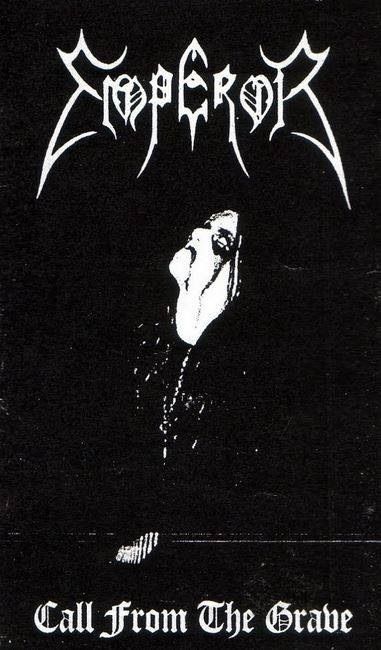
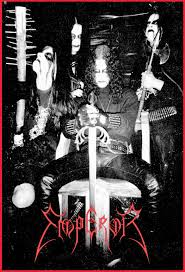
The short synthesiser introduction functions as a portal rather than a song. It establishes tonality and atmosphere, a cold distant melancholy that prepares the listener for immersion. Then the album opens fully with Into the Infinity of Thoughts, a track that immediately demonstrates Emperor’s instinct for large scale composition. The riffing moves like weather rather than machinery. Tremolo patterns shift and evolve while the drums push forward with relentless urgency. There is already a sense of narrative unfolding.
Cosmic Keys to My Creations and Times deepens the atmosphere and reveals another aspect of the band’s ambition. The keyboards act as melodic subtext, defining perspective and scale, the choir-like sounds drift above the turbulence of guitars and percussion, suggesting vast distance. The grandeur is tempered by an underlying melancholy that becomes central to the album’s identity.
The Majesty of the Nightsky introduces a colder more austere energy. Its hypnotic repetition creates a trance like immersion that emphasises texture over overt drama. There is a feeling of suspended time, as if the listener has moved beyond motion into pure atmosphere. It is one of the clearest demonstrations of how minimal variation can generate maximum psychological impact.
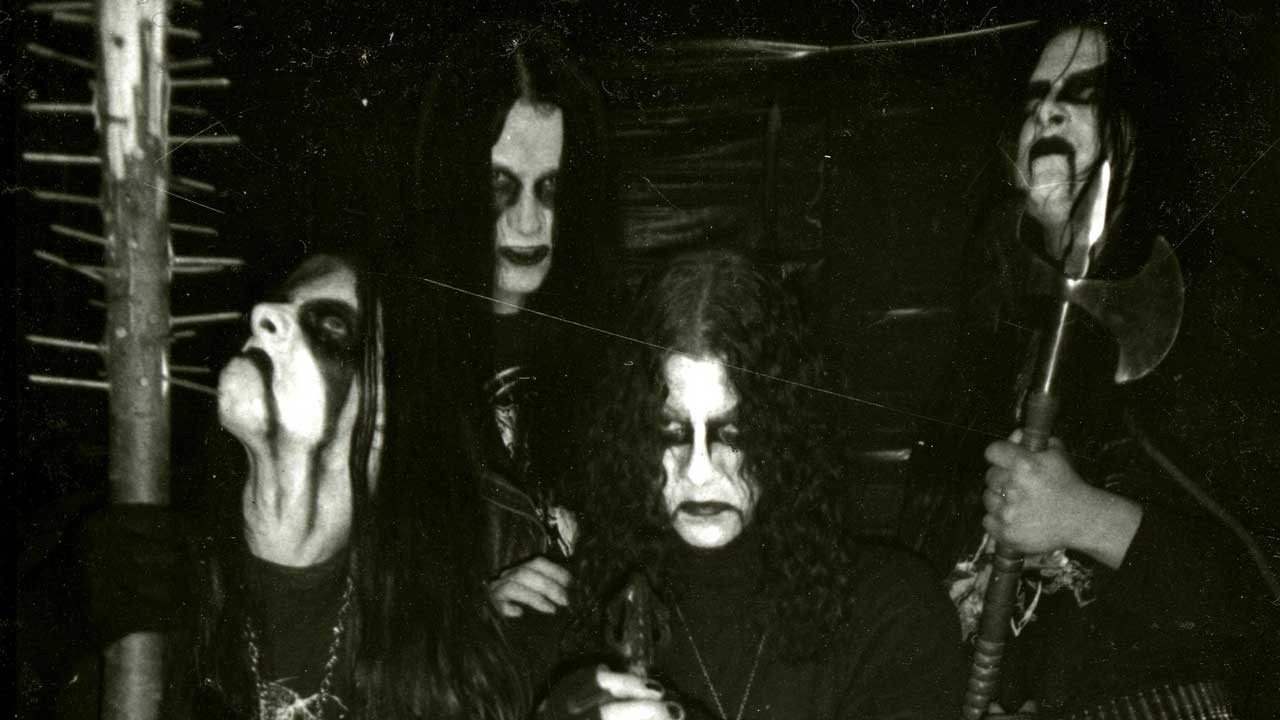
Next is I Am the Black Wizards, perhaps the album’s most iconic statement. The central melodic theme carries a strange duality. It sounds triumphant and menacing at the same time. Expansive yet claustrophobic. It feels like a declaration, a crystallisation of intent. The balance between guitars and keyboards here is superb. The music suggests myth being constructed in real time. Listening in those early years it felt impossibly confident. A fanfare for darkness delivered with absolute conviction.
Inno a Satana closes the original release as a true culmination. The interweaving guitar melodies at the beginning remain among the most hypnotic passages in the genre. Rather than relying purely on speed or density, Emperor create drama through counterpoint. Lines fold into one another with symphonic logic, the guitars themselves become orchestral voices. When the keyboards later reinforce the harmonic structure the effect is revelatory rather than bombastic. It feels like the completion of a journey that has been unfolding since the first note of the album.
Part of the record’s enduring mystique lies in its production. It is undeniably murky and black. If the band had possessed greater resources the sound might have been clearer or more conventionally powerful, but that shadowed quality has become inseparable from the atmosphere. The darkness of the recording suggests depth and distance. It enhances the sense that the music is emerging from somewhere hidden rather than being presented in the open.
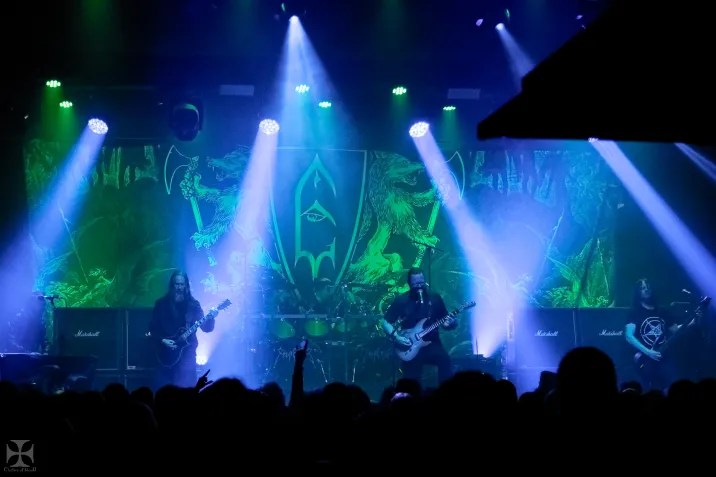
Listening obsessively during those formative years reshaped my own direction in ways I could not fully articulate at the time. The album suggested that music could function as a total environment. Joining black metal bands later felt less like a conscious decision and more like the continuation of a path that had already been set in motion.
In a very real sense, this music did not remain an abstract fascination, it led directly to action. In the early days of black metal in New Zealand I found myself playing in bands that were attempting, however imperfectly, to channel the same atmosphere and conviction we had absorbed from those recordings. There were very few of us at the time. The scene was small, isolated and largely misunderstood, but that only seemed to reinforce the feeling that we were part of something emerging rather than simply following a trend. Looking back now, I realise we were among the first here to take black metal seriously as a creative direction rather than a curiosity.
I realise this is not normal audiophile fare. Discussions in the audio world tend to circle endlessly around the same small group of impeccably recorded but often safe albums. Important though those records may be, there is value in stepping outside that comfort zone. In the Nightside Eclipse offers something different. A reminder that atmosphere, vision and conviction can matter as much as sonic perfection.
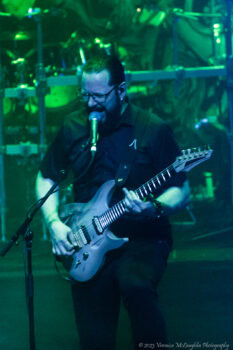
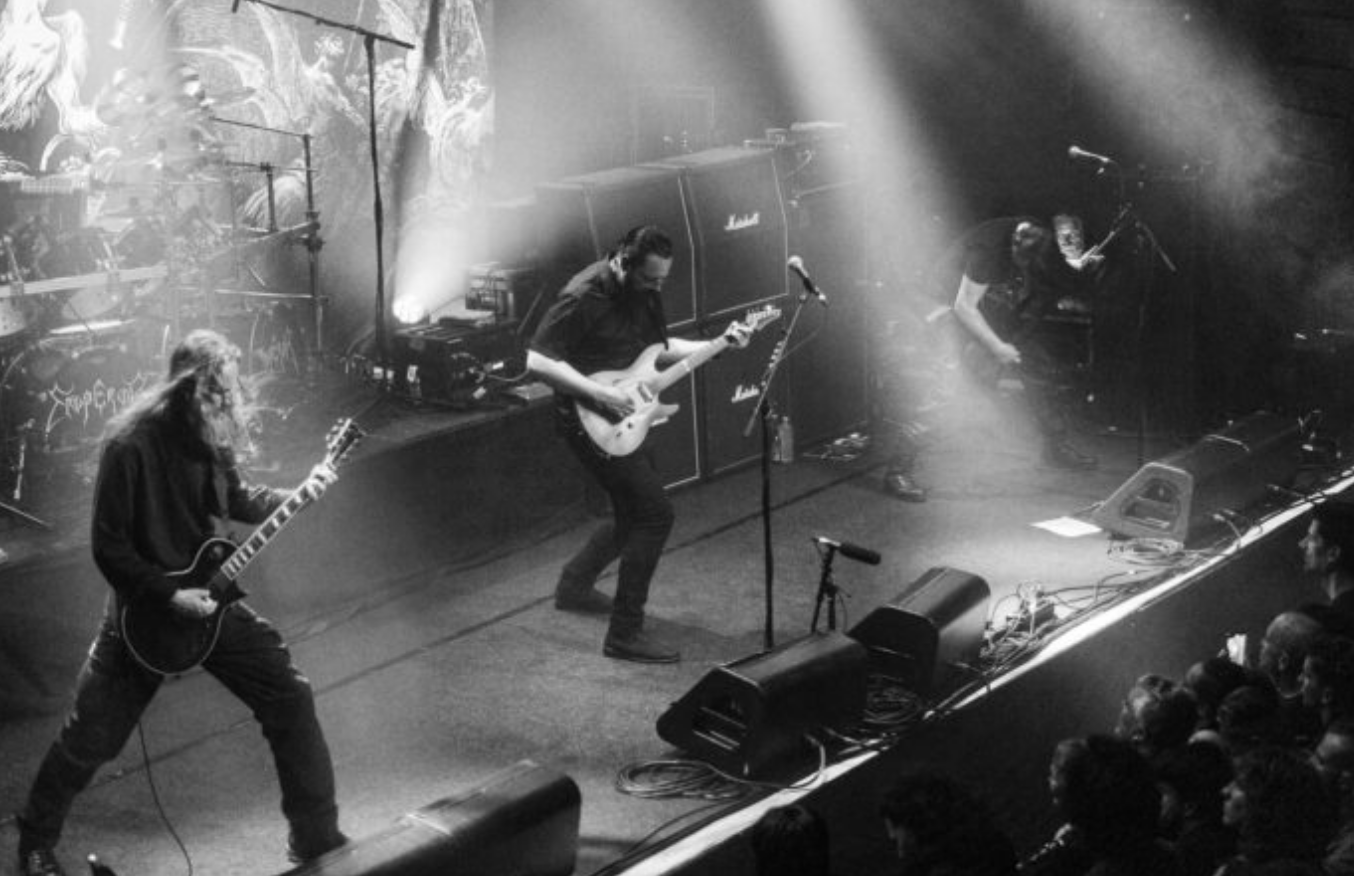
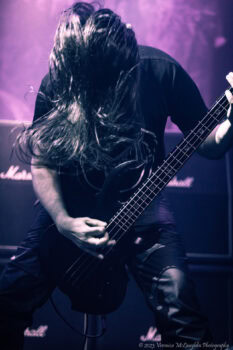
A couple of years ago I was able to see Emperor perform this album live here in New Zealand, played in its entirety. Hearing those songs in a real physical space after decades of private listening felt surreal. It confirmed just how deeply this music had embedded itself over time.
Like My Dying Bride’s Turn Loose the Swans, this became one of those life defining albums. Not simply a soundtrack to youth but a force that helped shape identity. Some records stay with you. A very rare few become part of who you are. Thankfully Emperor (and myself!) dropped most of the theatrics as the trends caught on. In interviews mainman Ihsahn comes across as a very erudite and musically informed person. Not a beer swilling munter, which is refreshing.
Here’s a reprint of an interview originally published in Metal Hammer issue 323, May 2019
Emperor’s 1994 full-length debut In The Nightside Eclipse was far from the first black metal album, but few had the same impact. In 2019, frontman Ihsahn and producer Eirik ‘Pytten’ Hundvin looked back on an album that blew the scene wide open.
The internet seems to think In The Nightside Eclipse came out on February 21, 1994, yet anyone who was there at the time will recall the agonising delays that pushed Emperor’s hotly anticipated debut LP back throughout that year. The record wasn’t unleashed until mid-December ’94 – 17 months after it was recorded, “under the seventh full moon anno 1993” (as specified in the liner notes) – at the end of a breathtakingly fertile year for the newly ascendant force of Norwegian black metal.
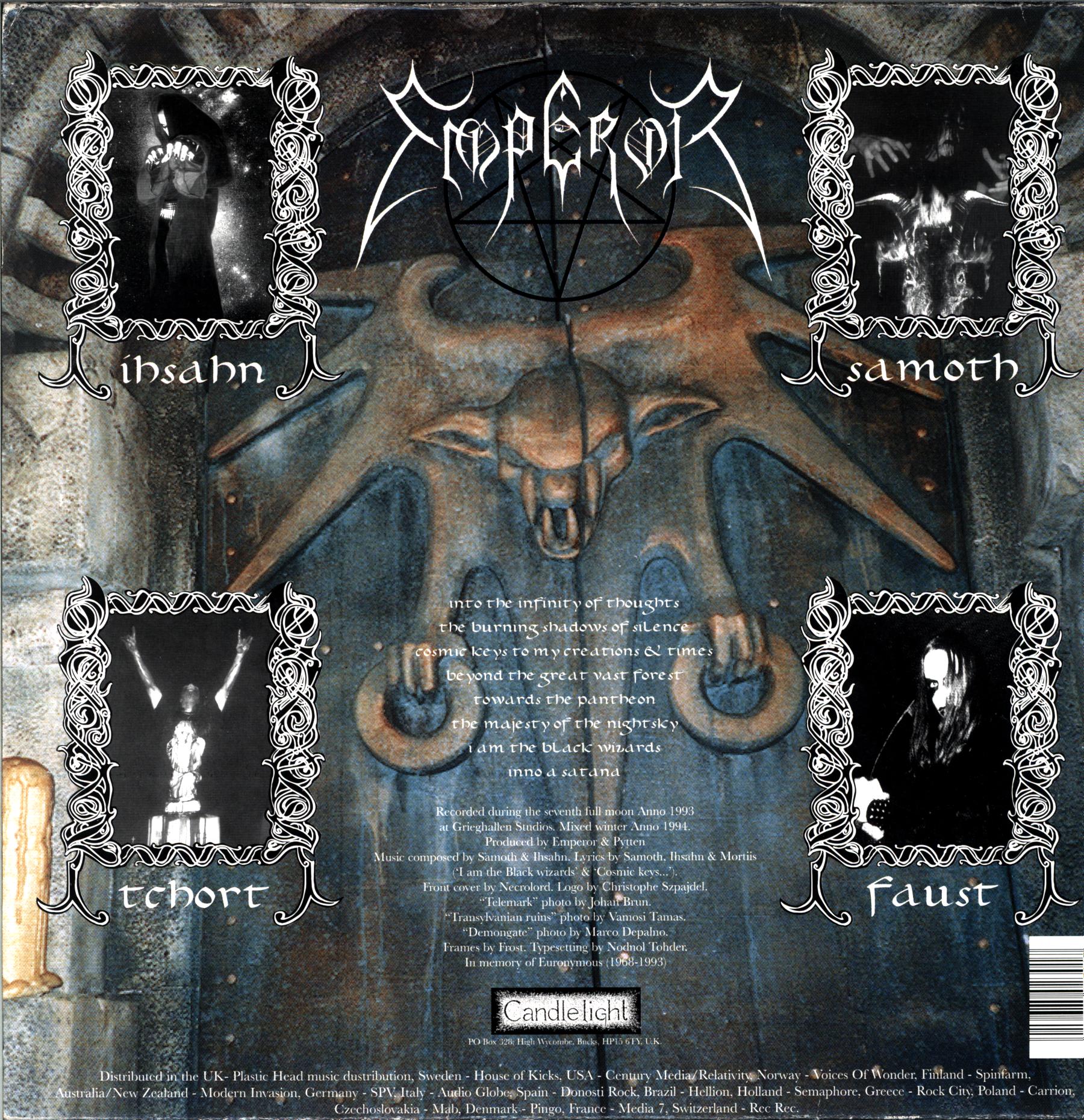
Mayhem’s De Mysteriis Dom Sathanas, Burzum’s Hvis Lyset Tar Oss, Darkthrone’s Transilvanian Hunger, debuts from Gorgoroth and Dimmu Borgir, and the first two albums by Enslaved and Satyricon all emerged in the time it took for Nightside to get its act together. After setting the underground on fire with the Wrath Of The Tyrant demo in 1992 and an eponymous EP in ’93, the still-teenaged Emperor – guitarist/vocalist/keyboardist Ihsahn, guitarist Samoth, bassist Tchort and drummer Faust – had a lot of ground to make up, and a hell of a lot to live up to.
The album’s producer, Eirik ‘Pytten’ Hundvin – already Norwegian BM’s go- to sound man after helming recordings by Immortal, Burzum and Mayhem at Grieghallen Studios in Bergen – checked his original notes to help us pin down the reasons for Nightside’s colossal delay. “I have been through my files from the production and can confirm that mixing was complicated,” Pytten declares. “We had a 16-track analogue multitrack, and linked to it by [timecode-reading device] SMPTE was an Atari computer with linked midi keyboards and sound modules, probably also an 8-track digital recorder. This is a very time-consuming set-up to work. In addition was everyone’s high expectations of the final result, and accordingly some remixes of the songs were adding time.”
Ihsahn remembers remixing The Majesty Of The Night Sky “17 times before we were satisfied”, and as Pytten points out, it was a laborious commute for the young band; Grieghallen lies more than 200 miles west of Emperor’s home town Notodden, in Norway’s Telemark region. Pytten confirms the final day of mastering as August 9, 1994, adding, “Approximately two weeks later all finances were settled. If my notes and memory is accurate, this is a highly acceptable time for settling an invoice!”
Aside from painstaking studio niggles, there was another, more unorthodox reason for Nightside’s delay. Shortly after recording it, three- quarters of Emperor were imprisoned for a variety of crimes: Faust for murder, Samoth for arson and Tchort for assault.
This quartet of misanthropic souls were positioned at the dark heart of an alarming new phenomenon: the Norwegian black metal ‘Inner Circle’, a loose association of like-minded musicians whose turbulent antisocial oneupmanship quickly spiralled out of control. In the time between Nightside’s recording and release, Mayhem guitarist Euronymous had been murdered and Burzum’s Count Grishnackh imprisoned for the crime, and Norwegian black metal had grown from a freakishly cult regional micro-scene to a thriving movement of international infamy.
Yet under all this pressure, Nightside became arguably the crowning achievement of its era – a dizzying, haunting, tempestuous masterwork pushing boundaries of composition, melody and atmosphere to make it arguably the most far-reaching artefact from Norse BM’s early years. The band never had any doubt of their debut’s potency: “It will be a monument in black metal history,” Samoth promised in March ’94 to excellently titled Finnish zine Pure Fucking Hell.
This was a busy time for the guitarist; as well as Emperor, Samoth’s six- string bolstered releases by Arcturus, Satyricon and Gorgoroth, in addition to session bass-work for Burzum. “It’s Samoth who had all the connections, and I tagged along!” admits Ihsahn, recalling the incestuous nature of the Norwegian scene in these early days. “At the time extreme metal was dominated by Swedish and American bands, so maybe since we all hung out a lot, going to shows, a Norwegian identity was created. It fit better with our surroundings. In The Nightside Eclipse was very much influenced by descriptions of stuff that look very much like our Telemark nature.”
The LP’s dramatic evocation of place was signposted by its gatefold sleeve, Kristian ‘Necrolord’ Wåhlin’s moonlit panorama opening to reveal a glorious 24-inch photograph of a mountainous wooded fjord. MTV went to Ihsahn’s home for an interview in ’94, the black-clad youth filmed stalking around conifers, gazing pensively at waterfalls and ruminating on “the winds, the rains… the wastelands, the emptiness, the silence…” Far more than Satan, the unifying essence and motivational impetus of Nightside is the mysterious, rugged landscape of Emperor’s homeland – albeit populated by some deeply unnatural beings.
“We had a strong need for expression, so it was easy to channel that into fantasy-like images and larger-than-life sounds,” recalls Ihsahn. “We were just as inspired by soundtracks that went along with big fantasy movies. We started out with some epicness on the first Emperor EP, but it became very obvious that we wanted to do something that was just out of this world.”
Assisting in that regard was Pytten’s Nightside production, an oppressive cacophony of barbed guitars, blitzkrieg drums and triumphing synth flourishes, heaving with apocalyptic sound effects. Production polarised opinion from day one, some feeling alienated by the harsh, wayward blizzard of sound, others powerfully immersed in its cryptic embrace.
“Aahh, this is a tricky question,” remarks Pytten, when asked how his assessment of the finished product has changed over the years. “With such long times working on the production, so many hours in the studio, so many replays of the songs, so many tries to get the music right, I can go on… I have to admit my first feeling was relief! But the way I see the album after the fatigue left me is that I have never thought, ‘Oh if I only had done so and so instead…’ I think, whatever words are put on the production, this is a captured sound that has a lasting quality. I am quite proud of what we all achieved.”
Ihsahn’s own assessment is even more touching and heartfelt. “I think it’s the purity of it,” ponders the frontman, considering why Emperor’s debut has survived so timelessly. “We had no commercial ambitions; there were none to have. It sounds romantic, but all this music was made purely with artistic motivations, this total, introverted, Norwegian ‘keep it to ourselves’ attitude is what enabled us to create something that no one else had done.
“I always look back at albums and think, ‘Ah, I could have changed that’, but then you go beyond that, it becomes so old that you just appreciate it for being a representation of where you were at that point. And this wasn’t just 25 years ago, it’s almost like another life, being basically a kid. I look back and I think, ‘What an immense privilege, to be able to so deeply get to dedicate so much time and attention to this thing called music that I love so much.’ That whole time formed the basis of me being able to do this for 25 years. What a stroke of luck! It’s almost paradoxical to be so thankful for black metal, given the evilness of it all…”


 Audio Satori
You must be logged in to post a comment.