

Dr Grordbort and the Art of Taking Nonsense Seriously
Not audio related at all, so skip this one if you don’t care for such things.
I’ve been an aficionado of steampunk and retro-futurism since before I realised there were names for it. The particular flavour of whimsical madness, the idea of a world where death rays exist, moustaches are mandatory and adventure is always just around the corner appeals to my slightly unhinged mind. It’s a world that never took itself too seriously, although the craftsmanship behind it clearly does.
Dr Grordbort sits right at the centre of it all. It’s a universe built around ray guns, ludicrous adventures and overblown imperial self-importance that would make a Victorian explorer blush. The props and sculptures are made with absolute seriousness, but the universe itself is packed with jokes. The Medal of Arbitrary Self Importance tells you everything you need to know.
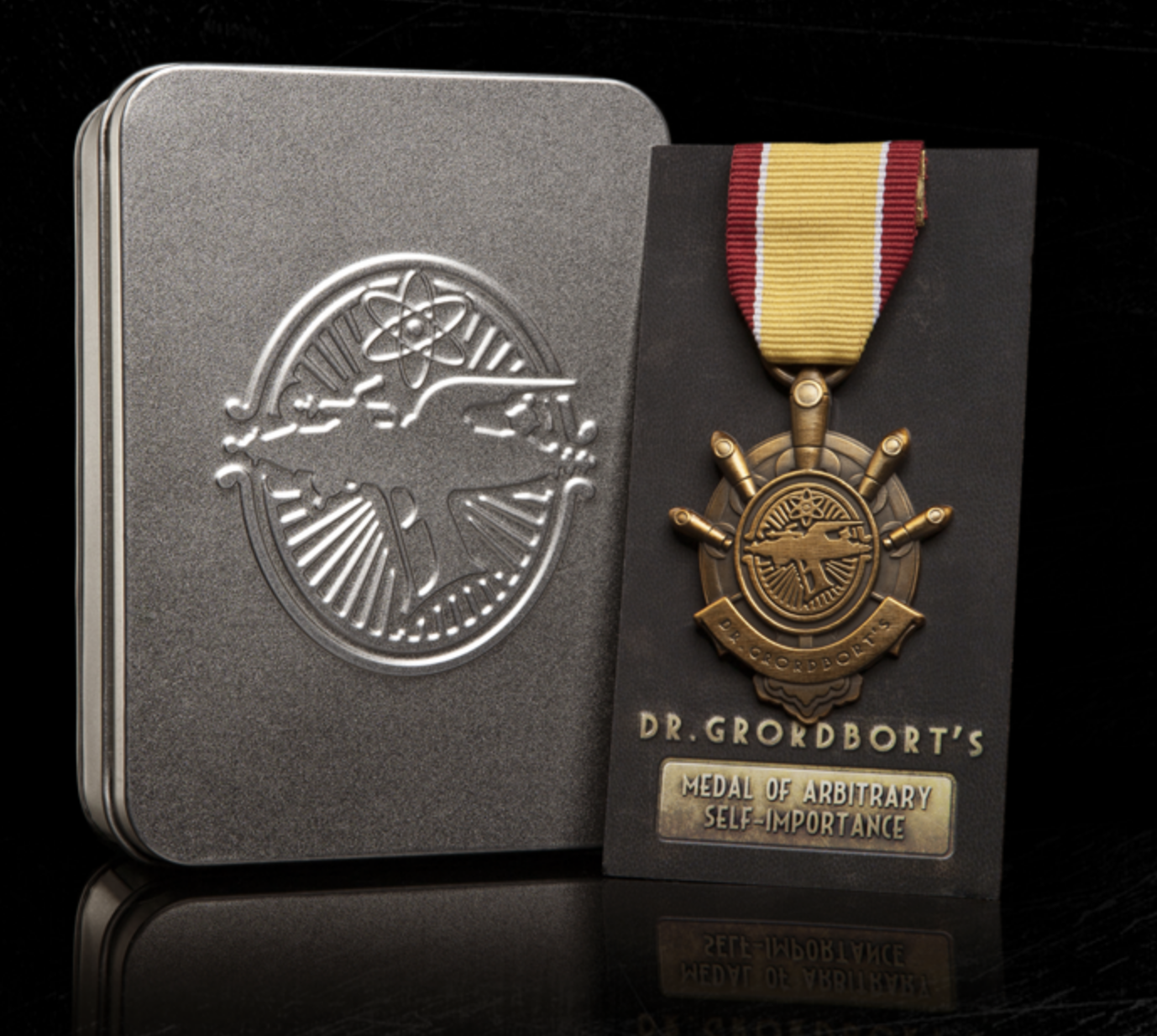
Ray guns are just cool. Not practical or realistic, just cool. Classic science fiction ray guns appeal to the same part of the brain that loves rocket ships, robots and giant monsters. Before science fiction got obsessed with gritty realism and military hardware, there was a time when the future was shiny and full of death rays. Dr Grordbort taps directly into that. You look at one of these guns and immediately want to point it dramatically at the horizon and declare that you’re off to defend civilisation from Martian invaders or Blue Sacked Pillocks as the case may be.
Lately I’ve found myself getting deeper into collecting the miniature ray gun line. As much as I’d love a room full of full-sized pieces, that’s probably a fantasy at this point. The originals have become incredibly rare and crazily expensive, now in the category of things I admire online whilst reminding myself that mortgage payments are also important. I do own a full-sized Righteous Bison, which remains one of my favourite things in the house. Every time I look at it, it brings me joy, which would make Marie Kondo happy I guess.
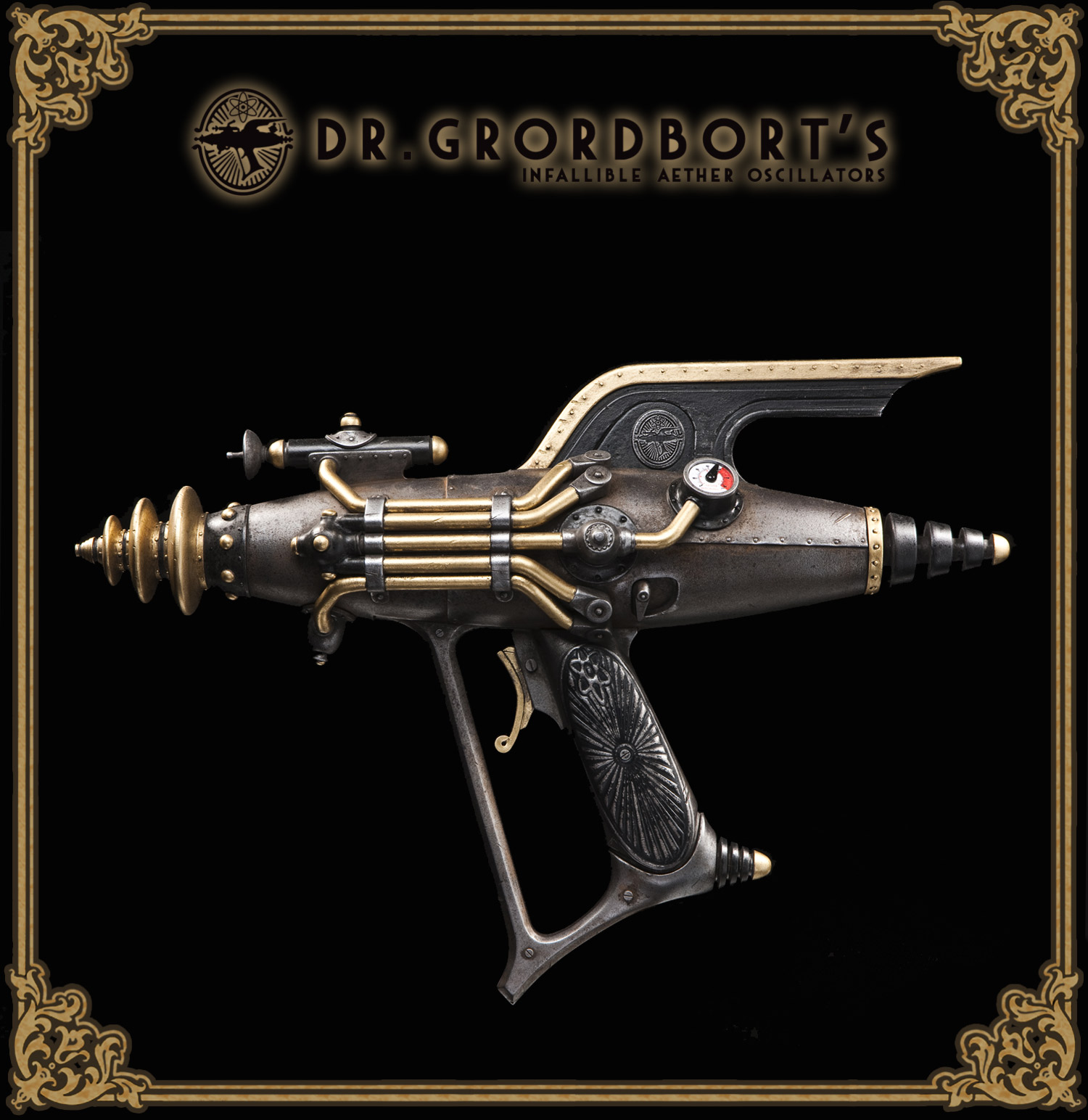
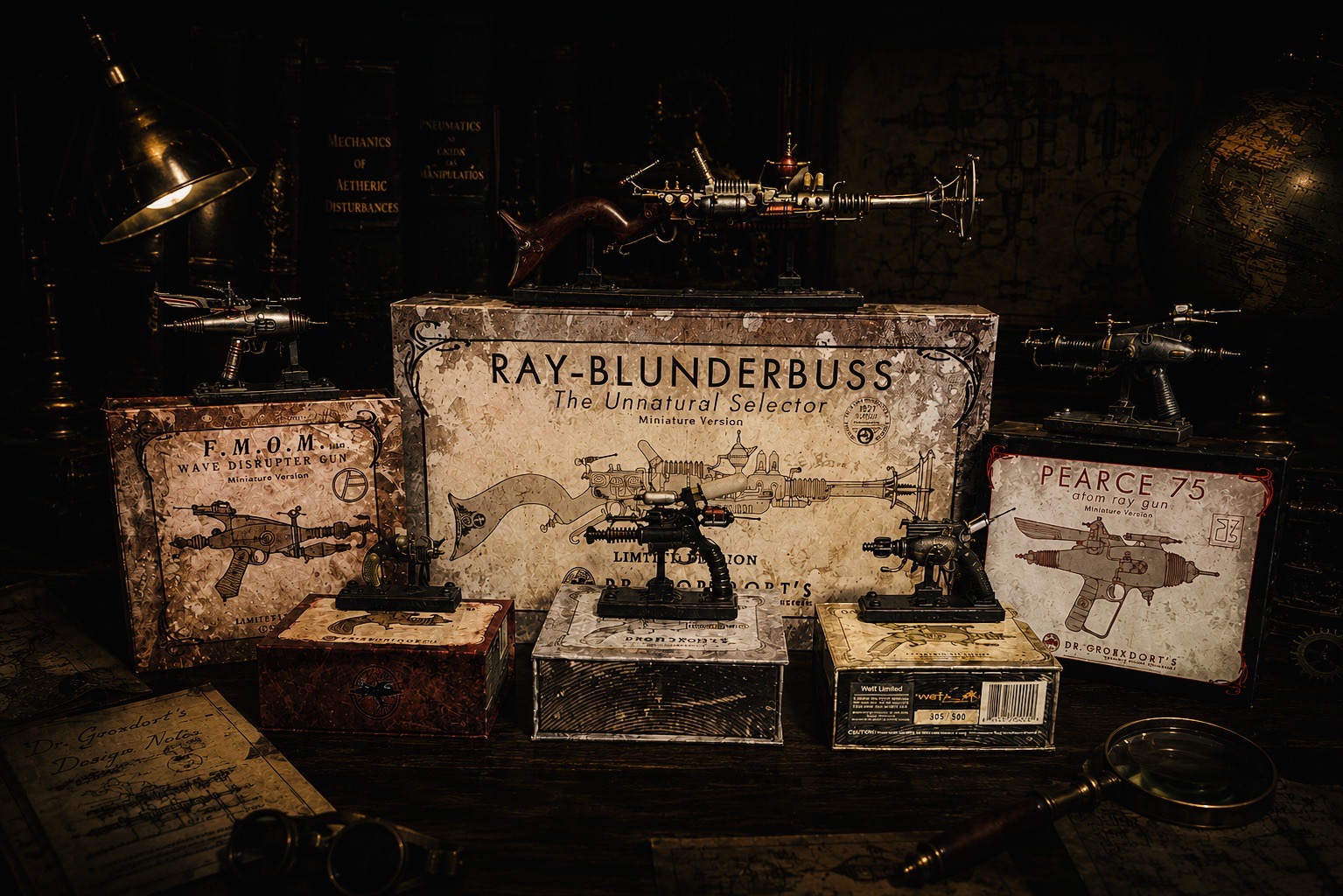
The miniature versions are very satisfactory in themselves. They’re like little pieces of the universe that you can actually live with. All the detail and ridiculous pseudo-scientific engineering, the charm of the originals, just condensed into something that doesn’t require its own display room. I couldn’t afford the full sized metal versions when they were released, and only managed to get the Righteous Bison because it was the plastic version.
There were six main releases in the Weta miniature ray gun line, and each one has its own personality. They feel like they were built for completely different jobs by completely different slightly unhinged Victorian scientist explorers.
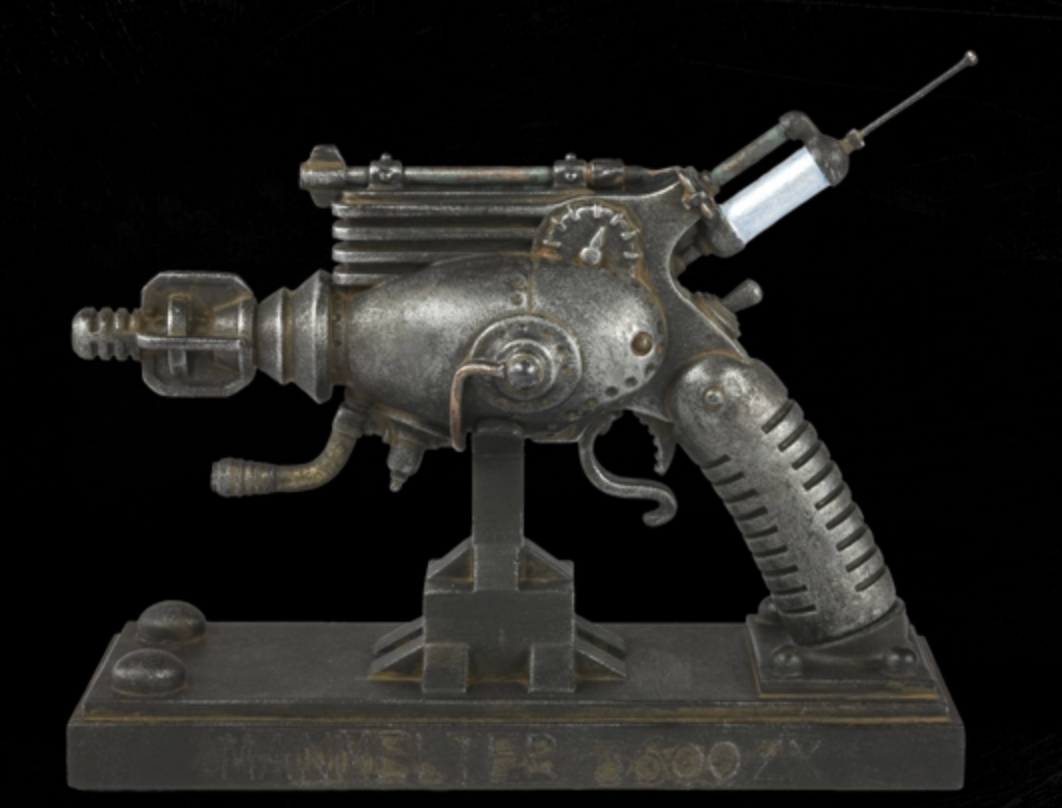
The Mini Manmelter 3600ZX Sub-Atomic Disintegrator was the one that started it all, a 2007 Comic-Con exclusive that sold out immediately. I was lucky to get one from the sculptor himself David Tremont. It’s the quintessential Dr Grordbort sidearm: compact, elegant and purposefully terrifying. Of all the designs this is probably the purest expression of classic pulp sci-fi ray gun aesthetics. Small enough to fit in a pocket, powerful enough to accidentally erase a small moon.
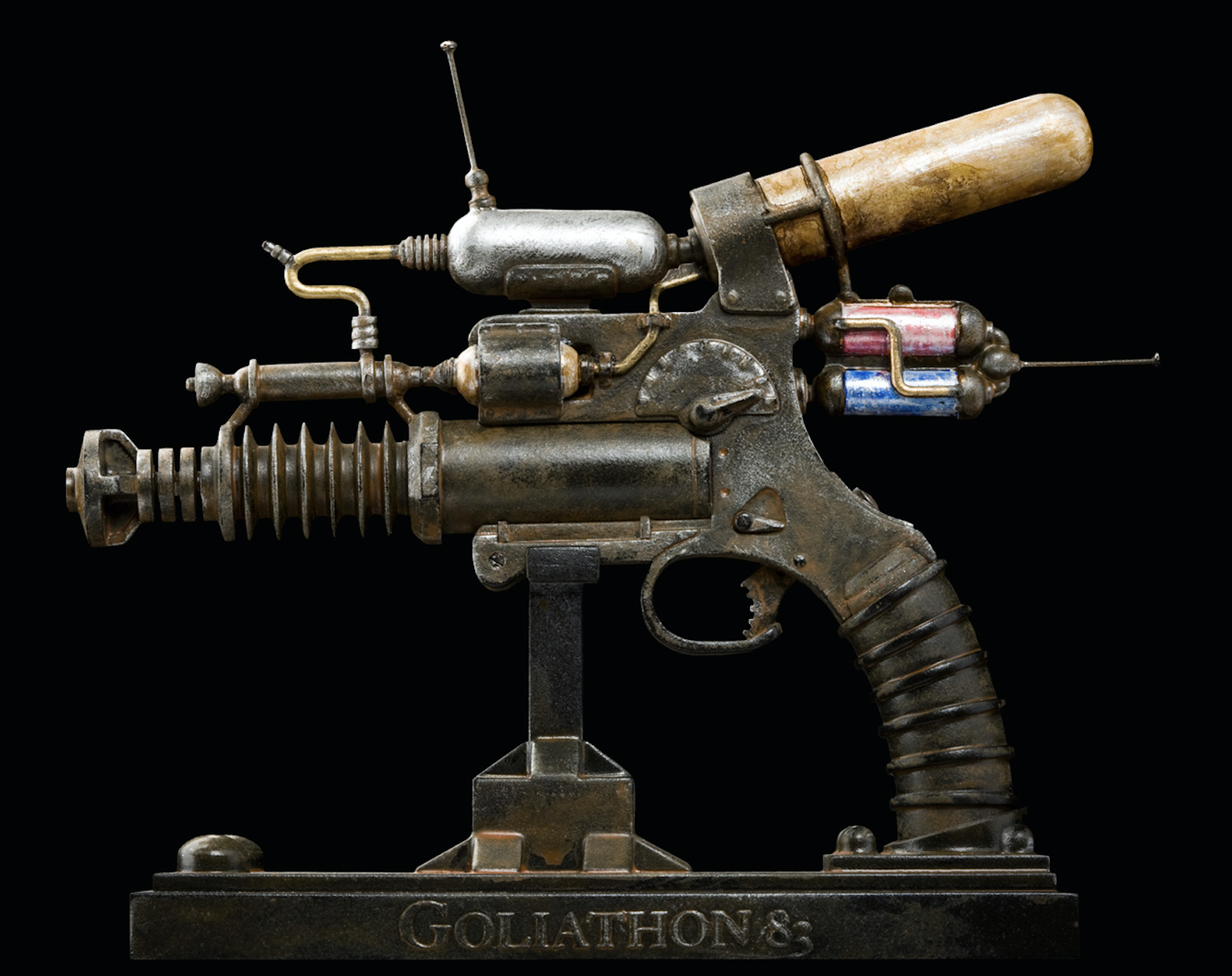
The Goliathon 83 Infinity Beam Projector is the opposite of subtlety. It looks like somebody decided a normal ray gun wasn’t nearly excessive enough and set about building portable artillery instead. Chunky, industrial and unapologetically brutal, it’s the ray gun equivalent of showing up to a fencing lesson in plate armour.
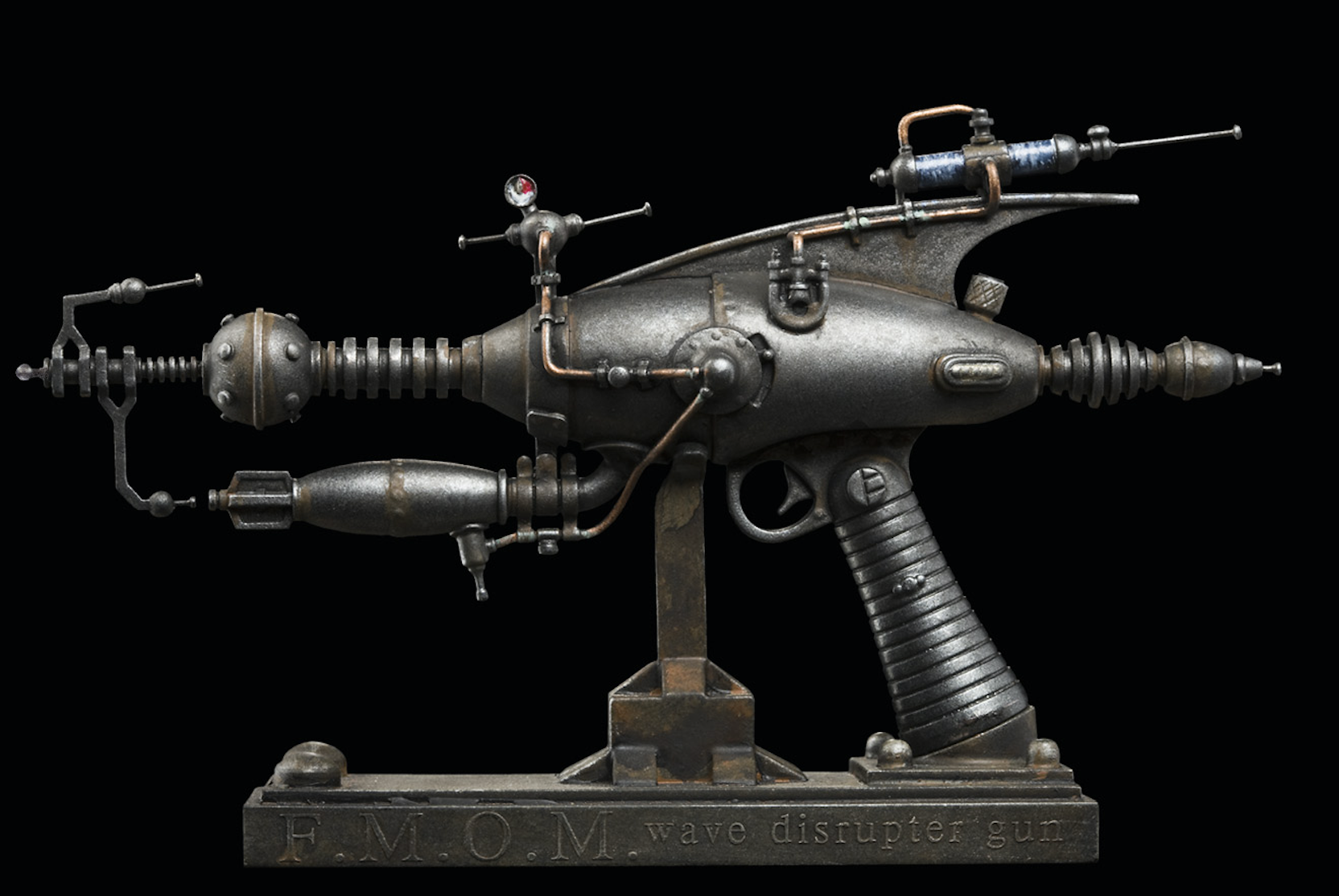
The F.M.O.M. Industries Wave Disruptor Gun is possibly my favourite purely from a design standpoint. It looks like it was engineered by someone who understood neither physics nor restraint, with that cool streamlined Art Deco-meets-space-age look that makes it seem simultaneously futuristic and antique. The name alone is ridiculous, and the gun itself somehow manages to look capable of punching a hole through both space and time. Which, according to the marketing, is more or less what it does.
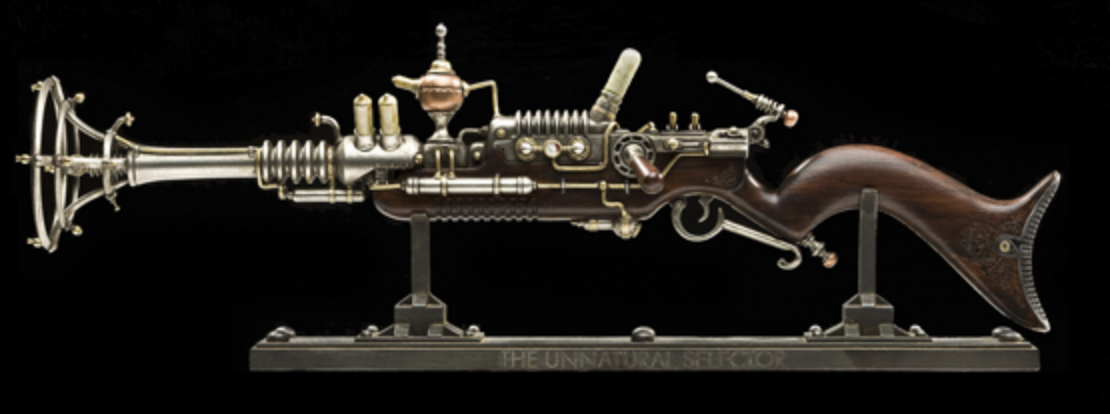
Then there’s the Unnatural Selector Ray Blunderbuss, the giant of the miniature range. At nearly three times the length of the other miniatures, it’s less a ray gun and more a ray cannon disguised as a gentleman’s hunting weapon. Everything about it declares imperial overconfidence. You can easily imagine Lord Cockswain striding through the jungles of Venus carrying one while making catastrophically poor decisions. Even in miniature form it dominates a display shelf, it’s about 30cm long.
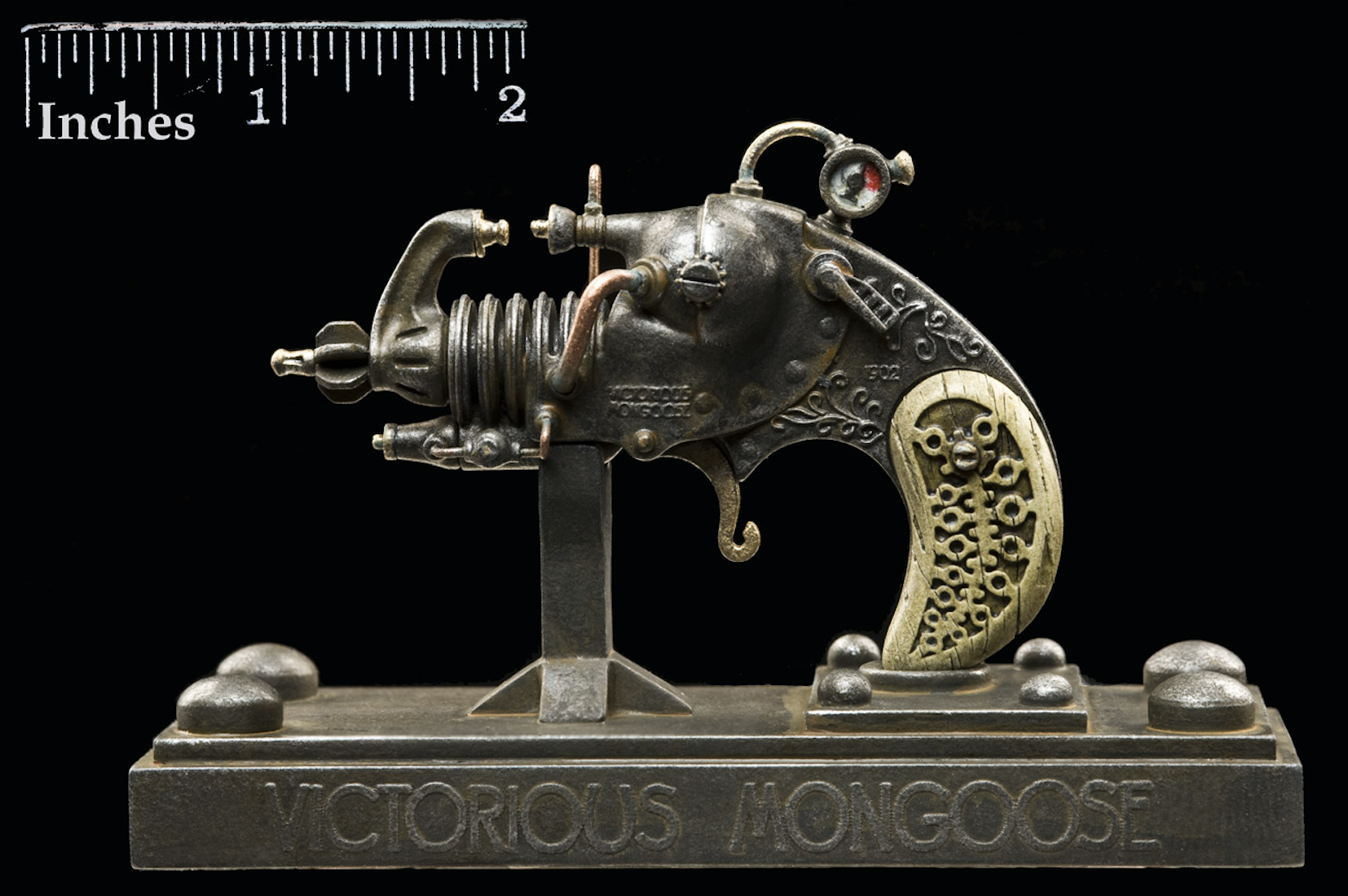
The Victorious Mongoose 1902A Concealable Ray Pistol is nicely fussy and over-engineered. The “concealable” part is perhaps optimistic. It feels like the weapon an adventurer would keep tucked inside a waistcoat for emergencies involving Martian assassins, rogue automatons or awkward diplomatic incidents. Despite being one of the smaller designs it has an incredible amount of detail packed into it.
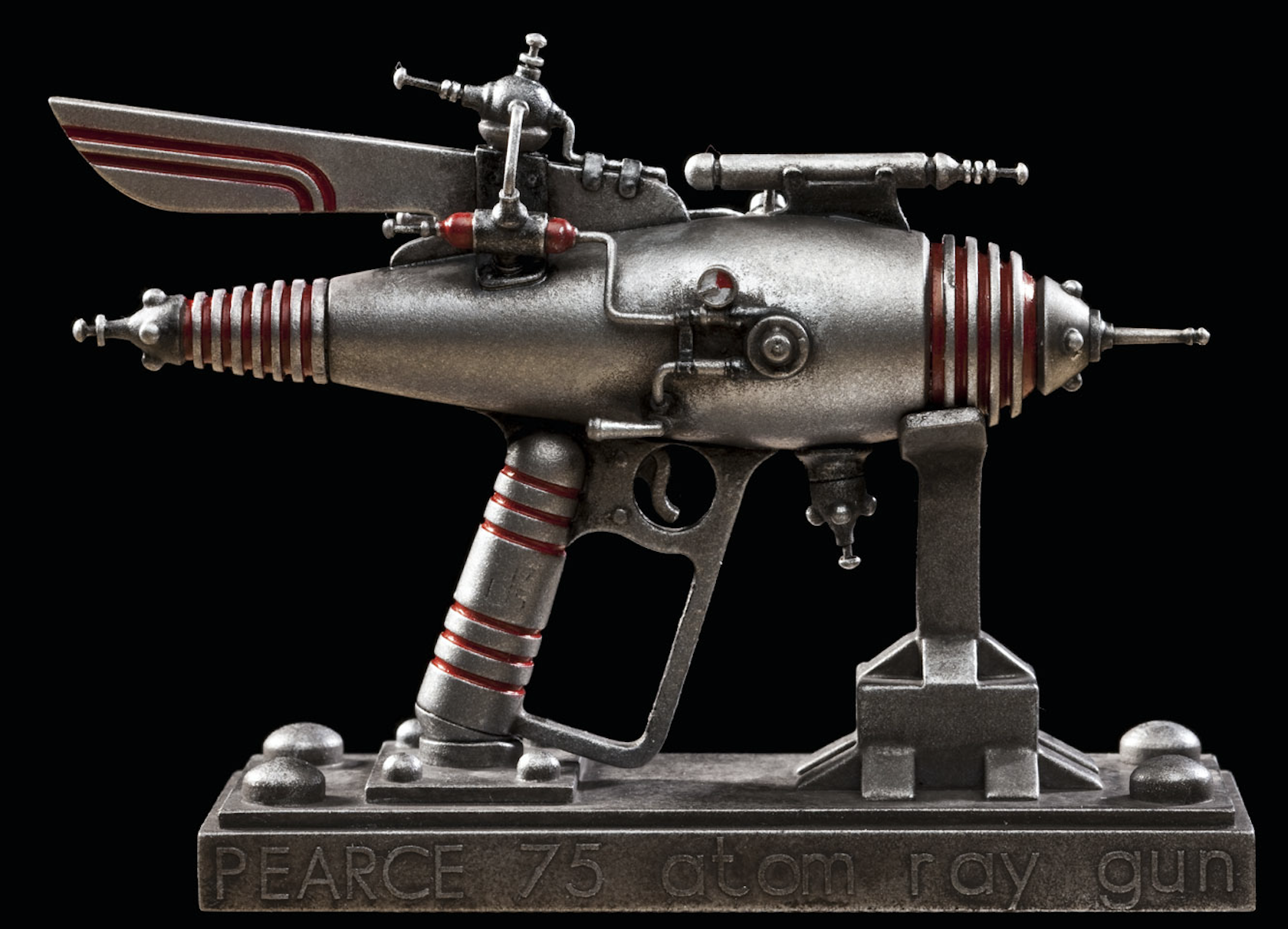
And finally the Pearce 75 Atom Ray Gun, the dandy of the collection. All curves, chrome and optimism, with a cleaner, more streamlined look than many of the earlier guns. It feels like a glimpse of the future as imagined by someone in 1905. Weta described the original reaction to it simply as “shiny,” which sums it up rather well.
Together they tell the whole story of the universe. The classic hero pistol, the military excess, the bizarre pseudo-science, the aristocratic madness, the adventurous charm and the sleek futurism. And unlike many miniature collectibles, they don’t feel like reduced versions of something else, they feel complete in their own right. Heavy little metal sculptures, designed by Greg Broadmore and brought into reality by David Tremont, each one carrying a healthy dose of retro-futurist nonsense.
One of the highlights recently was picking up a few pieces directly from Tremont himself, which is something I never really expected to happen. His sculpting work was such a huge part of bringing this world into physical reality. Broadmore’s illustrations are fantastic, but turning those drawings into objects that genuinely look like they came from some alternate-history imperial weapons manufacturer is another thing entirely.
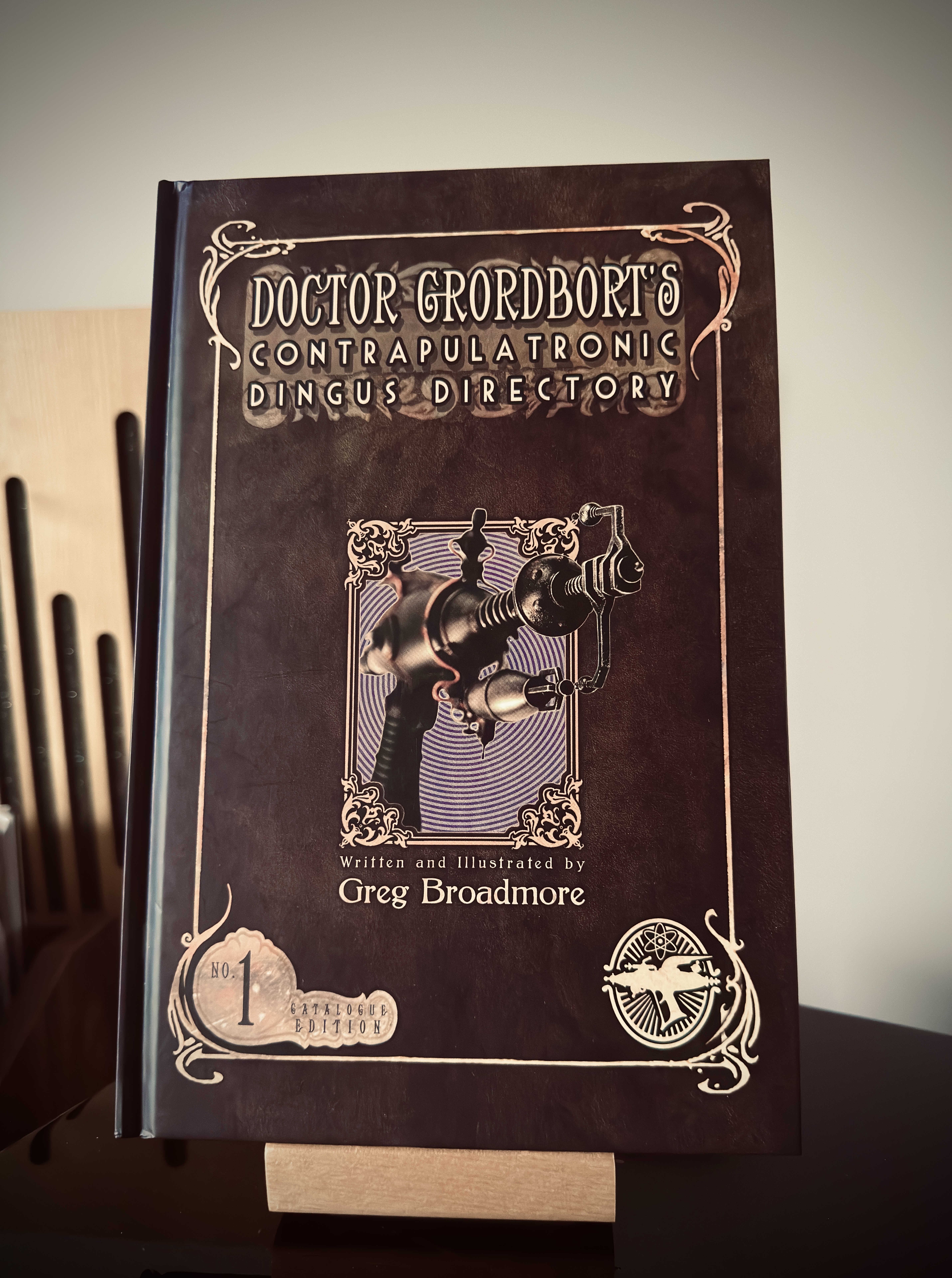

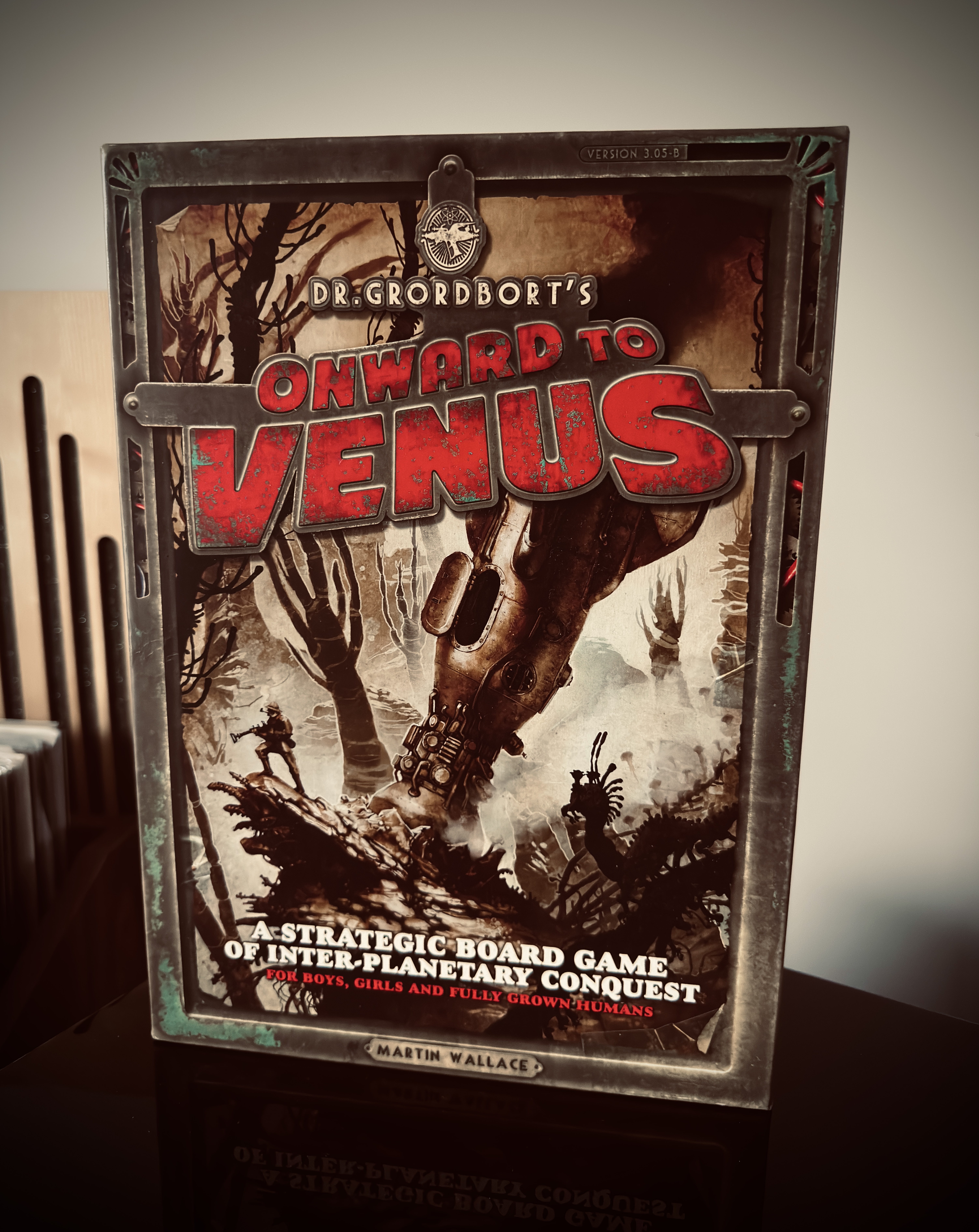
There’s also the Onward to Venus board game, which deserves a mention purely because it commits to the bit as hard as anything else in the Dr Grordbort universe. It’s a really nicely produced tabletop game set across the planets of the solar system, dripping with the same imperial absurdity and retro-futurist artwork that makes the whole world so appealing. Whether you’re actually playing it or just leaving it on a shelf to confuse guests, it feels like a genuine artefact from the universe rather than a piece of merchandise slapped together to extend a brand. For anyone who grew up loving this kind of whimsical science fiction, it makes you happy just to own it.
What keeps drawing me back to all of this, to Dr Grordbort specifically and to steampunk and retro-futurism more broadly, isn’t really the collecting. It’s the escapism. The world is funny without being cynical. It celebrates adventure while poking fun at it. It understands that grown adults can still enjoy the same sense of wonder they had as kids running around with toy laser guns, and it doesn’t apologise for that for a second.
A lot of modern collectibles feel like investments first and hobbies second. Dr Grordbort has never felt like that. It feels like collecting bits of an elaborate joke that everyone involved is committed to telling as seriously as possible.
There are a couple of bits I still want to collect, the Saboteur 66 (a finely balanced tool-of-the-trade for murderous bastards across the solar system), and one or two books. I have a few double ups too so will have to sell those at some point.
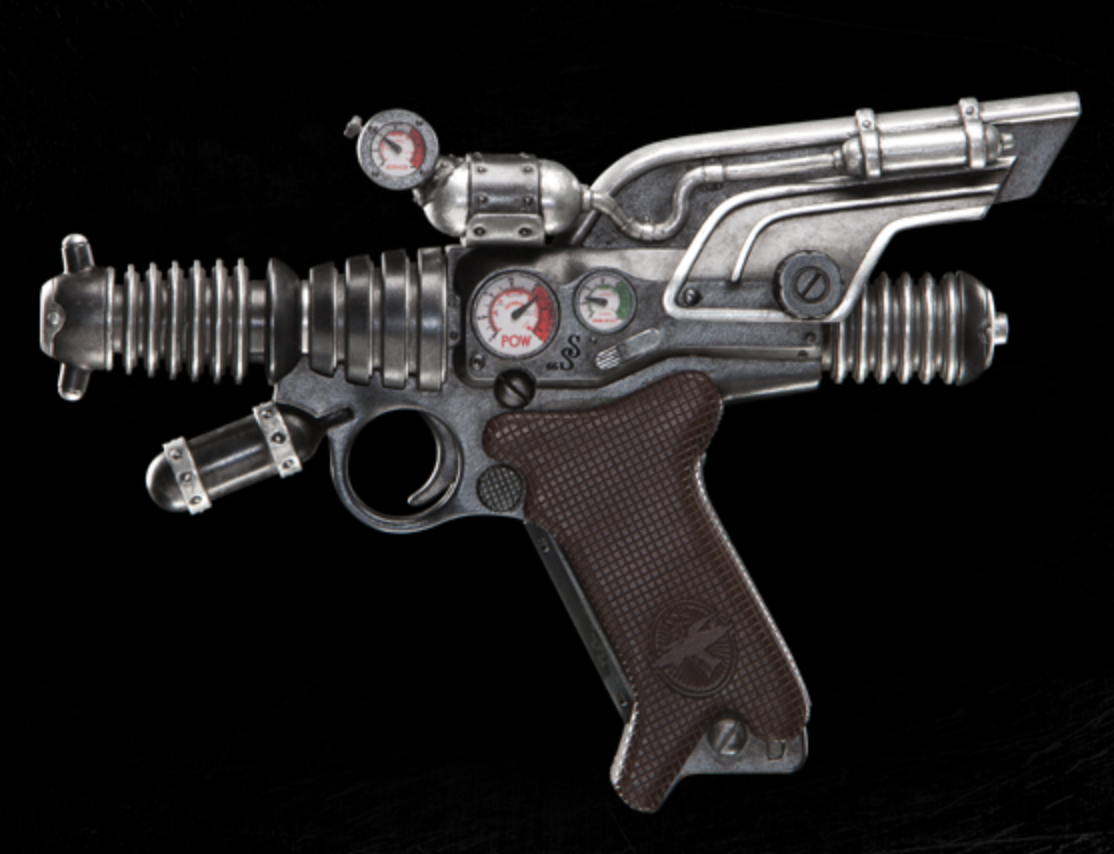
Every miniature on the shelf is a tiny portal into that world. A world where Mars is dangerous, moustaches are mandatory, ray guns solve every problem and medals are handed out for entirely arbitrary reasons.
The one problem with accumulating all of this is that it needs somewhere to live. A handful of miniatures and a board game sounds manageable until you actually look at the shelf situation and realise none of it is displayed particularly well. The miniatures deserve better than being lined up in front of books. The ideal would be some kind of dedicated display box, something with a bit of character to it, maybe timber and glass, something that looks like it belongs in a Victorian explorer’s study. Whether that means finding something and adapting it or building something from scratch is still an open question.


You must be logged in to post a comment.