
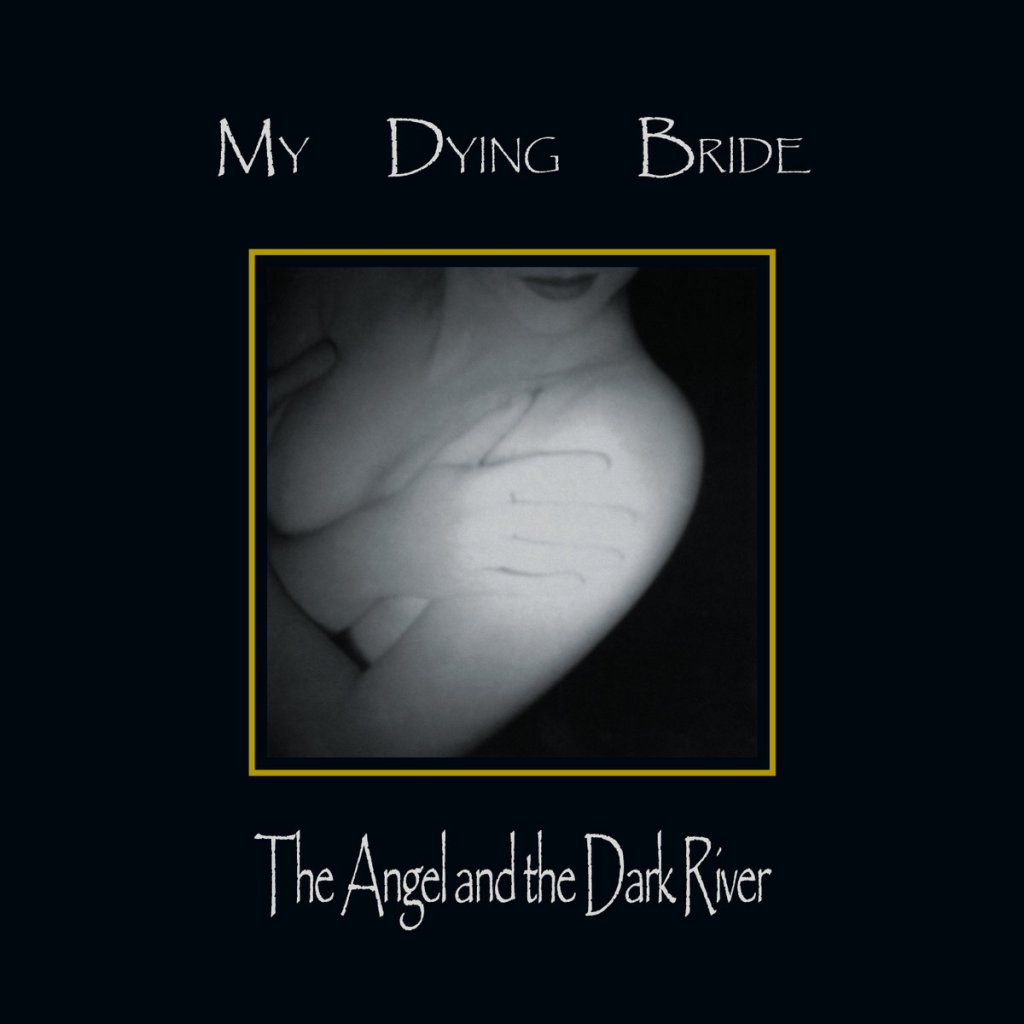
By the time The Angel and the Dark River came out in 1995, Turn Loose the Swans had already made a pretty big impression on me. I was usually pretty much on top of new releases at the time, and I’d already heard the track “From Darkest Skies” on a promo disc. The annoying thing was that they’d cut the beginning off it, so the bass intro was missing, not that I knew that at the time.
My friend Spencer surprised me by having secretly bought the album and springing it on me.
It was interesting how different the album was from Turn Loose the Swans.
Turn Loose… had still been very much a death-doom album. The growled vocals were a big part of it, and there was quite a lot of contrast between the really heavy stuff and the violin, clean passages and more atmospheric bits. The Angel and the Dark River more or less gets rid of that distinction. The growls are gone, Aaron is singing cleanly, and the violin and keyboards are much more part of the overall sound.
It’s still bloody heavy, though.
“The Cry of Mankind” is probably the obvious example. It’s an epic track, and at the time I remember it seeming enormous. That main riff just keeps grinding away, with the violin and keyboards sitting around it, and the whole thing gradually builds. Then, when you think it’s coming to an end, it carries on into that long, weird outro. It’s a strange way to finish a song and I always liked that they did it. It just keeps going rather than wrapping everything up neatly. I seem to remember the original vinyl version having that section edited down, although I may be mixing that up with one of the radio edits.
It also became one of their regular live songs, and it’s easy to see why. It’s got that huge, slow-moving quality that works really well on stage. The outro in particular gives them something to really stretch out with. It became one of those songs that you expected to hear in their set.
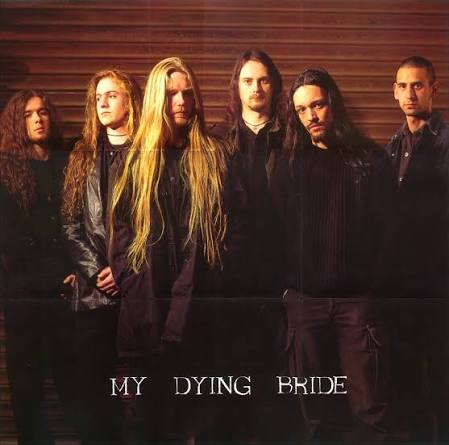
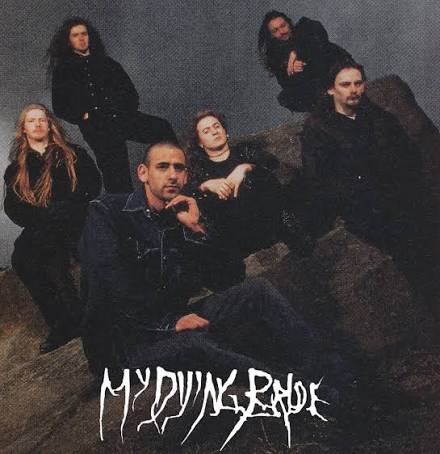
Hearing “From Darkest Skies” properly for the first time was excellent. That cool bass and violin intro bit was there, followed by the heavy as fuck guitars and soaring violin melody, and it was immediately better than the chopped-up promo version I’d heard.
“Black Voyage” and “Two Winters Only” continue in much the same vein. There’s more room in the arrangements than on Turn Loose the Swans, and the band aren’t constantly jumping between death metal and quieter material. “A Sea to Suffer In” is a bit more direct, and “Your Shameful Heaven” brings back some of the heavier side, but generally the whole album feels more controlled.
That’s probably the biggest difference between the two records. Turn Loose the Swans sounds like a band experimenting with what they could get away with. The Angel and the Dark River sounds like they’d worked it out.
There was also the usual Peaceville business of different versions and bonus tracks. “The Sexuality of Bereavement” had been released as a 7″ in the Peaceville Collectors Club series. I can’t actually remember whether I had that before or after the album came out, i think before though. It’s very much a Turn Loose the Swans-era track, though, with the growled vocals, so it makes sense that it ended up being associated with this period.
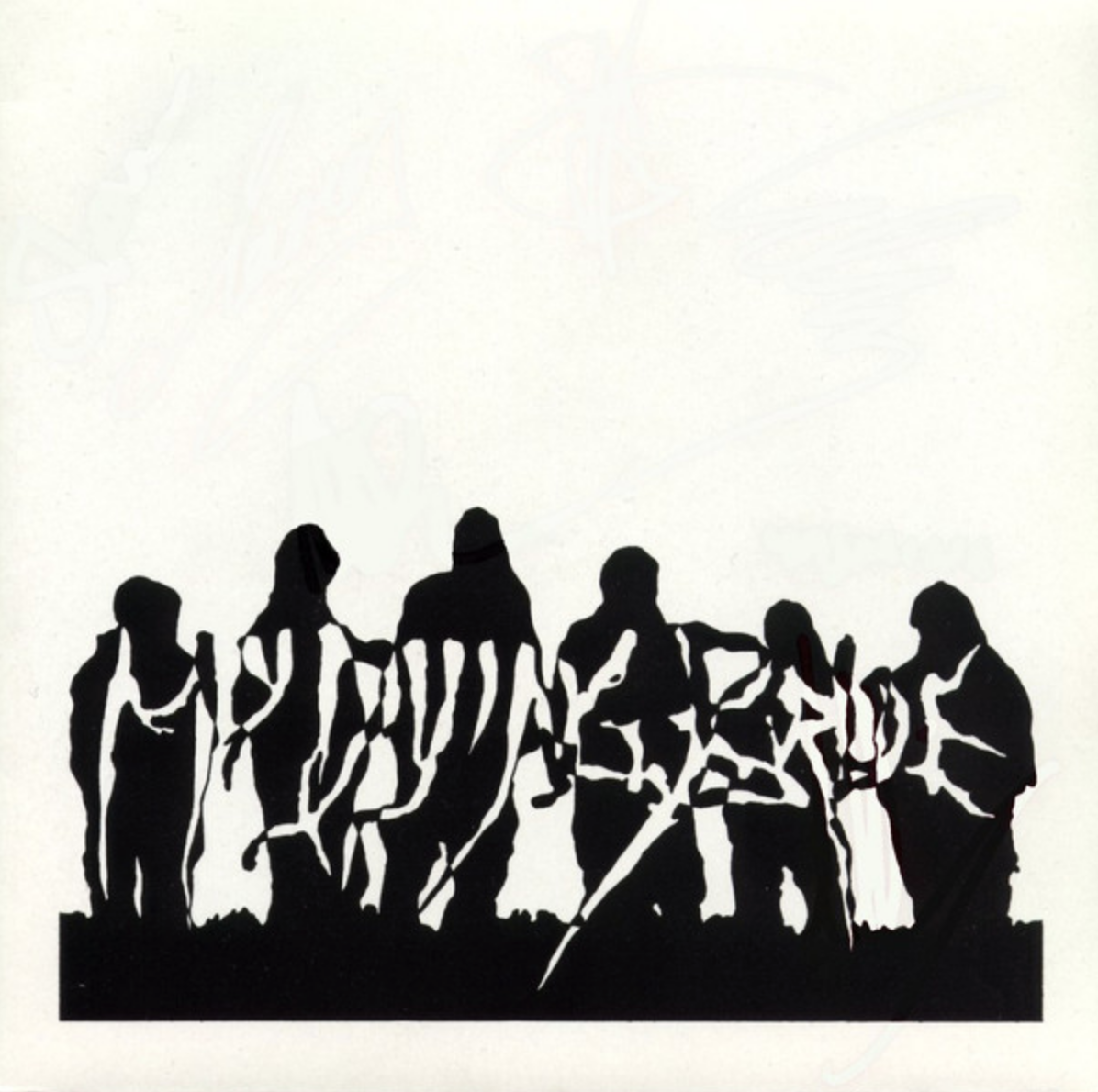
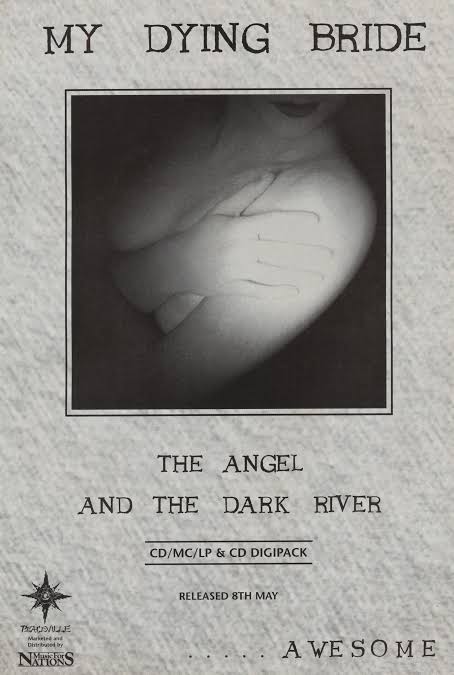
I got hold of the limited digipak version of it, which had “The Sexuality of Bereavement” as a bonus track and came with a poster. Then there was another limited version with a black version of the cover, which had the Live at the Dynamo ’95 bonus CD.
That live disc was only a short set, but it was a nice thing to have. It had “Your River”, “A Sea to Suffer In”, “Your Shameful Heaven” and “The Forever People”, and it captured the band around the time of the album rather than some later attempt to document them.
And it has the famous Aaron voice crack when he introduces the band.
He goes for the suitably deep and dramatic introduction and his voice just gives up on him. It’s quite funny, particularly because My Dying Bride were serious business at the time. It’s a hilarious moment that makes an old live recording more memorable.
The Dynamo disc also makes it obvious that the songs could be considerably more forceful live than they sometimes sound on the studio album. “A Sea to Suffer In” and “Your Shameful Heaven” have a lot more attack, while “Your River” takes things back to Turn Loose the Swans.
Looking back, I think what makes The Angel and the Dark River work so well as the follow-up to Turn Loose the Swans is that they didn’t just try to make another version of it. They took out quite a lot of the death-metal side and concentrated on the things that were already making them different: the big riffs, the violin, the keyboards and the sense of atmosphere.
The clean vocals were probably the biggest change. At first it seems like something is missing because there are no growls, but after a while you stop noticing that and the album just becomes what it is. Aaron’s voice suits the songs, particularly on “From Darkest Skies” and “Two Winters Only”, and the guitars are heavy enough that there’s no danger of the album becoming lightweight.
For me, though, the memory of the album is still tied up with that first listen at Spen’s place. I’d already heard “From Darkest Skies”, but only the truncated promo version. Then he put the actual album on, loud, and there was that bass intro I hadn’t heard before, being a bassist in a band at that time it really stood out. I always thought the bass on that album sounded really good, the super clean ‘new strings’ deep Trace Elliot sound of the time..
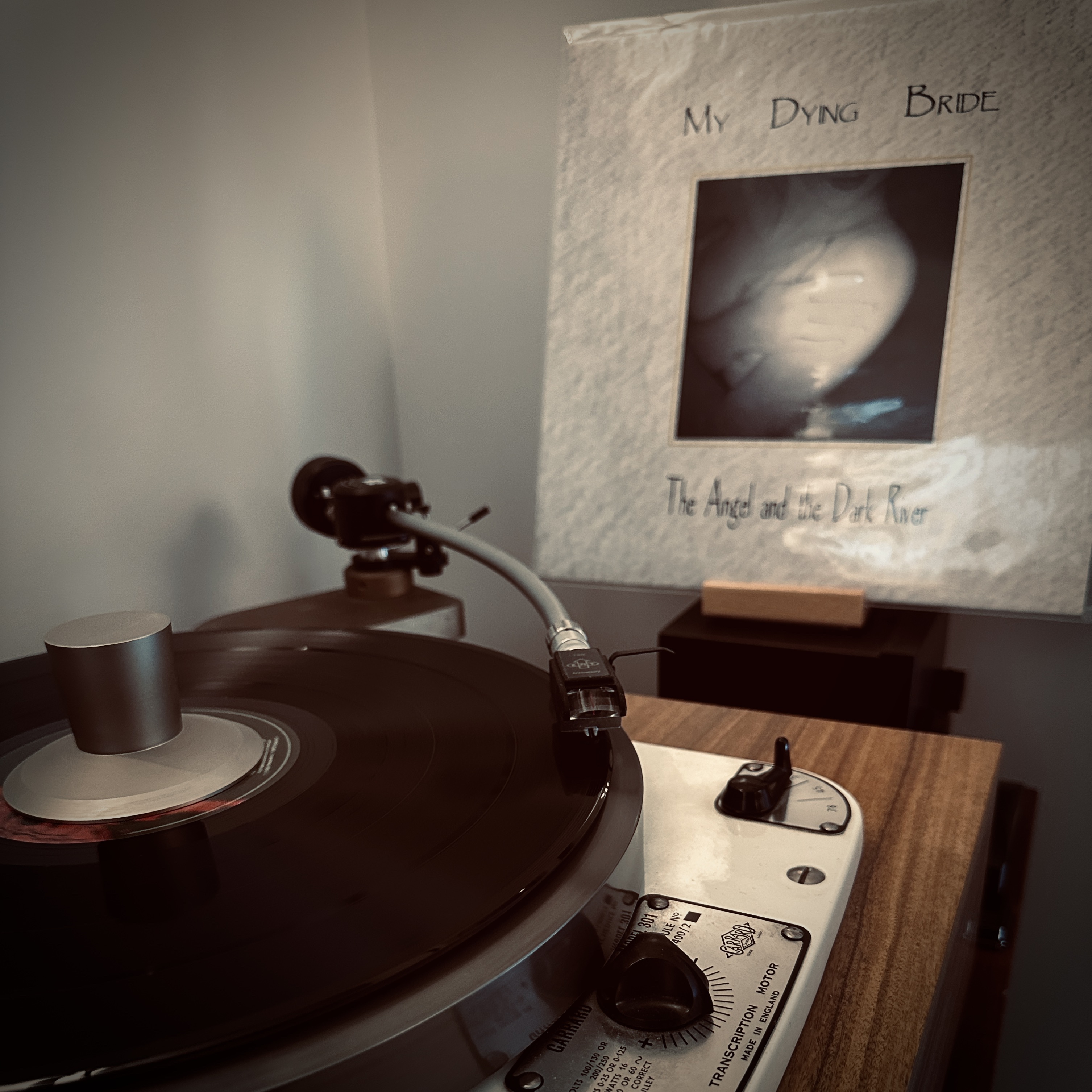
I’ve been playing it on vinyl again recently, and it’s one of those albums that sounds absolutely enormous on a good system. The guitars have real weight and texture to them, the bass has that deep, physical rumble, and the violin and keyboards sit above it without getting lost. When you turn it up, the whole thing just gets bigger and darker. The new half-speed master from the Anthology of Sombre Reflections box is particularly impressive. It has a huge, solid bottom end, but there’s also a lot of air around the instruments, so you can hear the individual layers of the arrangement rather than just getting a wall of sound. The guitars have a dense, almost physical quality that you want from this record, while the quieter passages have plenty of space around them. It’s a very impressive pressing, and I’m really looking forward to hearing it on the next iteration of my stereo. With the extra scale and resolution I’m aiming for, I suspect this record could be pretty spectacular.
Having both the original 1995 vinyl pressing and the new half-speed master from Anthology of Sombre Reflections makes for quite an interesting comparison, because they aren’t actually identical editions with different mastering.
The most obvious difference is the running order. The original LP has “Black Voyage” as the third track on Side One, with “A Sea to Suffer In” opening Side Two. On the new half-speed version, those two are reversed. “A Sea to Suffer In” finishes Side One and “Black Voyage” starts Side Two.
The reason becomes obvious when you listen to “The Cry of Mankind”. The original vinyl uses the edited version, with the long atmospheric section at the end cut down. The new half-speed master restores the full version, running over 12 minutes. That extra time is enough to change how the sides have to be laid out, hence the change in track order. It’s actually quite a nice touch that they’ve used the full version rather than simply reproducing the old LP master. The original track was always meant to be that long, and the band themselves said at the time that the single had been drastically edited.
It also changes the feel of the album slightly. On the original LP, “The Cry of Mankind” is followed by “From Darkest Skies” and then “Black Voyage”, which makes for a very strong first side. You then turn the record over and get “A Sea to Suffer In”, “Two Winters Only” and “Your Shameful Heaven”.
The new version gives you “A Sea to Suffer In” at the end of Side One, which actually works pretty well. You get the full, extended “Cry of Mankind”, then “From Darkest Skies”, and then another long track before you have to get up and turn the record over. Side Two then starts with “Black Voyage”.
As for the sound, the difference between the two pressings is quite interesting. The original has that slightly harder, denser character you tend to associate with a lot of mid-90s Peaceville vinyl. It sounds nostalgic almost, and there’s something quite appealing about that original presentation. The new half-speed master is cleaner and more open, with more space around the guitars, violin and keyboards and a noticeably bigger sense of scale. The bass also has more weight and definition.
That doesn’t make the original obsolete, though. If anything, having both makes the comparison more worthwhile. The original is the way the album was presented in 1995, the new one gives you a more complete version of the album and a more spacious, modern presentation of the original recording.
I think of The Angel… as a particularly important My Dying Bride album. Turn Loose… was the one that got them there, but this was where they really settled into the sound.


You must be logged in to post a comment.