
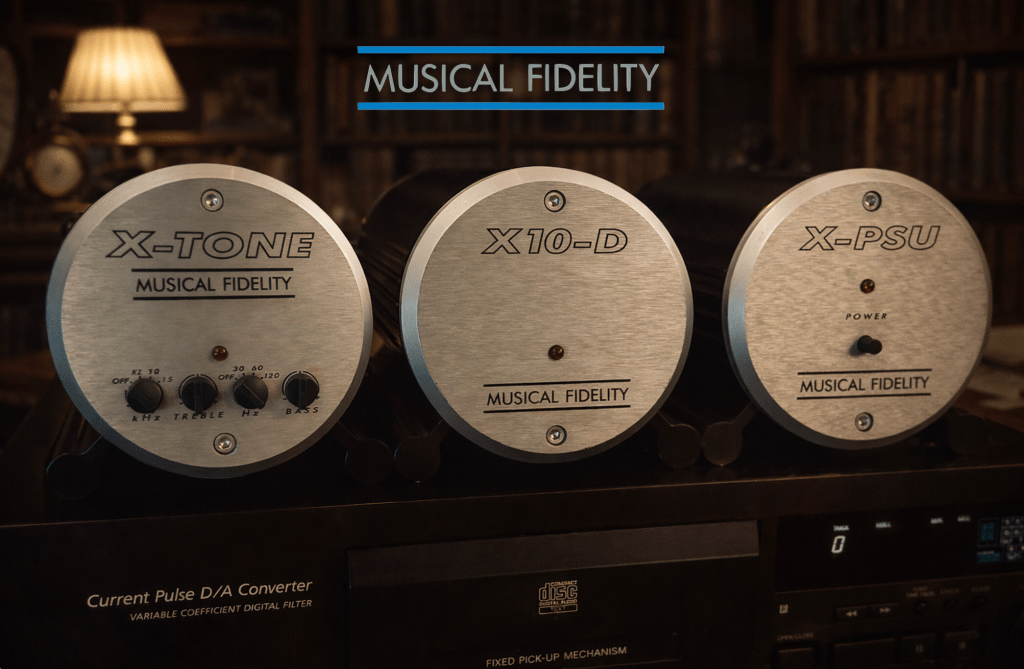
I picked up a few of those old Musical Fidelity X-series pieces again recently, the X-10D, X-PSU, and X-Tone. I had them years ago, got rid of them as you do, and somehow ended up back with them. They’re pushing thirty years old now, which which makes them properly vintage now, which is always appealing. It doesn’t seem that long ago, time flies I guess. I wasn’t in any kind of professional audio context when I first had them, I was really just starting out. I’d seen them in a local shop, AudioVision in the CBD and thought they were cool. They weren’t really on my radar then, but then I bought a few magazines and saw a few interesting reviews about them, particularly the X-10D. I think I actually bought my first piece second hand via the old Trade & Exchange, I can’t remember now.
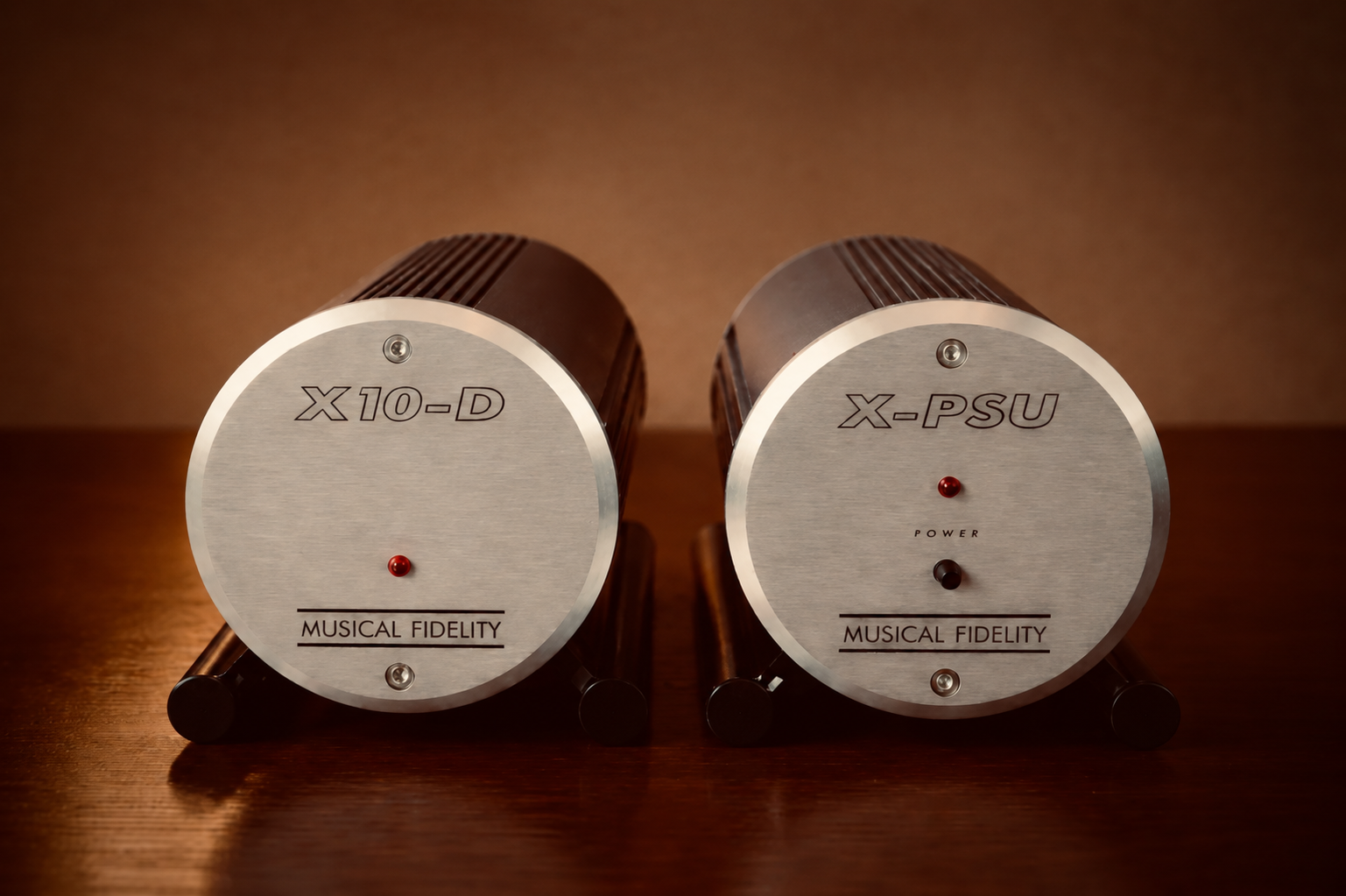
The X-10D was my first experience of anything with a tube in it. I remember being a bit suspicious, it was called the “Missing Link”, and sounded too good to be true. But it did something I couldn’t ignore. Nothing you could easily point at, just a slight easing of things. I’ve heard a lot of valve gear since and I have a better sense now of what it was doing, but at the time it was just mysteriously beguiling I think.
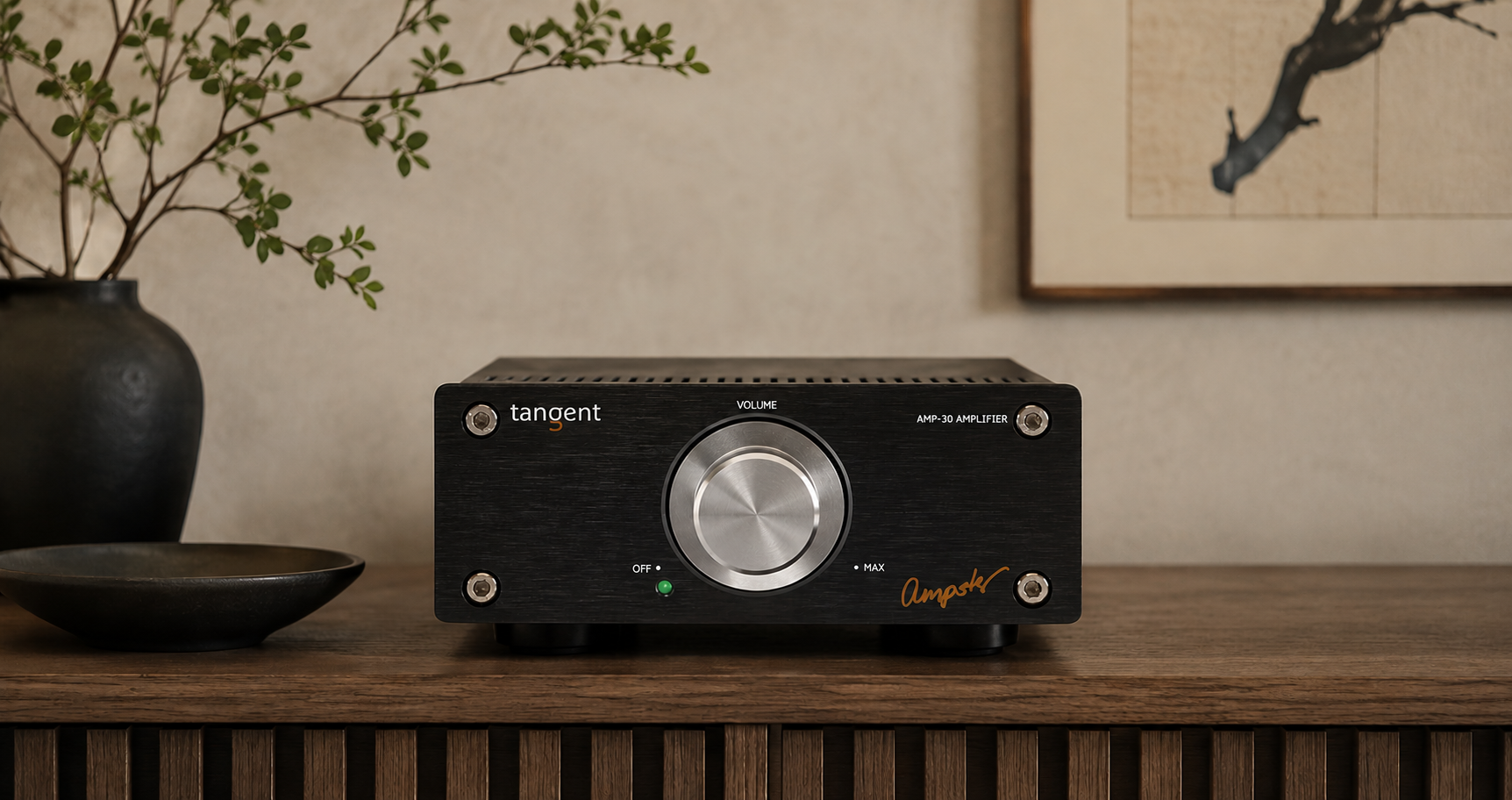
I’ve been running them in a second system with an old Sony CD player I’ve written about before, and a random amp contraption thing called a Tangent AMP-30 and my Omega wide-band speakers. Nothing fancy, just a simple system I’ve cobbled together to see how they work.
The X-10D still does what I remember. The Sony is clean and honest and the buffer takes just a little of that cleanliness off, which sounds like a bad thing but isn’t always. Easier to listen to over a longer stretch maybe. I wouldn’t make big claims for it but the effect is consistent and real.
The X-PSU is tidiness more than anything else. One power supply instead of wall-warts trailing behind the shelf. If you hear a difference beyond that I’d be curious, but I’m not sure I do.
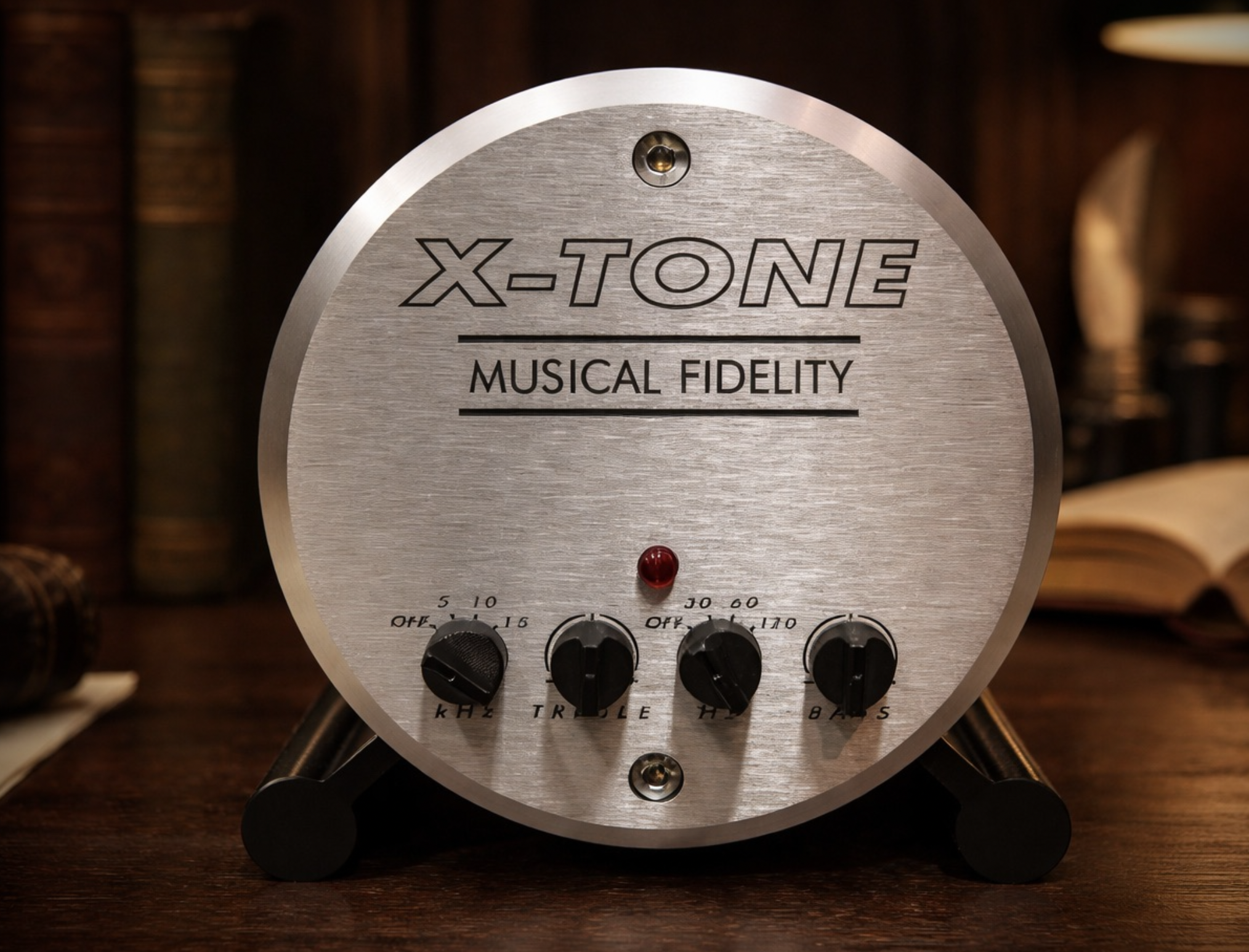
The X-Tone is the one that’s taken on a different meaning coming back to it. Tone controls have always been a bit of a fault line in hi-fi, with a lot of people treating them as somehow improper, as if adjusting the frequency balance of a recording is cheating. It’s the signal path purity argument, which I understand of course, but it has always felt a bit too convenient, like a way of making a limitation sound like a benefit.
No two recordings sound the same. No room is neutral. The idea that one fixed tonal balance is going to serve everything you play is fine as a position but it doesn’t survive much contact with actual listening.
I’ve never gone down the digital processing route at home. I know what it can do and I’m not dismissing it, but I don’t want another layer of setup and menus between me and just putting a record on. Something physical that I can nudge by ear is about as far as I would want to take it.
A system I heard years ago had a Rives Audio PARC working in the bass region and it was one of the better low ends I’ve come across. The guy had his room properly treated, knew what he was doing, and the PARC was just sorting out what the room was adding. You wouldn’t have known it was there. That’s usually how you know something is working. I’d like to find one of those units actually, though Rives folded into oblivion a while back.
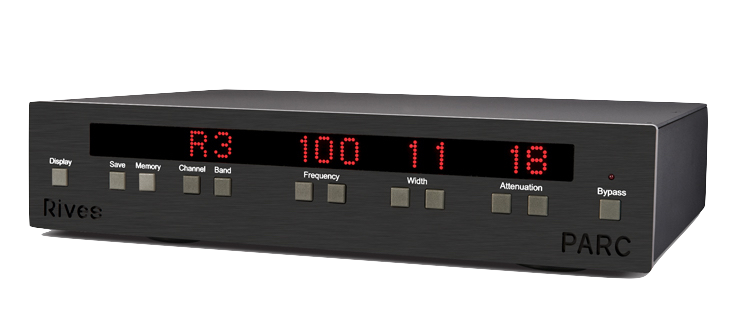
It haunted my brain because it made the case more effectively than any theoretical argument could. Careful, targeted correction can make a system more convincing, not less.
The X-Tone works on a smaller and less precise scale but the principle isn’t that different. You make a small adjustment by ear until the recording settles. It doesn’t feel like you’re interfering, rather just a small accommodation. A bit more here, a touch less there. After a while you stop thinking about it.
What I keep coming back to with these pieces is how little they insist on anything. The X-10D nudges the character slightly, the X-Tone gives you a bit of room to respond to what you’re hearing, and the Sony underneath it all just gets on with its job. The whole thing ends up being more flexible than the sum of its parts, and you can shift the balance a little depending on what’s playing or how you’re feeling. That kind of adaptability is underrated and honestly harder to come by than it should be. Speaking of adaptability, I still lust after a Cello Palette EQ, but I will never be able to afford nor accomodate one of those…
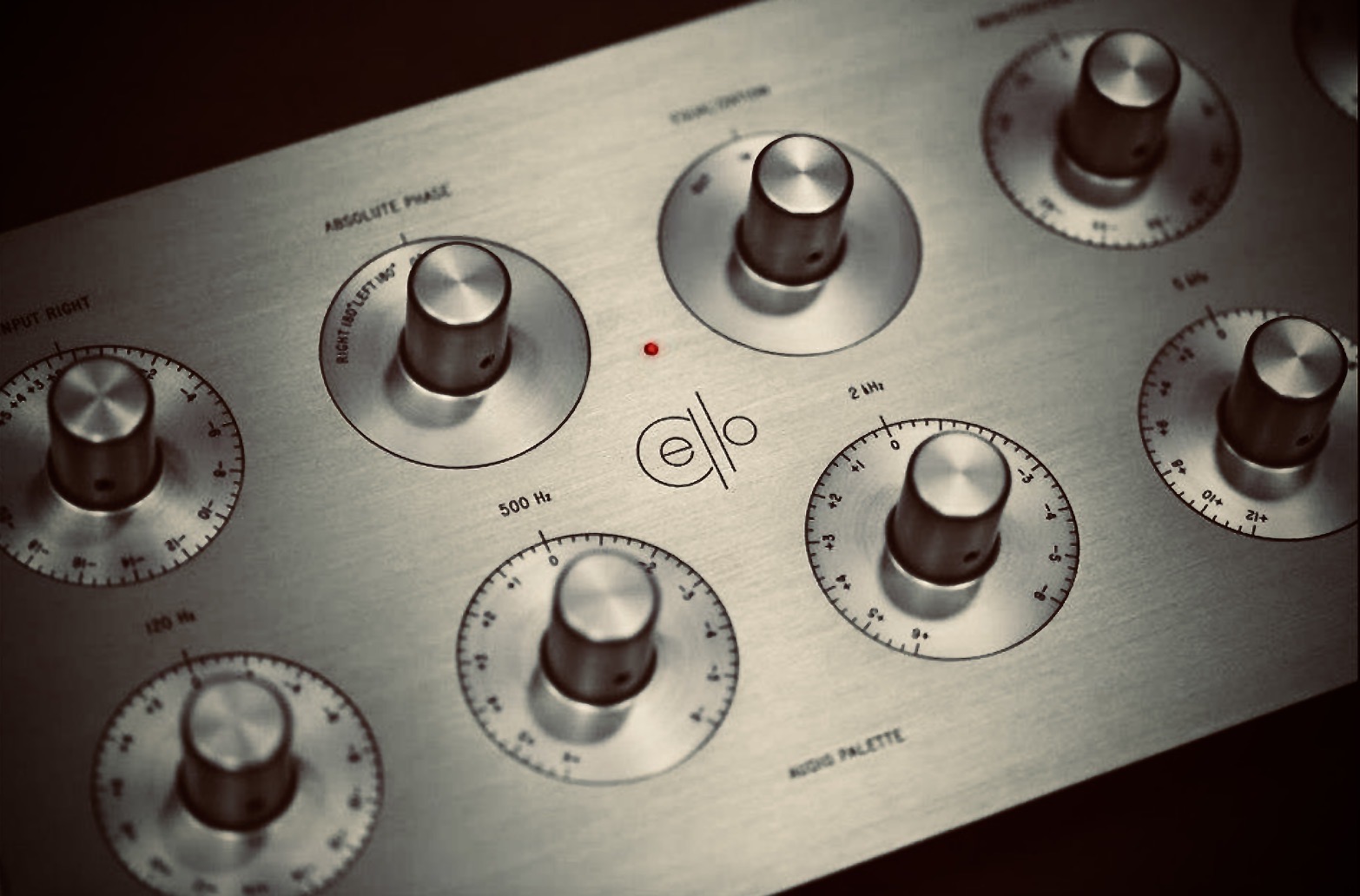
Thirty years on and they still make a reasonable case for themselves. I wasn’t expecting to find them quite this easy to live with again.
What I’ve noticed coming back to all of this is how quickly the objections to tone controls fade once you actually start using them again. It stops feeling like you are breaking a rule and starts feeling like you are just responding to what is in front of you. Not manipulating the ‘truth’ of what is there, because what does truth mean anyway; just changing the flavour to something more of your liking, in the moment. The hair-shirt flat-earth Illuminati won’t come and take your stereo off you because you are playing with tone controls.
With the X-10D in the chain as well, the whole thing works surprisingly well together. The buffer softens things slightly, and the X-Tone lets you make small changes when you need to. Using the already excellent Sony as the source, the system stops feeling locked into one sound and becomes something you can adjust depending on the mood of the recording.
That’s really what stands out about revisiting these X-series pieces after all these years. They don’t insist on a single correct way of listening, they invite small adjustments, almost casual decisions about balance and feel. Less ideology, more listening, and in a way that feels even more appealing now than it did the first time around.
Back in 1996, Sam Tellig, aka Tom Gillett, reviewed the X-10D for Stereophile, and as was often the case whenever Musical Fidelity was involved, his enthusiasm ran a bit ahead of the reality. Listening to it now, I think he gave the little buffer rather more credit than it really deserves:
“Musical Fidelity X-10D” it said on the box. No, this is not bathtub mildew remover or laundry detergent. Actually, it’s hard to figure out exactly what it is. The box is little help. Musical Fidelity calls the X-10D “the missing link,” a “pure Class A CD-player accessory.”
I’ll reveal the true identity of X-10D in a moment. But I’ll say straight off that for those of you with such CD players as the Marantz CD 63 etc., this may be the most cost-effective CD upgrade ever to come down the pike. Digital processors?Nah. Do you want to spend $500 to $1000 (for starters) on a processor, only to be faced with paying $200 for a good digital cable to run between your player and processor? And what else do you get by separating the two boxes, besides having to buy cable? You get jitter, that’s what. I say forget processors. Anthony Michaelson, Managing Director of the British Musical Fidelity company, appears to agree—even though he makes processors. In a phone conversation, Anthony referred to outboard processors as “commerce”—which I take to mean he can sell ’em but you should perhaps not buy ’em. According to Anthony, though there’s nothing wrong with the DACs in many modestly priced players, their analog output stages are another matter: cheap op-amps, wimpy power supplies, and the like. Much of the improvement in sound that you get with an outboard DAC may be due to the DAC’s better analog output stage. So why not just buy a better analog output stage? That, essentially, is what the X-10D is—for about a third of what you’d likely pay for even a budget outboard DAC. Cost-effective? You bet!
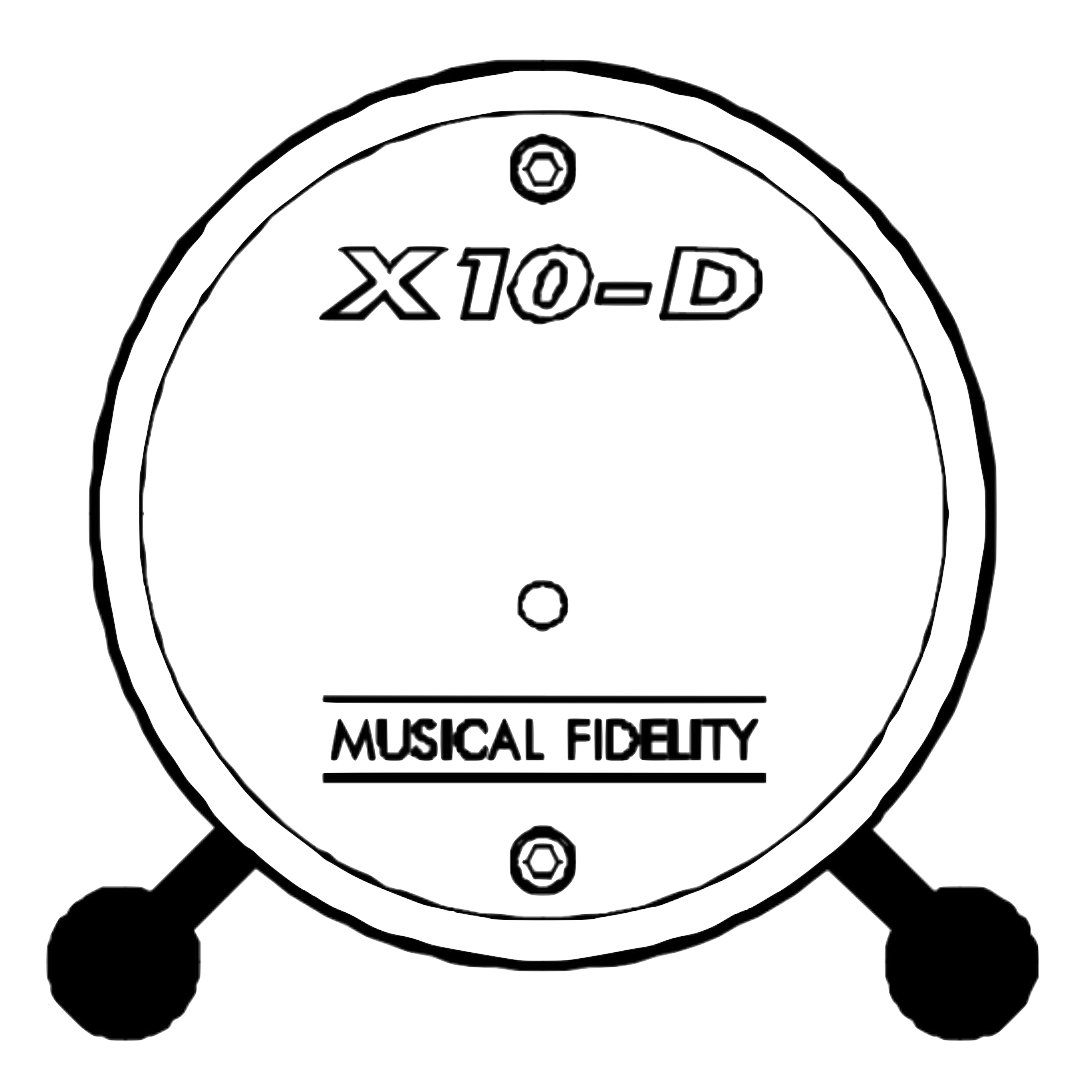
The X-10D thing looks neat—a long, narrow cylinder supported along its sides by two rails running the length of the unit. Anthony tells me that, in-house, they’ve nicknamed it “the piglet.” Additional products using the same chassis will be forthcoming, including a tubed headphone amp, an outboard phono stage, and a line stage—although whether these or other Musical Fidelity products make it to these shores remains up in the air. So…what exactly is this thing that I am suggesting—nay, urging—you to shell out 200 bucks for?
It’s a tubed output stage and buffer. The X-10D has two sets of RCA jacks, input and output (you’ll need an extra set of interconnects). You put the X-10D between your CD player and your preamp, active or passive. Or you can put it after your preamp, active or passive. Or you can put one X-10D before the preamp and another one after, if you like—which would have the effect of tubing everything before it goes to your power amp.”Voilà!,” says Anthony, whose products are all the rage in France. “You have turned your solid-state preamplifier into a tube preamplifier” with “the ineffable magic of tubes.”Essentially, the unit is an impedance-matching device,” he explains. “It has a very high input impedance, of about half a meg [500k ohms—Ed.], and quite a low output impedance—we rate it at 200 ohms or less, but in fact it’s about 15 or 20 ohms. What this does is allow a CD player to operate perfectly. You can take almost any old CD player, bang an X-10D on the end of it, and you can’t believe the results you get.”If my own experiences with the Marantz CD 63SE are any indication, Anthony is right. With the CD63SE in particular, the X-10D transformed the sound, especially in those areas where the CD-63SE itself is weak. There was more body, more bloom. Dynamics were vastly improved. There was more there there.
One caveat: The X-10D is probably not for every CD player, and the two extra sets of RCA connectors, plus the cabling and everything else that will now be in the signal path, will probably compromise the sound ever so slightly. I did not hear any great improvement using the X-10D with my Meridian 508, perhaps because the Meridian player has such a superb (and tubelike) analog output stage already. Nor would I use the X-10D with the YBA 3 CD player, feeling that the X-10D made the sound ever so slightly less transparent. But with the Marantz CD63SE? Holy smoke! Talk about transformations! Anthony swears up and down that the X-10D does not add distortion or alter frequency response (footnote 1). “The figures we’re getting from this thing have never been achieved with tubes before,” he crows. “Distortion is less than 0.01% from 10Hz to 100kHz. Signal/Noise ratio is way better than 90dB. Frequency response is flat from 10Hz to 100kHz.” I would assume that any slight loss of information is due to the cabling and connectors.The key with the X-10D is versatility. Hell, you could use this thing even if you do have a DAC—put it after the DAC or after the preamp. Music, especially digital music, almost always sounds better after it’s passed through bottles. Put it into the tape loop of your preamp and tube it on the cheap.
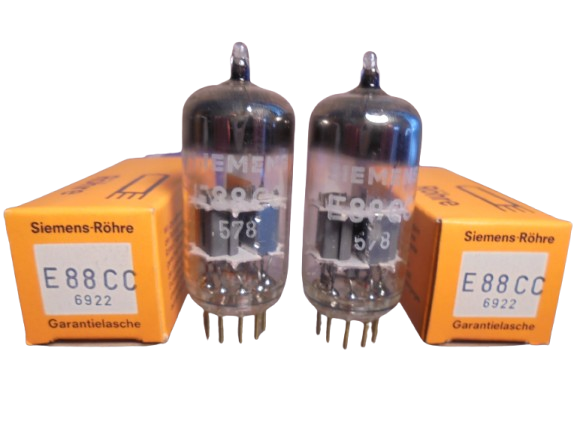
Inside, the unit has two 6DJ8s, each mounted in a tube socket so tube replacement should be no problem. The unit is meant to be left on all the time—which, contrary to what you might expect, may actually prolong the useful life of the tubes. (This would not be true of tube amplifier output tubes, of course.) If you open the unit to change tubes, be aware that Musical Fidelity considers this “tampering”; if they catch you at it, they void your warranty. Oh, hell, just be careful, and remember that the top hex screw holds the ground wire—you’ll have to carefully put it back in place when reassembling. In any event, I haven’t tried messing with the tubes, and I don’t suggest you do, either, until it becomes a necessity. At the risk of being repetitious, the X-10D is a stunning upgrade for the Marantz CD63 or CD63SE. The unit adds richness, dimensionality, and improves dynamics. It takes the sounds of these players—which, straight out of the analog outputs, can be a little thin—and fleshes it out. It smooths the treble, adds body to the midrange and bass. It takes the $500 Marantz CD63SE and makes it sound more like a $1500-$2000 CD player—all for $199.95. Quibbles? The metal rails on the bottom of the unit can scratch your table or other piece of equipment. You should get some felt or stuff to put under the unit—or tweak it with four dabs of Blu-Tack or Fun Tak, whatever they call it at your local ironmonger’s—oops, hardware shop. And, as I suggested, if you have a more-or-less state-of-the-art CD player, like the Meridian 508 or YBA CD3, you may not want to bother with the X-10D. The unit may take away as much as it gives, just because of those extra pairs of connectors and interconnects in the signal path. On the other hand, if you own something like the Marantz CD63 and you’re reasonably happy with your CD player, don’t give it another thought: Buy a Musical Fidelity X-10D.


You must be logged in to post a comment.