
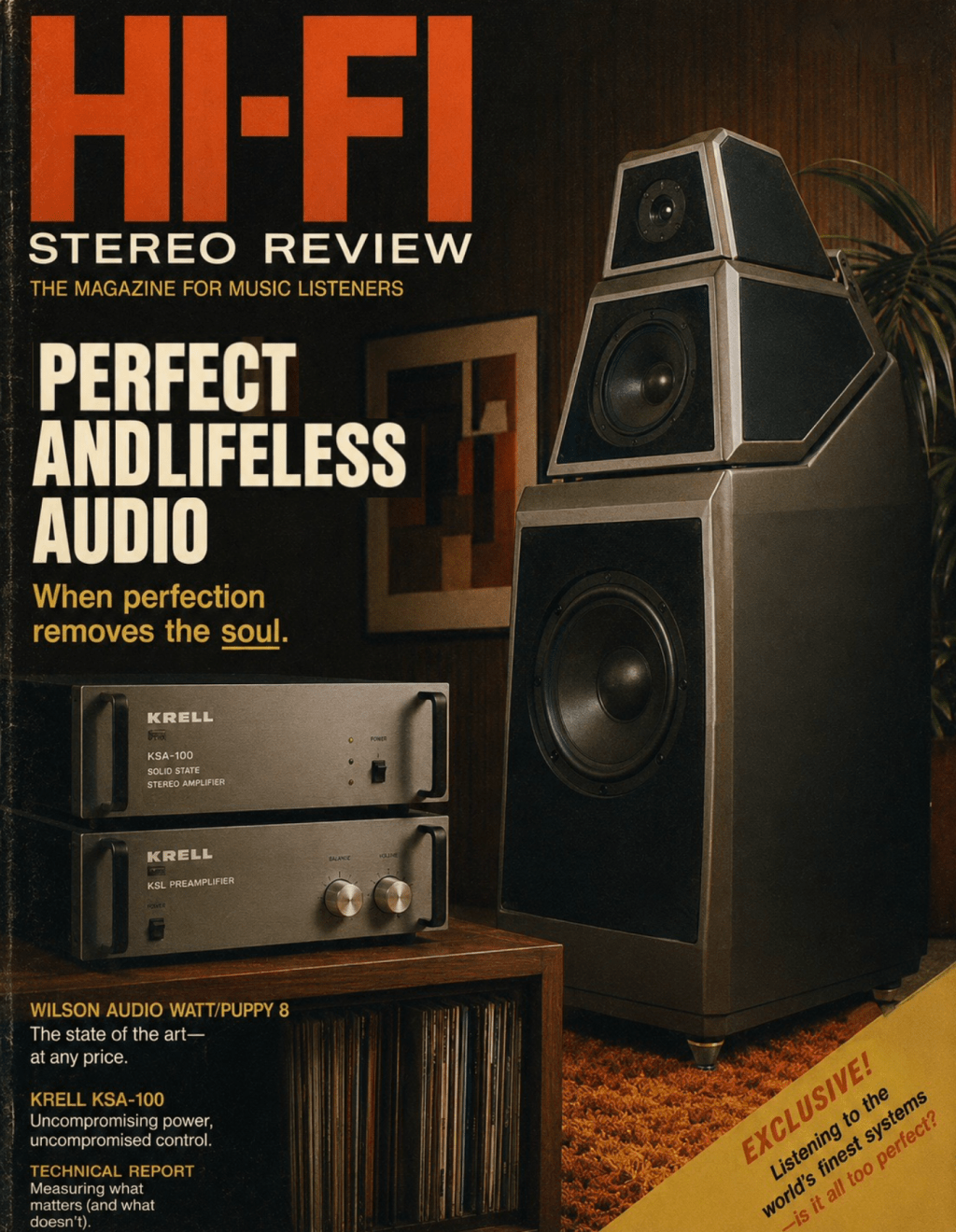
I was recently talking with a young guy who has fallen down the audiophile rabbit hole. He’s done all the reading, haunted the audiophile dark web forums, been in the Facebook groups, the whole thing. He’s super keen and excited to begin his journey. He’s ended up where most people find themselves early on: the goal is neutrality above all else. Transparency is king, get the equipment out of the way and let the music through pure and uncoloured. I think everyone goes through this phase at the beginning, and some never seem to evolve beyond it.
I said I wasn’t sure that was quite right, and that some of the most interesting systems he’d ever hear would have a pretty distinct personality. He looked at me like I’d lost the plot. Which, in audiophile circles, would be a fair assumption.
“Neutral” is probably the most loaded word in the audio world. It’s treated like a moral virtue almost. A neutral amplifier, a neutral DAC, neutral speakers, neutral cables, somehow. Entire systems get built around the idea that less personality means more ‘truth’.
The thing is though, most of the systems people actually remember and actually enjoy aren’t neutral at all, which has definitely been true in my experience.
The audio world doesn’t really want to deal with this. People form deeper attachments to gear that has some kind of character. Not gross colouration or obvious distortion, just a subtle push in a direction, maybe timing, density, warmth, or aggression. It’s hard to pin down but you feel it. It could even just be the philosophical approach of the designer, or how the tubes look cool the way they glow in a certain light, or whatever.
Really, no system is truly neutral anyway. Every room changes tonal balance, every speaker does something different with space, each cartridge has its own thing going on. The mastering engineer makes calls that are entirely their own. Human hearing shifts with context constantly. A system that sounds balanced at midnight can sound thin and bleached in the morning. So what are we actually calibrating toward here?
The neutrality obsession tends to become a wild goose chase after something that basically only exists in a lab. Listening gets weirdly forensic and detail retrieval becomes the whole point. Systems get judged on what they expose rather than what they actually do with the music.
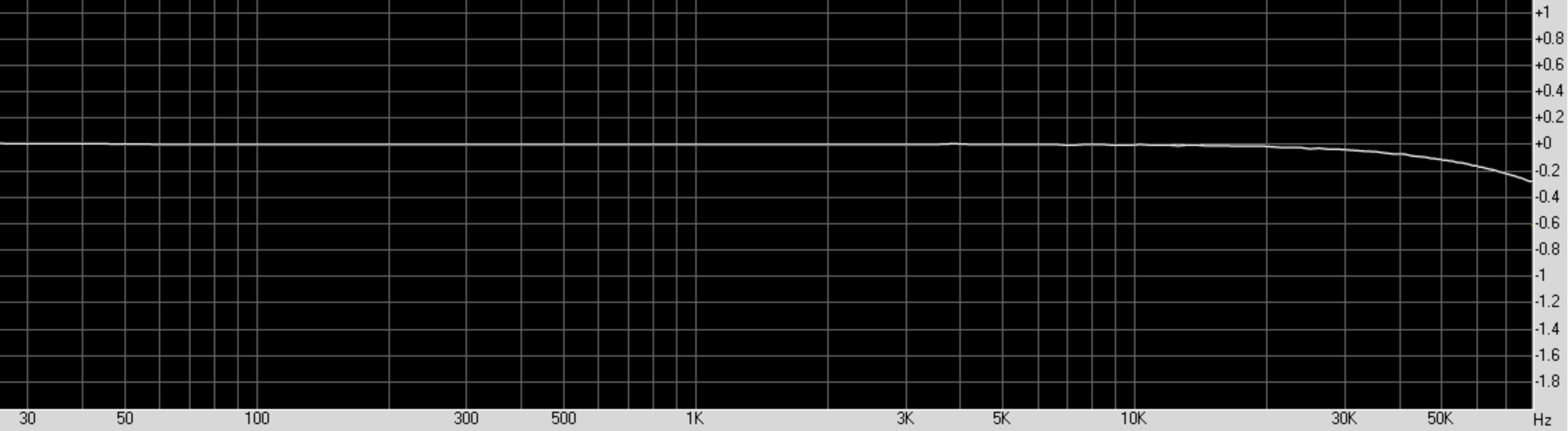
This how you end up with systems that sound incredible for fifteen minutes and exhausting for two hours. Most of the B&W high end models fall into this category for me, and all the Wilsons I have heard too, as far as speakers go. Some gear is just boring as shit to listen to. Products that are over-engineered and lose sight of the wood for all the trees.
There’s also this assumption baked into all of it that music is just a fixed object sitting there waiting to be correctly revealed. It isn’t really. A stereo isn’t meant to be a microscope. It’s closer to an instrument, and every component is doing something to pacing and weight and emotional tension in ways that are hard to separate from the music itself.
This gets obvious pretty fast once you move outside the usual audiophile repertoire. A lot of these ultra-revealing modern systems are extraordinary with sparse jazz and well-pressed acoustic recordings, then kind of fall apart as far as engagement beyond spectacle with anything messier. Extreme metal goes thin and fatiguing, drone loses immersion, punk loses its danger, electronica loses propulsion. Things get really boring.
These genres run on texture, saturation, compression, and momentum. A system obsessed with pulling everything apart can wreck the thing that makes the music work in the first place. Some older or more characterful systems actually handle this better. They might blur edges a bit but the music stays physically convincing rather than feeling like it’s being picked apart.
Not a fashionable thing to say because it sounds too subjective, but listening is subjective anyway. Recording engineers don’t work neutrally either, not really, not in the way audiophiles tend to imagine. Studios are full of coloured monitors, analogue gear, transformers, tape saturation, valve compression, deliberate distortion. Entire genres exist because of sonic coloration. The idea that playback is somehow the one part of the chain that needs to be perfectly transparent is a bit strange when you look at how music actually gets made.
And there’s something worth noticing about why the neutrality thing won’t go away, in that it offers certainty. If the system is neutral, choices feel defensible. Purchases can be rationalised and taste feels like it has some kind of objective basis. You’re not just saying you like something, you’re saying it’s correct.

A lot of the super high end fancy pants systems I have heard over the years become audio NPCs. I remember hearing them, but I definitely don’t remember what they sounded like beyond being ultimately bland and boring. On the flipside of that I can definitely remember the sound of the more characterful and ‘flawed’ systems I have heard. Its like meeting people, some are just NPCs in the background of life, whereas others you remember for their eccentricity and character.
One of the main factors in hifi is one that is rarely assessed with the same fervour as the components themselves, and that element is the actual listener. The mood and frame of mind of the listener plays a huge part in how it will sound. If you’ve had an arse day, your stereo might sound terrible, or irritate you in ways it hasn’t before. If you’ve had a few wines or whatever, you might be more forgiving of its perceived failings.
The most memorable systems are memorable because they don’t really care about any of that. They sound committed and tend to pull the music somewhere. They make records feel urgent or intimate or lush or just alive in a way that’s hard to explain.
Those stick in my memory a lot longer than technically ‘perfect’ ones.
Neutral is really a synonym for boring I think, things are infinitely more interesting with a bit more colour and roughness around the edges.


You must be logged in to post a comment.