
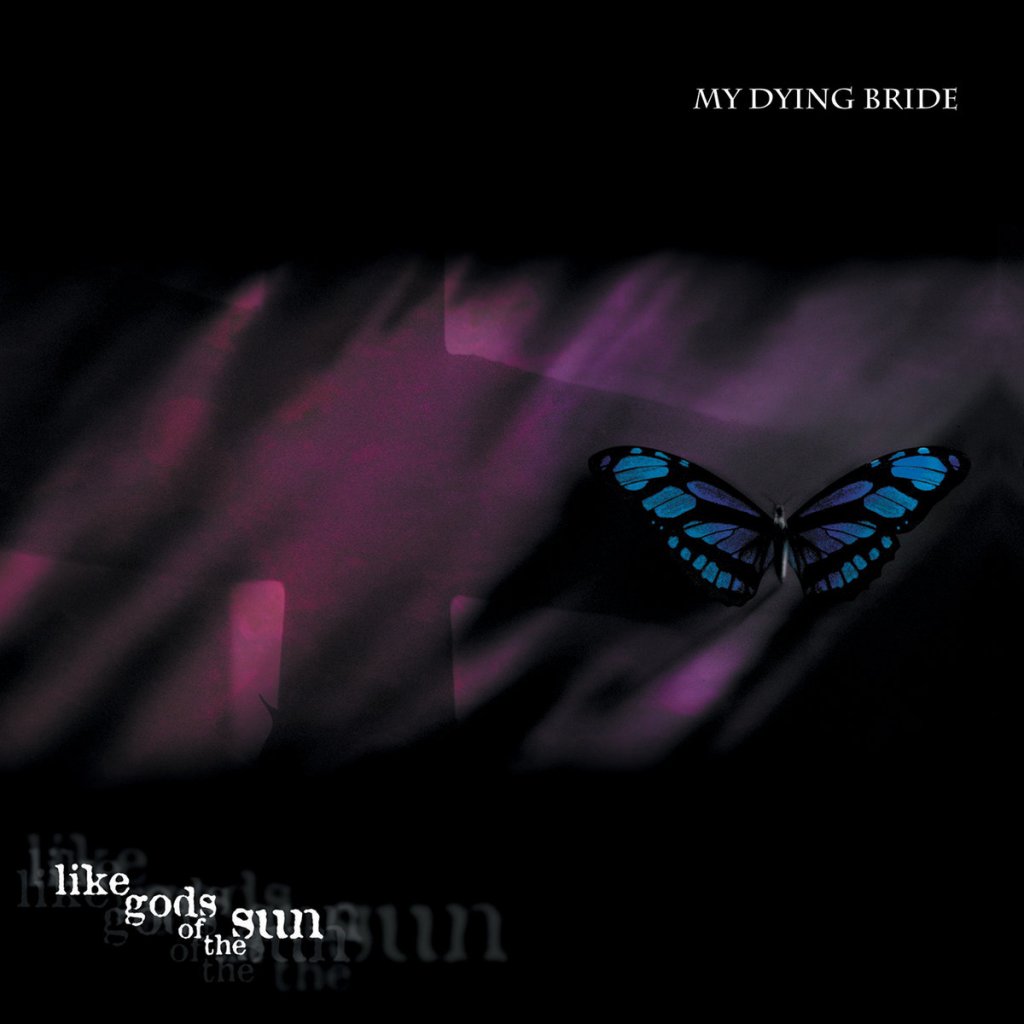
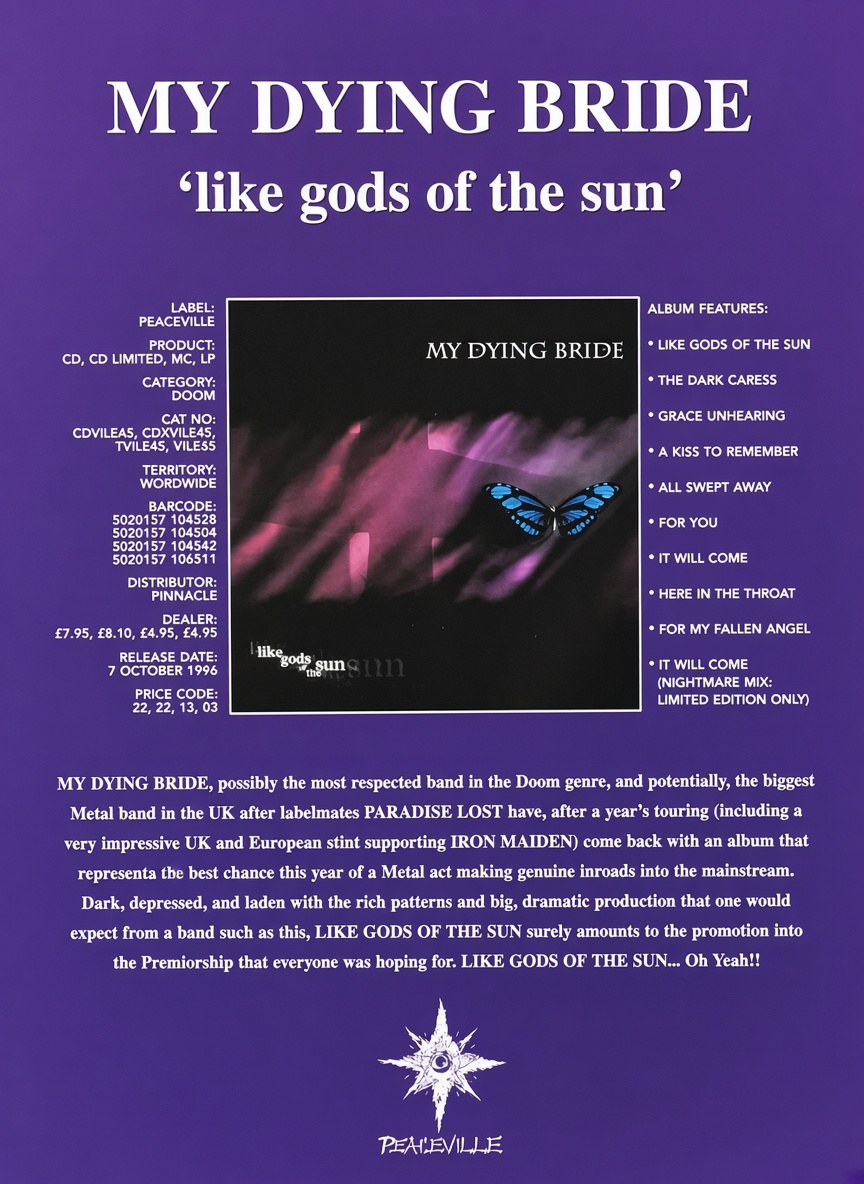
Like Gods of the Sun, released on October 7th 1996 (30 years ago!), is an album I’ve listened to hundreds of times since it first came out. By this point, the band had developed a sound of its own, combining heavy guitars, gothic atmosphere and Aaron Stainthorpe’s distinctive vocals. The songwriting is more direct than on some of their earlier records, but there are still plenty of unusual details that keep me coming back to it.
The speedy evolution in My Dying Bride between As the Flower Withers and Like Gods of the Sun is pretty remarkable, especially when you consider it happened in just four years. They were constantly evolving, trying new things and developing their sound without losing what made them special in the first place. For me, this line-up was a perfect example of how the right musicians can bring out the best in each other. Everyone had something different to contribute, and together they created something that was greater than the sum of its parts.
I remember Like Gods… seeming darker and more sinister than The Angel and the Dark River, even though the two albums clearly share a lot of the same DNA. There was something about the atmosphere of this record that really got under my skin. I listened to it incessantly on the train on my way to university, with my trusty old Sony Walkman providing the soundtrack to the commute. It’s funny how certain albums become tied to a particular time and place, and I can still associate this one with those train journeys. I must have played it to death, but it never seemed to lose its hold on me.
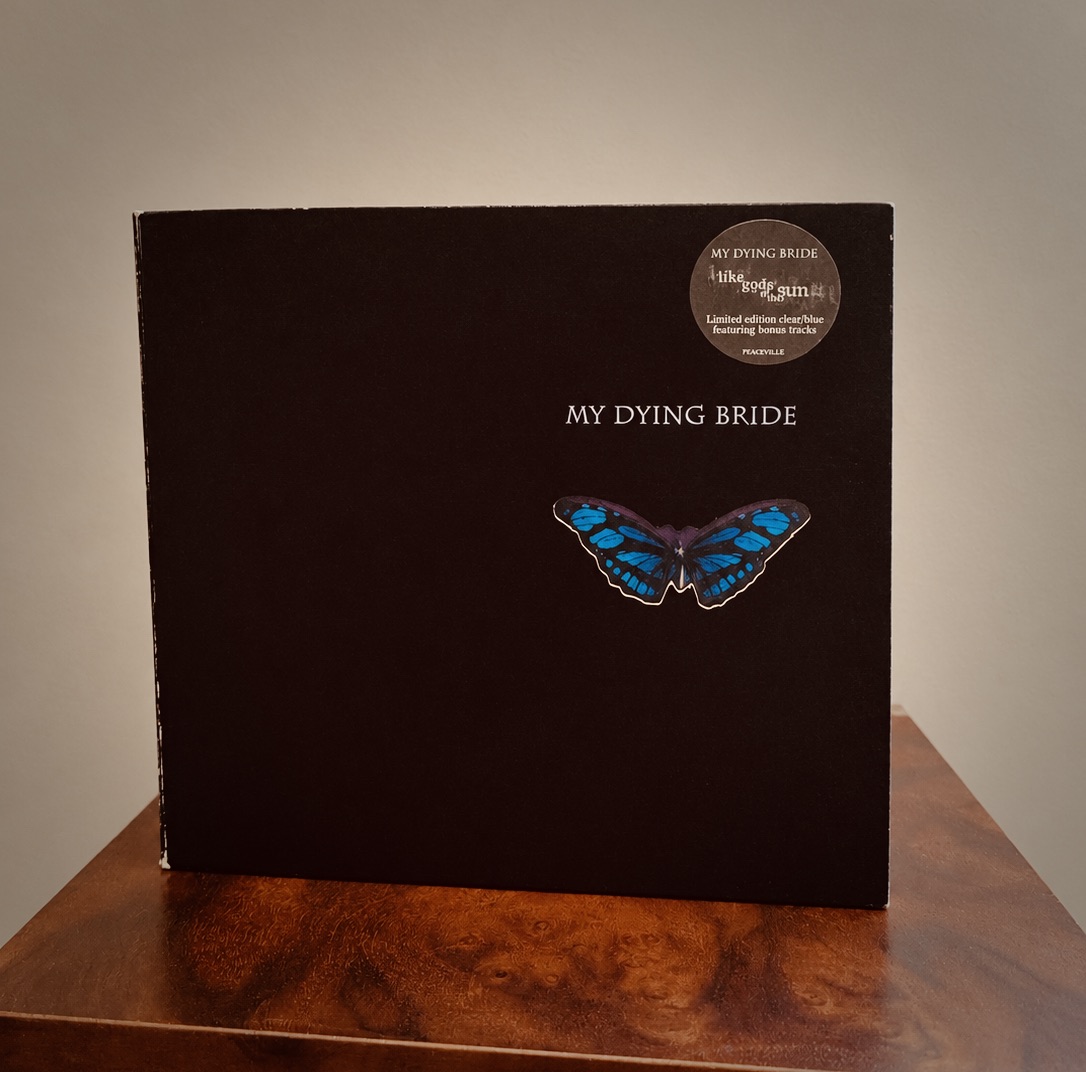
I have the cool digipak edition, complete with its butterfly-shaped cut-out in the cover. I’ve always liked packaging like this; it gives an album a bit of personality and makes it something more than another CD on the shelf. The butterfly is also an interesting contrast with the music inside. This also included a bonus track in the form of It Will Come (Nightmare) which is a super pared down sinister sounding remix of that track.
I originally bought the album on vinyl when it came out as well, so it’s been part of my collection for a long time. More recently, it has appeared in the Anthology of Sombre Reflections box set, bringing the album back into circulation on vinyl, although it was reissued by Peaceville on double vinyl at some point I remember, although I didn’t bother buying that. It’s nice to see a record I’ve owned for so long getting another outing in a format I enjoy collecting. There’s another cool coloured vinyl edition about to be released too, that I might get because it looks really good.
Looking back at reviews from around the time of its release, it’s interesting to see how the album’s development was received. Pedro Azevedo, writing for Chronicles of Chaos in February 1997, was enthusiastic about the heavier guitar sound, the production and the performances. He also noted that the songs were generally shorter than before, but felt the musical quality remained intact. A few months later, Dave Bone’s review for Lollipop Magazine similarly described the band as having refined its approach, with the cleaner vocals, down-tuned guitar riffs and dark keyboards creating a broader range of effects.
That response makes sense to me. The album has a more guitar-led character, and the songs often get their hooks into me through repetition. For You and A Kiss to Remember are good examples of the band’s ability to write memorable melodies without losing the darker edge that makes their music distinctive. There’s a directness to the songwriting that works well, and the tracks have enough individual character to keep the album moving.
One of my favourites, All Swept Away charges out of the gates with an insistent riff that keeps pushing forward. I really like the relentlessness of the opening, with the guitar locked into a pattern that gives the song a sense of urgency. It fits the album’s darker mood but approaches it from a different angle, using forward momentum rather than relying on slow, brooding passages. It’s a good example of how My Dying Bride can maintain their sombre character without always taking the expected route.
One of the things I enjoy about Like Gods… is that, beneath the more direct guitar work and memorable melodies, the band still leaves room for the unexpected. It Will Come is a good example. I found myself almost hypnotised by the intro, its sparse, repetitive rhythm gradually drawing me in. The minimal drum pattern reminds me of Slayer’s Criminally Insane. The bands occupy very different musical territory, but I like the way such a simple rhythmic idea can establish an atmosphere and hold your attention before the song develops.
The remix of It Will Come is another reminder that My Dying Bride have never been entirely predictable. It takes the song in a different direction while retaining that slightly strange quality I enjoy in the band’s music. Those details are part of what stops the album from becoming simply a collection of heavy riffs and gothic melodies.
One thing I remember from the time is how much I enjoyed the overall sound, particularly the bass, which I thought was excellent. I was playing bass in bands myself at the time and spending a fair bit of time recording in studios, so I was probably paying more attention than most to the sounds and production choices being made. Ade’s super-clean sound was a real trademark, and I loved the precision and definition it brought to the music. The bass in particular had a real sense of weight, clarity and control that I thought worked exceptionally well. I’d still be curious to know exactly how the guitars were recorded, what equipment was used and how much studio processing was involved. It would be an interesting question to put to the band, particularly given how distinctive the overall sound is on this record.
The period reviews are interesting here, too. Where I initially heard something a little too processed, Azevedo heard a crunchier, heavier guitar sound that gave the album a stronger metal character. Neither response is especially surprising: the same production choices can make a record sound more powerful to one listener and less natural to another. My own view has shifted over time, and I now hear the guitar sound as part of the album’s identity.
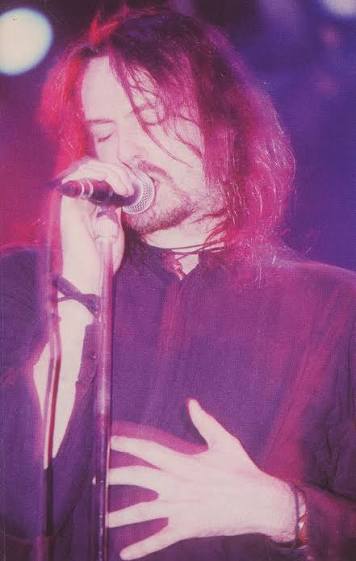
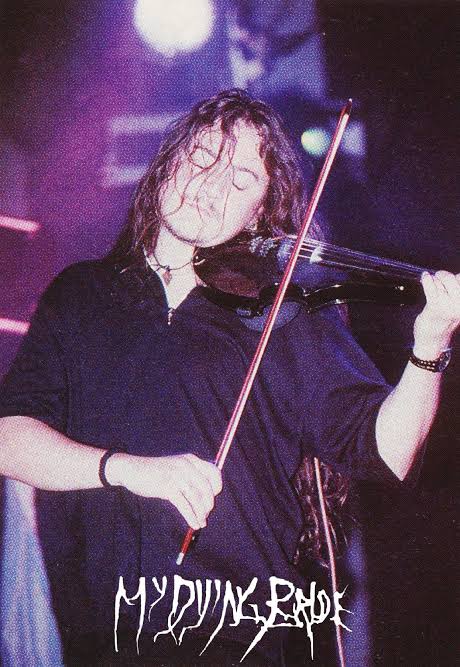
Aaron Stainthorpe’s vocals are a big part of what makes the record work for me. His delivery is dramatic and often theatrical, but it suits the music rather than feeling like an act laid over the top. The guitars provide much of the weight, while the arrangements leave enough space for the vocals, violin and melodies to come through. The combination gives the album a distinctive character, even when the songs are more straightforward in structure.
Like Gods of the Sun also arrived at an interesting point in the band’s development. It followed The Angel and the Dark River, which had already established a more cleanly sung and gothic direction, but it wasn’t simply a repeat of that record. The heavier guitar sound and more compact songwriting give it a character of its own. The reviews from 1997 suggest that some listeners welcomed this as a refinement of the band’s sound, rather than seeing the move away from longer, more expansive compositions as a loss.
Not everyone has been as enthusiastic. AllMusic’s later assessment was much cooler, praising the production while finding the songwriting less compelling than the band’s earlier work. That disagreement is understandable, particularly if you come to the album expecting the same impact as the records that preceded it. But I’ve never found it particularly useful to judge Like Gods… solely by how closely it resembles another My Dying Bride album. It has its own strengths, and some of its most interesting moments reveal themselves gradually.
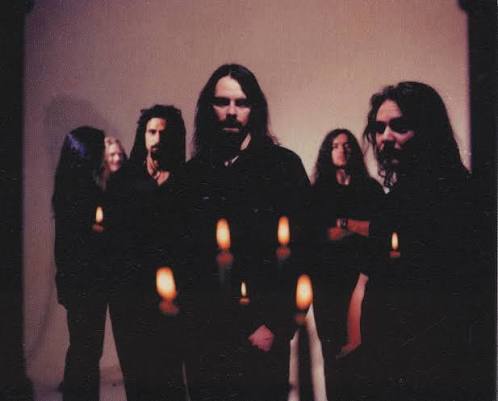
The musicianship is some of the best the band ever produced. The twin guitar work from Andrew and Calvin is excellent, from the harmonised melodies to the heavier, tightly locked-in riffs. Martin Powell’s violin is a real highlight, too, adding plenty of variety and atmosphere without ever feeling like it’s there simply for the sake of it. Rick Miah’s drumming is equally impressive, working with the bass and guitars to keep everything moving while giving the songs room to breathe. The whole band sounds confident and completely in sync, which suits the more Gothic direction of the album perfectly. I was gutted when I found out that Martin and Rick were leaving after this record. For me, this line-up had something special, and things were never quite the same after they went.
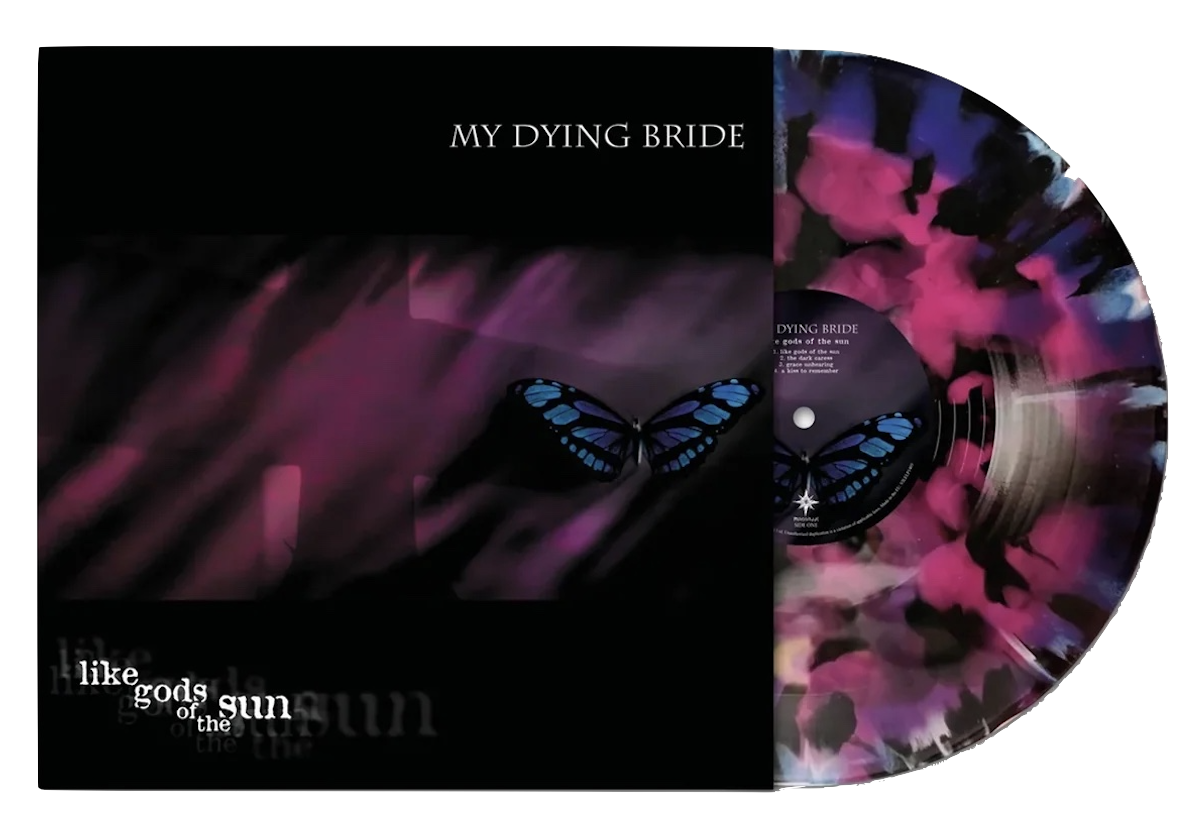
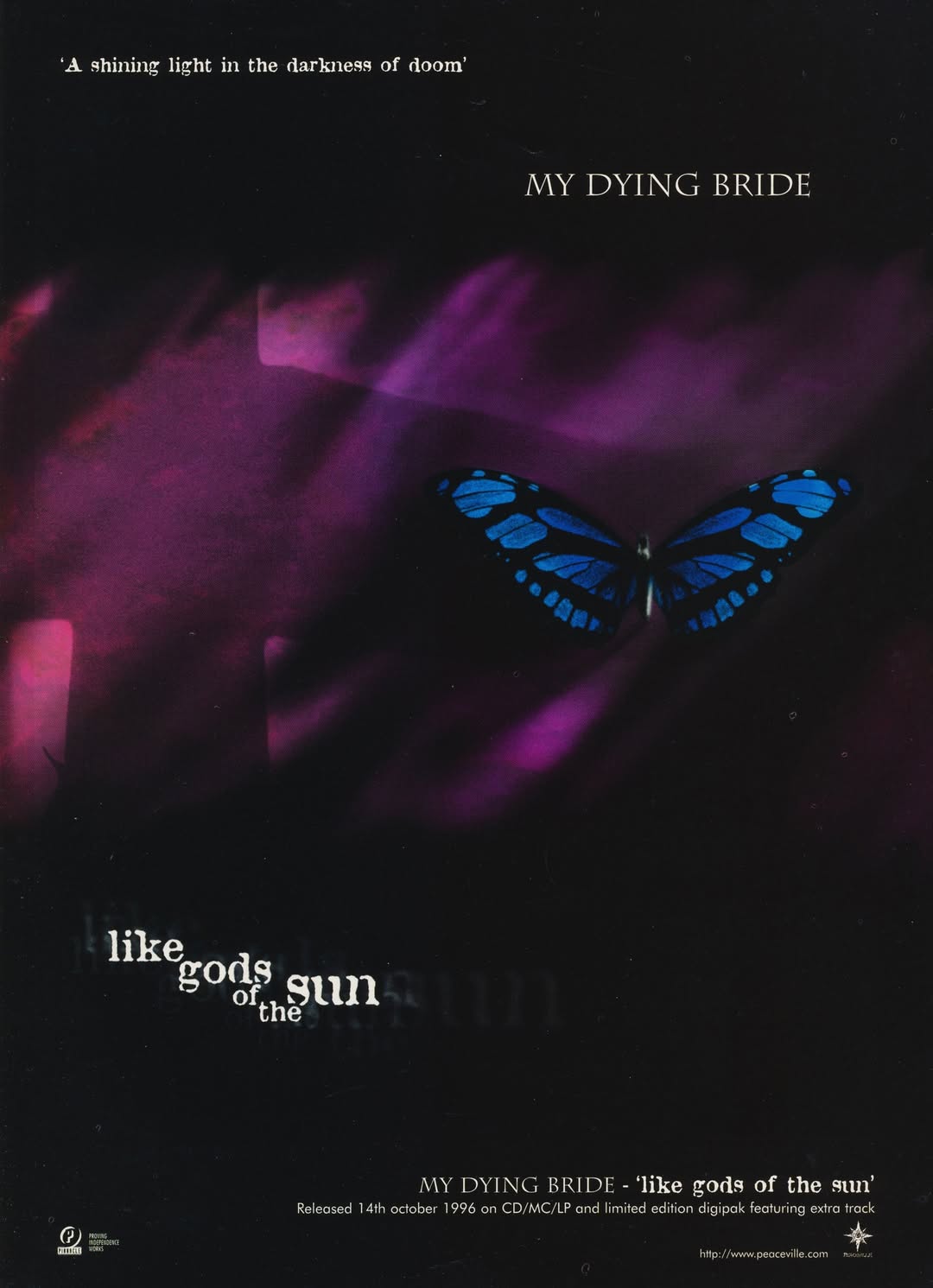
Like Gods of the Sun remains an album I enjoy revisiting from this period of My Dying Bride’s career. It’s not just nostalgia; it’s the memorable songs, the unusual turns and moments that keep it interesting. I actually had a Like Gods… t-shirt that I wore to death back in the day. And I still really like that butterfly digipak.


You must be logged in to post a comment.